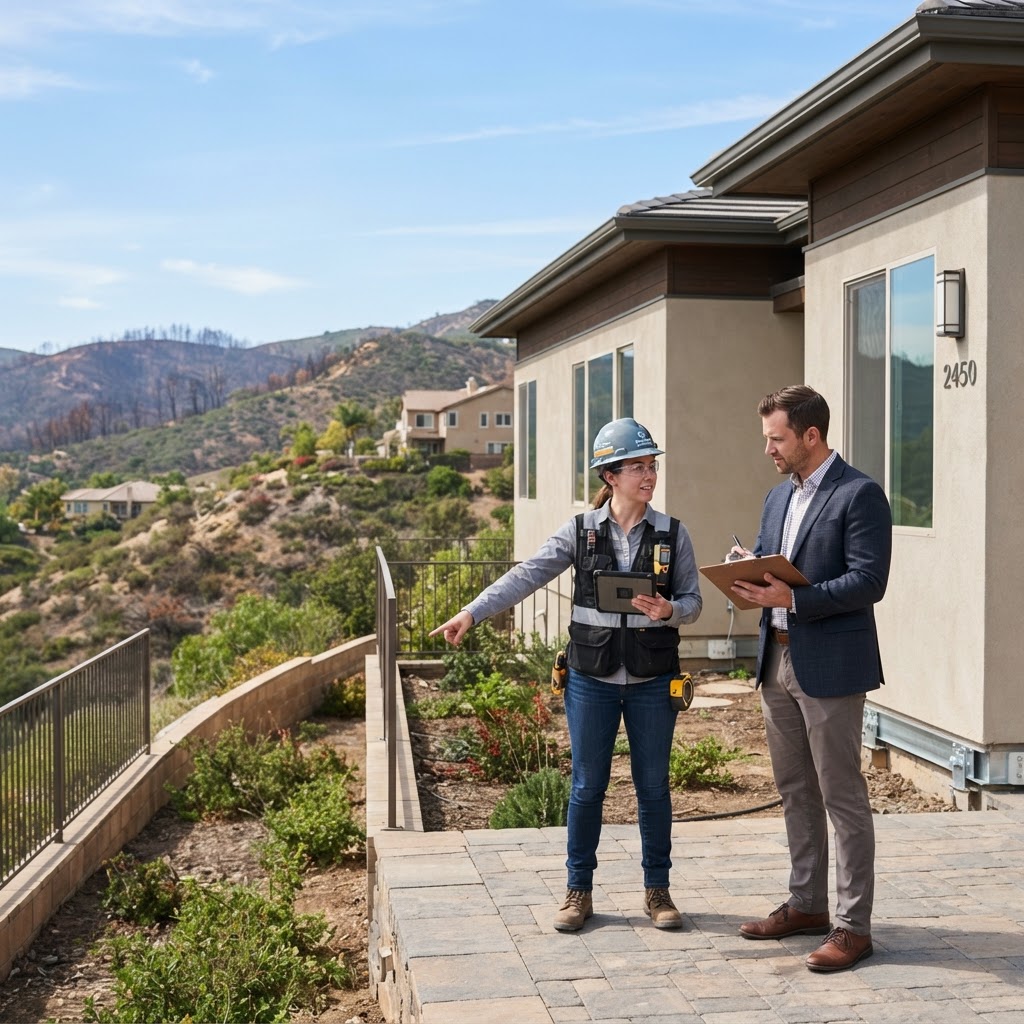
The Zoning of Risk: Integrating Disaster Mitigation into California Escrow
For decades, California real estate transactions have treated natural hazard disclosures (NHDs) as a box-checking exercise—a perfunctory step in the closing process. However, as the state’s climate profile shifts, the traditional reactive approach to disaster preparedness is failing both buyers and investors. To preserve asset liquidity and insurability, homeowners must transition toward a model where structural mitigation is integrated directly into the purchase and renovation lifecycle.
The Real Estate Risk Disconnect
Data from the California Department of Insurance and recent market analyses indicate a widening gap between property valuation and long-term risk exposure. While an NHD report informs a buyer of a property's location within a Wildland-Urban Interface (WUI) or a seismic zone, it rarely mandates action. This passivity is increasingly dangerous. According to the National Association of Realtors (NAR), climate-related property risks are beginning to exert downward pressure on home values in high-risk zones, yet many buyers overlook the cost-to-harden factor until after the close of escrow.
Transitioning to Proactive Mitigation
To stabilize the long-term economic outlook of a California property, investors and homeowners must treat hardening as a core component of the escrow phase. By evaluating the 'mitigation-readiness' of a property before the deal closes, buyers can leverage necessary upgrades into price negotiations or seller credits.
Key Focus Areas for the Escrow Phase:
- Ember-Resistant Retrofitting: Beyond clearing defensible space, focus on attic vent screening and ember-resistant siding. These upgrades are increasingly viewed by carriers as prerequisites for binding coverage.
- Foundation Anchoring: In seismic zones, verifying whether a property has been bolted to its foundation (a critical step for pre-1980s homes) should be a standard contingency.
- Insurability Due Diligence: Before removing contingencies, homeowners should obtain a provisional quote from an insurance provider. Relying on current premiums to project future costs is a critical error; verify if the property qualifies for the California FAIR Plan or if private market coverage remains viable.
Practical Takeaways for Market Participants
The new reality of California real estate requires a strategic shift in how assets are acquired and managed:
- Investors: Factor 'hardening costs' into your pro-forma. A property that requires a new class-A fire-rated roof or updated seismic bracing is not just a renovation project; it is a risk-mitigation investment that protects the underlying asset from catastrophic devaluation.
- Buyers: Treat the physical audit of a property as a financial audit. Use the due diligence period to assess the cost of bringing the home up to modern Wildland-Urban Interface (WUI) standards. If the cost of hardening exceeds the projected insurance savings, it should be reflected in your offer price.
- Sellers: Proactively performing home-hardening assessments can distinguish your listing in a cautious market. Providing documentation of completed retrofits (e.g., roof certifications, seismic upgrades) can alleviate the 'insurance fear' that currently stalls many transactions in high-risk zip codes.
Conclusion
Disaster preparedness is no longer a personal choice; it is a financial imperative for California property ownership. By moving mitigation from a post-closing 'to-do list' to a pre-closing strategy, homeowners can better insulate their portfolios against the state's evolving risk landscape, ensuring their property remains a viable asset rather than a stranded risk.