The Neighborhood-Serving Retail Renaissance: California’s New CRE Anchor
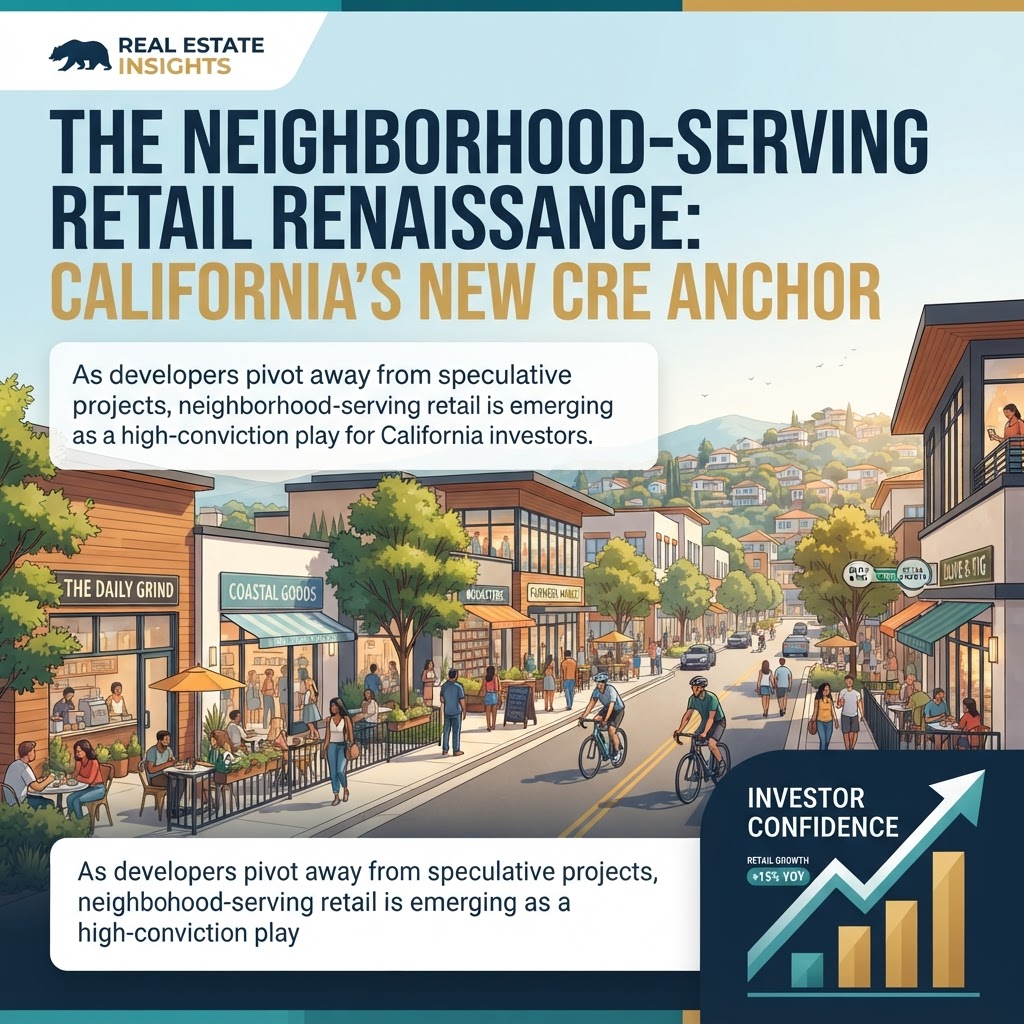
In the current California commercial real estate landscape, the era of speculative, large-scale development has largely given way to a mandate for discipline. As interest rates remain a primary concern for developers—with 64% of industry participants citing current rate volatility as a major hurdle to new projects—the focus has shifted toward assets that offer tangible, daily utility. Among these, neighborhood-serving retail has emerged as the most resilient and sought-after asset class.
The Shift Toward Needs-Based Assets
According to the Summer 2026 Allen Matkins/UCLA Anderson Forecast, developer sentiment is increasingly concentrated on projects that serve local residential populations. Nearly 46% of survey respondents identified neighborhood-serving retail as their primary development focus. This is not merely a trend but a structural shift; investors are prioritizing grocery-anchored centers, coffee shops, and fitness-oriented retail hubs that provide essential services to the immediate community.
This "needs-based" strategy is a direct response to the volatility in the broader market. While big-box retail has faced significant pricing resets—with median sale prices for large-format buildings falling 19% year-over-year in some Southern California submarkets—smaller, community-oriented centers have maintained more stable occupancy levels and consistent net operating income (NOI).
Market Analysis: Cap Rates and Valuation
California remains a competitive market for net-lease retail, with average cap rates hovering around 5.49% as of mid-2026. While this is slightly higher than the ultra-low rates of previous years, it reflects a more realistic pricing environment that is attracting institutional and private capital alike. Investors are finding that quality assets in transit-oriented or coastal locations continue to command a premium, even as lenders tighten their LTV requirements to roughly 70-84%.
The data suggests a clear divergence in performance:
- Big-Box Retail: Facing headwinds from supply-chain shifts and changing consumer habits, with higher vacancy risks.
- Neighborhood/Strip Centers: Benefiting from "sticky" demand, where consumers prioritize convenience for daily errands.
Practical Takeaways for Investors
For those looking to navigate the current California market, the following strategies are essential:
- Prioritize Tenant Mix: Focus on centers that feature a blend of services—fitness, dining, and grocery—which drive consistent foot traffic and cross-shopping opportunities.
- Underwrite for Resilience: With interest rates remaining a wildcard, ensure that your debt service coverage ratio (DSCR) is stress-tested against potential rate fluctuations. Avoid over-leveraging on properties that rely on a single, non-essential tenant.
- Monitor Local Zoning: As California continues to push for housing density, look for retail assets that are well-positioned for future mixed-use integration. The ability to adapt a site to include residential components is becoming a significant value-add lever.
Ultimately, the "retail reset" is not a decline, but a refinement. By focusing on the essential, neighborhood-level infrastructure that supports California’s growing population, investors can secure stable, income-driven returns in an otherwise uncertain economic climate.