The Infill Advantage: Why California Industrial and Multifamily Lead in 2026
As of late 2026, the California commercial real estate landscape has moved beyond the broad-based uncertainty of the previous two years. Instead, the market has bifurcated, with clear winners emerging in sectors where physical scarcity meets structural demand. For investors, the current environment rewards those who prioritize infill locations over speculative greenfield development.
The Industrial Infill Premium
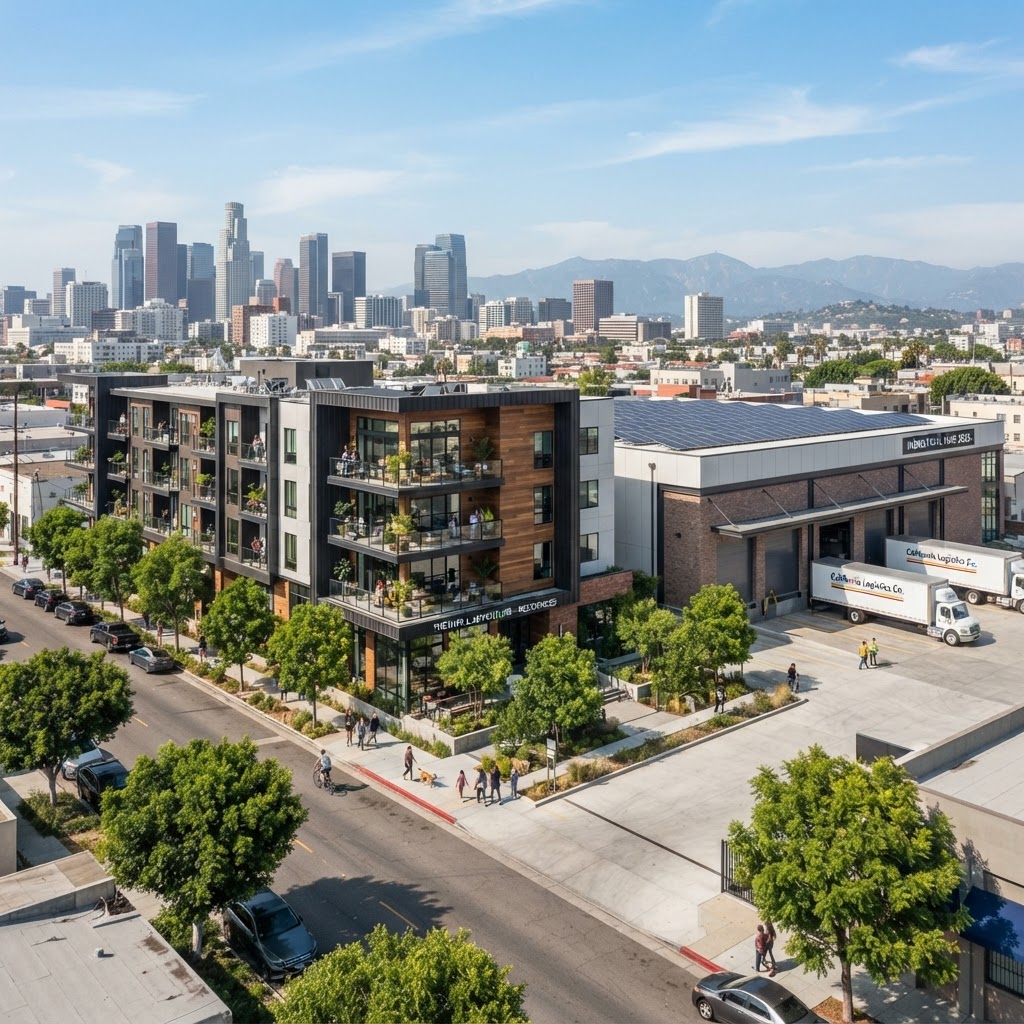
The industrial sector is undergoing a significant shift. While big-box logistics centers in peripheral markets face supply-side risks, infill industrial assets—those located within dense urban cores—are seeing a resurgence in value. According to recent market reports, new industrial deliveries in Los Angeles have slowed significantly, dropping to 1.0 million square feet year-to-date, down from 2.3 million square feet in previous periods [9]. Furthermore, legislative changes such as AB 98, which restricts large-scale infill warehouse development, have effectively created a moat around existing assets, protecting owners from new competition and driving long-term value for well-positioned infill properties [9].
Multifamily: The Capital Magnet
Multifamily remains the primary destination for institutional and private capital in California, accounting for over 50% of investment sales volume in major counties like Los Angeles during mid-2026 [9]. While rent growth has moderated to a flat 0% in some submarkets due to elevated Class A deliveries, the underlying demand remains robust [4]. Investors are increasingly focusing on the "local story"—where supply constraints in specific municipalities prevent the oversupply seen in other regions [3].
Strategic Takeaways for Investors
- Prioritize Infill Over Scale: With legislative hurdles like AB 98 limiting new industrial supply, existing infill assets are becoming increasingly valuable. Focus on properties that cannot be easily replicated due to zoning or land scarcity [9].
- Monitor Regulatory Overhang: Legislative proposals such as AB 1157 continue to influence investor sentiment regarding rent control. Investors should conduct thorough due diligence on local municipal ordinances, as properties in incorporated cities may be subject to different regulatory environments than those just a few miles away [7].
- Operational Prowess as a Yield Driver: In a market where cap rates have tightened and rent growth is normalizing, total returns are increasingly dependent on operational efficiency rather than simple market appreciation [8].
Ultimately, the California market in late 2026 is not a monolith. By focusing on sectors with high barriers to entry and localized supply constraints, investors can navigate the current cycle with a defensive yet opportunistic posture.