The Self-Sufficient Home: A Tactical Guide to California Disaster Autonomy
In California, the traditional reliance on immediate post-disaster government intervention is shifting. With the 2024 California State Emergency Plan emphasizing that preparedness is a shared responsibility, homeowners must transition from passive policyholders to active managers of their property’s continuity. As climate-driven hazards like wildfire, extreme heat, and flooding become more frequent, the ability to remain self-sufficient for at least seven days is no longer a recommendation—it is a necessity.
The 7-Day Autonomy Standard
While many emergency guides suggest a 72-hour supply, California’s complex geography and the potential for infrastructure isolation necessitate a 7-day threshold. Homeowners should audit their property for the following:
- Utility Independence: Beyond standard kits, ensure you have the means to filter water and maintain communication if the grid fails. The California Data Exchange Center (CDEC) provides real-time hydrologic data that can help you anticipate local flood risks before they manifest.
- Digital & Physical Inventory: The California Department of Insurance recommends creating a video inventory of your possessions. Storing this in the cloud ensures that if your physical home is lost, your documentation remains accessible for insurance claims.
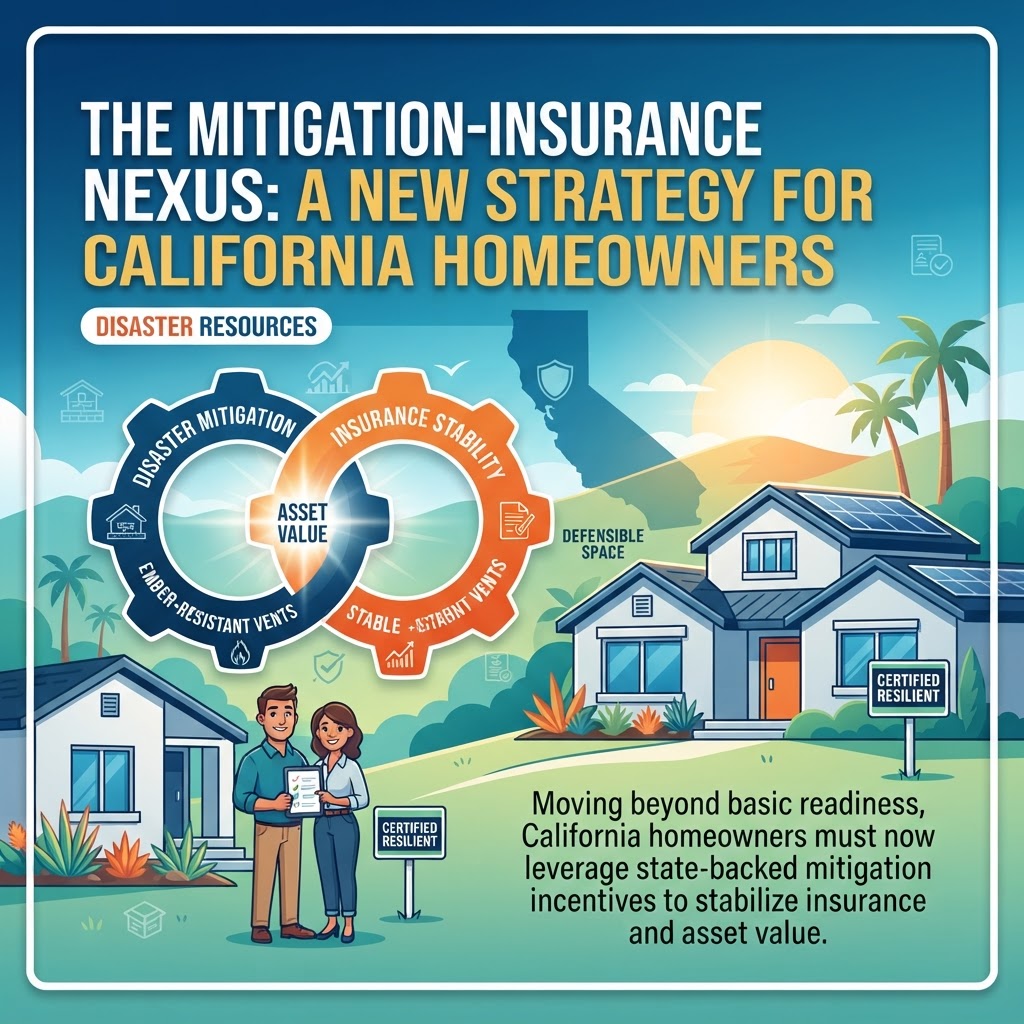
- Hazard-Specific Hardening: Use the MyHazards tool provided by CalOES to identify your specific risk profile. A home in a wildfire-prone area requires different mitigation than one in a flood zone, such as clearing defensible space or installing backflow valves.
Navigating the Insurance-Recovery Gap
Insurance is your first line of defense, but it is not a panacea. Standard homeowner policies often exclude earth movement, mudflow, and flood. Homeowners must understand that the California FAIR Plan is a last-resort option with a $3,000,000 limit, often requiring supplemental coverage to be truly effective. If you are in a high-risk zone, review your policy annually to ensure your coverage limits reflect current rebuilding costs, not just the original purchase price.
Practical Takeaways for Homeowners
- Sign Up for Local Alerts: Do not rely on national news. Register for systems like AlertOC or your county’s specific emergency notification platform to receive hyper-local, time-sensitive instructions.
- Join or Form a CERT: Community Emergency Response Teams (CERT) provide the training necessary to assist neighbors when professional responders are overwhelmed.
- Document for Recovery: Keep a physical and digital copy of your insurance policy, property deed, and a list of emergency contacts in a waterproof, portable container.
- Understand Your Role: As noted by local municipal guidelines, private property owners are responsible for their own debris removal and mitigation. Budgeting for these potential costs is a critical component of long-term financial resilience.
By integrating these tactical steps into your annual home maintenance schedule, you move from being a victim of the next disaster to a resilient steward of your property and community.