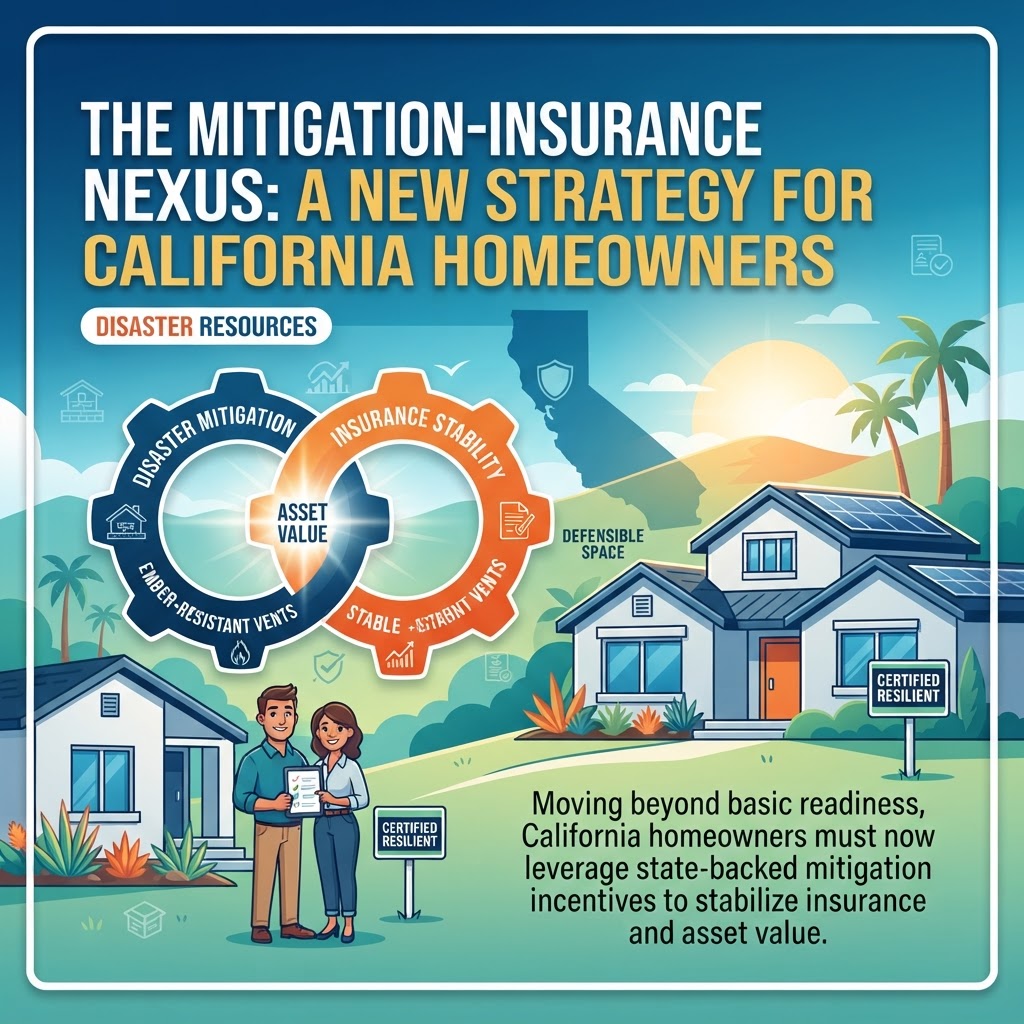
The Mitigation-Insurance Nexus: A New Strategy for California Homeowners
For California homeowners, the intersection of climate risk and insurance availability has shifted from a secondary concern to a primary driver of property value and liquidity. As of late 2026, the state’s insurance market is under significant pressure from extreme weather events, making proactive risk reduction not just a safety measure, but a financial imperative for protecting home equity.
The Financial Case for Home Hardening
The traditional approach to disaster preparedness—focusing solely on emergency kits and evacuation plans—is no longer sufficient to address the structural challenges of the current market. Recent policy shifts, such as Assembly Bill 1 (2025), mandate that insurers offer discounts for homeowners who invest in verified risk-reduction measures. However, research indicates that these discounts are often inconsistently applied, placing the burden on homeowners to advocate for their own property’s risk profile.
Homeowners should view mitigation as a capital improvement project. By hardening a home against wildfire or seismic activity, owners are not only reducing the probability of catastrophic loss but are also positioning their properties to remain insurable in a tightening market. For example, the California Residential Mitigation Program (CRMP) provides specific grants for seismic retrofitting, which can be a critical factor in maintaining affordable coverage in earthquake-prone regions.
Leveraging State-Backed Resources
The state has launched several initiatives to bridge the gap between risk and recovery:
- California Wildfire Mitigation Program (CWMP): A partnership between Cal OES and CAL FIRE that provides financial assistance for home hardening and defensible space creation, particularly for low- and moderate-income households.
- Disaster Rebuilding Assistance Program (DRAP): Managed by CalHFA, this $100 million program provides essential mortgage lending tools for homeowners looking to rebuild after qualified disasters, ensuring that the rebuilding process incorporates modern, resilient building standards rather than simply replacing the previous structure.
- Seismic Retrofitting Incentives: Local programs, such as those in Berkeley, continue to offer permit fee waivers and transfer tax incentives to encourage the strengthening of older, vulnerable structures.
Practical Takeaways for Owners and Investors
To navigate this landscape, homeowners and investors should adopt a data-driven approach to property management:
- Audit Your Risk Profile: Utilize emerging open-data platforms to understand your parcel-level risk. Relying on general regional data is insufficient; understanding your specific wildfire or seismic exposure is necessary to negotiate insurance premiums effectively.
- Prioritize Certified Retrofits: When performing renovations, prioritize measures recognized by the Insurance Institute for Business & Home Safety (IBHS). These certified improvements are more likely to trigger the insurance discounts mandated by recent state regulations.
- Engage with the FAIR Plan Transition: If your property is currently covered by the California FAIR Plan, focus on documented mitigation efforts that may allow you to transition back to the private insurance market, which is essential for long-term financial stability and mortgage compliance.
The future of California real estate depends on a shift from reactive recovery to proactive resilience. By treating disaster mitigation as a core component of property maintenance, homeowners can protect their assets against the escalating costs of climate-linked disasters while contributing to the broader stability of the state’s housing market.