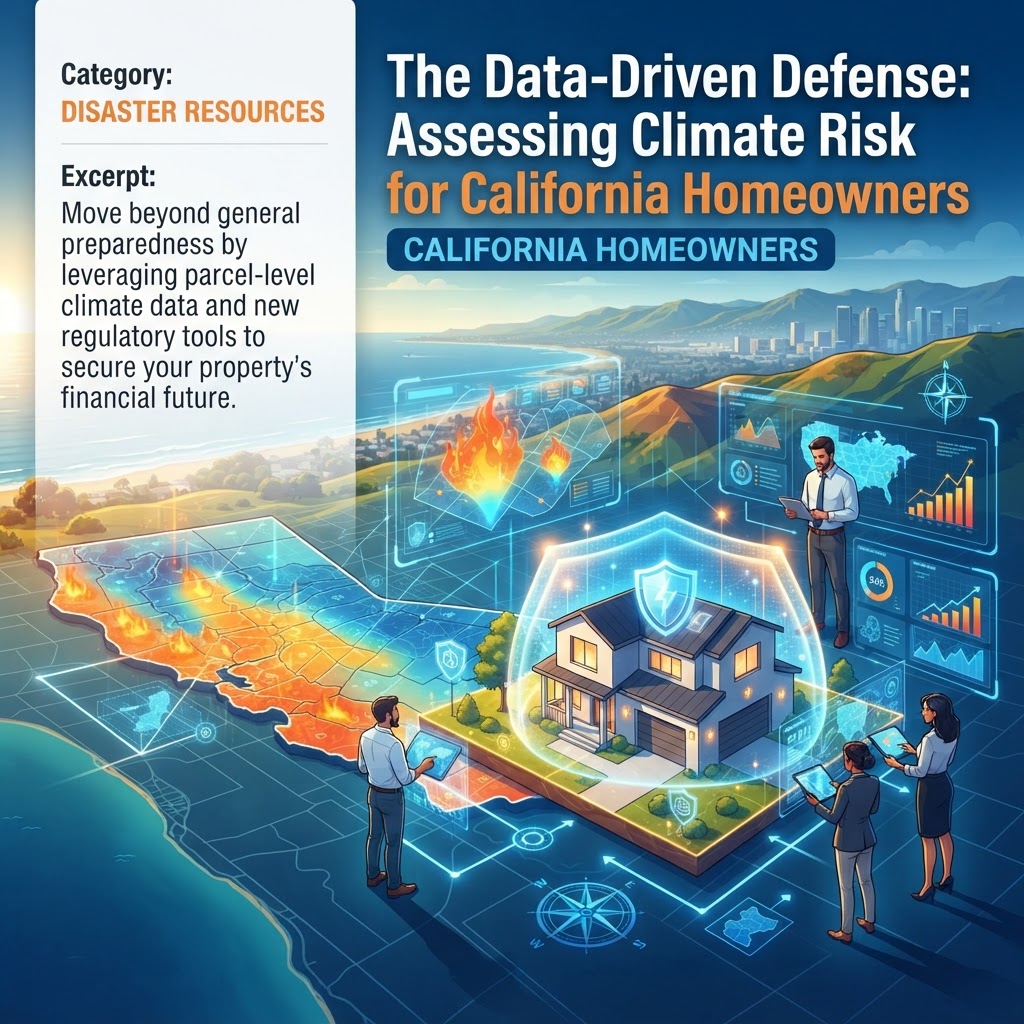
The Data-Driven Defense: Assessing Climate Risk for California Homeowners
For California homeowners, the traditional approach to disaster preparedness—stocking supplies and creating evacuation plans—is no longer sufficient. As climate-linked disasters intensify, the state’s housing market is increasingly defined by the intersection of physical risk and financial volatility. To protect property value and ensure long-term viability, homeowners must shift toward a data-driven strategy that accounts for parcel-level hazards and evolving insurance regulations.
Leveraging Parcel-Level Intelligence
General hazard maps are often too broad to inform specific property decisions. Homeowners and investors should now utilize granular, open-source tools like CarbonPlan’s Open Climate Risk, which provides parcel-level wildfire risk assessments based on scientific research [6, 9]. By understanding the specific risk profile of a property, owners can move from reactive maintenance to targeted mitigation, such as home hardening, which may influence insurance eligibility and long-term asset appreciation [6, 7].
Navigating the New Insurance Landscape
The California insurance market is undergoing a structural shift. With rising premiums and increased non-renewals, homeowners must be proactive in managing their coverage [1, 7]. Recent legislative efforts, such as SB 876, aim to improve transparency by requiring insurers to provide more accurate replacement cost estimates and detailed disaster response plans [5].
Key Actions for Homeowners:
- Audit Your Coverage: Do not assume standard policies cover all perils. Flood, mudslide, and earth movement are typically excluded from standard homeowners insurance [1, 2, 3].
- Understand the FAIR Plan: If you are in a high-risk area and cannot secure private coverage, the California FAIR Plan serves as a last-resort option, though it is limited in scope and often requires supplemental 'difference in conditions' (DIC) policies for comprehensive protection [1, 2, 8].
- Request Mitigation Credits: If you receive a non-renewal notice, contact your insurer immediately to ask about specific mitigation actions that could restore your eligibility for coverage [1].
The Governance of Resilience
Research from the Terner Center highlights that a property's risk is often tied to the actions of neighbors and local entities [6, 9]. Effective resilience is not just an individual endeavor but a neighborhood-level requirement. Homeowners should engage with local Community Emergency Response Teams (CERTs) and utilize the CalOES MyHazards tool to understand the specific disaster profile of their community [4].
Practical Takeaways for Real Estate Stakeholders
- For Buyers: Before closing, use the Open Climate Risk dataset to evaluate the long-term insurability of a property. A home that is difficult to insure today may face significant liquidity challenges in the future [6, 9].
- For Investors: Factor in the cost of potential 'difference in conditions' policies and home hardening requirements when calculating the ROI of properties in Wildfire Hazard Severity Zones [6, 7].
- For All Owners: Document all property improvements and maintenance. In the event of a claim, having a clear record of your home’s condition and upgrades is essential for navigating the recovery process and ensuring accurate replacement cost payouts [5, 8].
By integrating these data-backed strategies, California homeowners can better navigate the state's complex risk environment, protecting both their physical assets and their financial stability in an era of climate uncertainty.


