The Insurance Gap: Navigating California’s Evolving Disaster Risk Landscape
For California homeowners, the traditional approach to property protection—relying solely on a standard homeowners insurance policy—is increasingly insufficient. With the state facing a "likely historic" El Niño and persistent wildfire threats, the disconnect between standard coverage and actual disaster risk has created a significant financial vulnerability for property owners.
The Coverage Misconception
A critical oversight for many Californians is the assumption that standard homeowners insurance provides comprehensive protection. According to the California Department of Insurance, standard policies typically exclude damage caused by flooding, mudslides, and debris flows unless they are directly triggered by a recent wildfire. Furthermore, earthquake damage is almost universally excluded from standard policies, requiring separate coverage through the California Earthquake Authority (CEA).
This creates a "coverage gap" that can leave homeowners financially exposed. For instance, while a standard policy covers fire damage, the subsequent mudslide caused by heavy rains on a fire-scarred hillside may not be covered, leaving the homeowner to bear the cost of reconstruction alone.
Strategic Risk Mitigation
To bridge this gap, homeowners must adopt a proactive, multi-layered strategy:
- Audit Your Policy: Do not wait for a disaster to read your policy. Contact your agent to confirm specific exclusions. If you have made home additions, ensure your coverage limits are updated to reflect the current replacement cost.
- Understand the FAIR Plan: For those in high-risk areas who cannot secure traditional coverage, the California FAIR Plan serves as a "last resort" option. However, it is capped at $3,000,000 in total coverage, which may be insufficient for high-value properties in luxury markets.
- Invest in Retrofitting: Seismic retrofitting not only increases structural resilience but can also lead to insurance premium discounts. Programs like the California Residential Mitigation Program offer grants to help offset these costs.
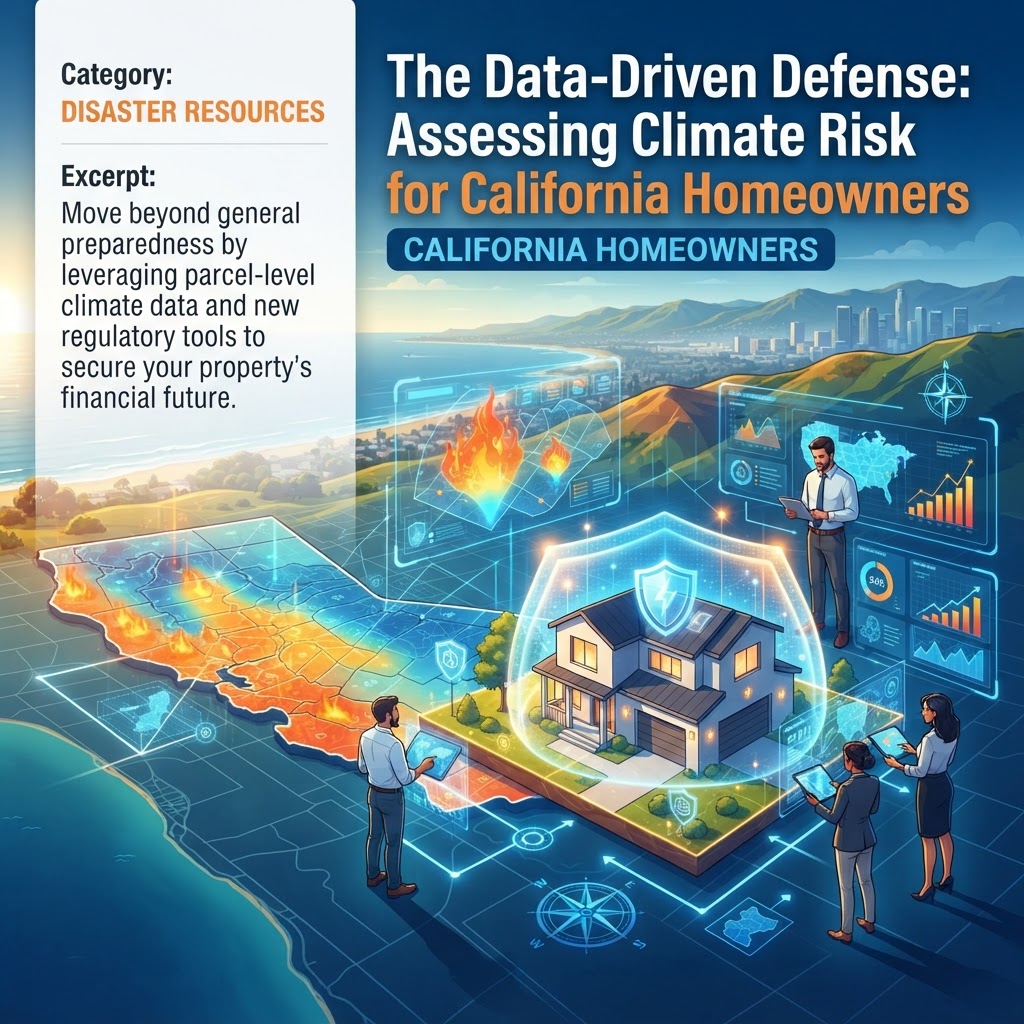
- Leverage Digital Tools: Utilize the CalOES MyHazards tool to identify specific risks at your exact address. This data-driven approach allows for targeted investments in home hardening, such as creating defensible space or installing ember-resistant vents.
The Financial Reality of Recovery
In the event of a declared disaster, federal assistance from FEMA or low-interest loans from the Small Business Administration (SBA) are often viewed as a safety net. However, these resources are not a substitute for private insurance. FEMA assistance is generally limited and intended for basic needs, while SBA loans require proof of repayment capability. Homeowners should treat insurance as their primary defense and federal aid as a secondary, limited supplement.
Practical Takeaways for Homeowners
- The 30-Day Rule: Flood insurance policies typically require a 30-day waiting period before taking effect. Do not wait for storm warnings to purchase coverage.
- Inventory Your Assets: Maintain a digital, photo-based inventory of your possessions. This documentation is essential for expediting claims after a loss.
- Community Coordination: Disaster resilience is not just an individual pursuit. Engage with local neighborhood groups to establish evacuation routes and communication protocols, as community-level preparedness significantly improves survival and recovery outcomes.
By shifting from a reactive mindset to a proactive, data-informed strategy, California homeowners can better protect their most significant assets against the state's unique and evolving environmental challenges.