The Shifting Geography of Disaster Exposure in 2026
For decades, natural disaster preparedness in California was largely framed around wildland-urban interface (WUI) properties and seismic fault lines. Today, the landscape is fundamentally different. Recent catastrophe data ranks California third nationally for overall natural disaster risk and fourth in per-capita insurance losses, trailing only high-consequence states like Colorado, Nebraska, and Florida. Yet, the traditional geography of disaster risk has blurred.
Urban and low-risk suburban communities are increasingly bearing the financial and structural consequences of statewide exposure. A striking indicator is the California Fair Access to Insurance Requirements (FAIR) Plan: as private carriers restrict writing or non-renew coverage, enrollment has surged dramatically. Notably, an estimated 14% of FAIR Plan policies and 28% of its total financial exposure now stem from properties located in urban zones classified as low wildfire risk. In addition, atmospheric river events have illustrated that flood dangers exist well beyond traditional FEMA Special Flood Hazard Areas (SFHAs), leaving properties that never required federal flood coverage vulnerable to severe inundation.
The Core Dilemma: Risk Exposure vs. Policy Retreat
According to research from the Public Policy Institute of California, seven of the state’s top 12 property insurers have curtailed coverage or scaled back operations since 2022. While California’s historical insurance burden has stayed relatively low compared to Gulf Coast states due to Proposition 103 regulations, rates are adjusting rapidly to reflect modern catastrophe modeling, with projected premium jumps of roughly 16% statewide in 2026.
At the same time, traditional backstops face operational strains. FEMA mapping has historically overlooked localized drainage thresholds and climate-magnified storms, leaving many suburban owners without federal National Flood Insurance Program (NFIP) policies—in fact, only about 2% of California residents maintain flood insurance. When a secondary catastrophe or localized flood strikes, owners without surplus-lines coverage or targeted endorsements often absorb the entire balance sheet hit.
Actionable Preparedness: Practical Steps for Owners and Buyers
Homeowners, prospective buyers, and real estate investors must evolve beyond basic emergency kits to execute multi-layered asset protection strategies:
1. Comprehensive Property Underwriting Audits
- Verify Elevation and Localized Runoff: Do not rely solely on designated FEMA flood zones. Examine municipal stormwater catchment reports and municipal hydrologic hazard layers before acquiring real estate or adjusting policy structures.
- Bridge Policy Exclusions: Recognize that neither standard homeowners policies nor the baseline California FAIR Plan cover earthquake or flood damage. Secure separate Difference in Conditions (DIC) policies or private flood endorsements to avoid catastrophic balance-sheet exposure.
2. Tangible Hardening for Non-WUI Homes
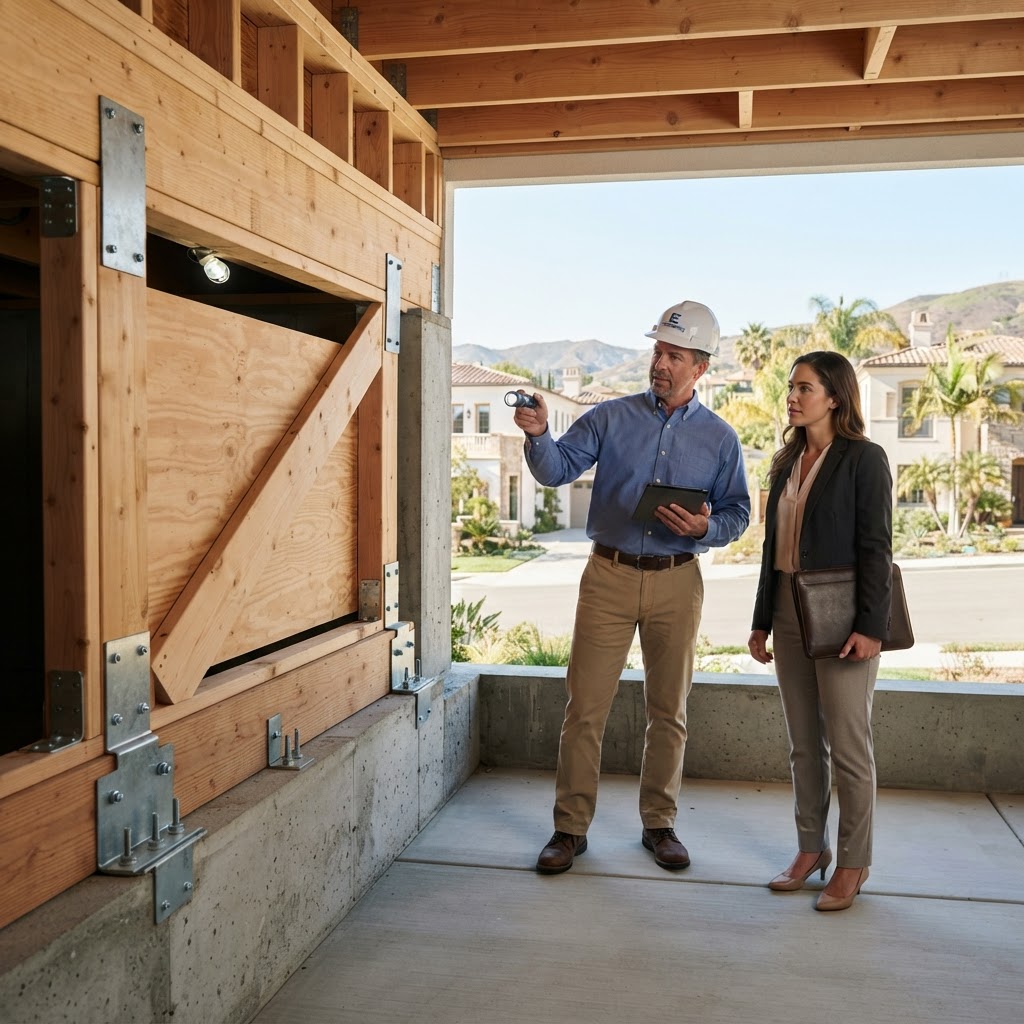
- Mitigate Water Infiltration: Install dual backflow preventers, high-capacity battery-backup sump pumps, and perimeter French drain networks to protect against high-volume atmospheric rivers.
- Non-Combustible Zone 0 Defenses: Even in low-to-moderate fire areas, clear all combustible materials within a five-foot perimeter of the foundation and upgrade attic and foundation vents to 1/8-inch ember-resistant mesh.
- Automated Utility Shutoffs: Ensure all main gas lines are equipped with seismic automatic shutoff valves and maintain accessible manual shutoff tools near meters.
3. Institutional-Grade Document and Asset Redundancy
- Maintain a cloud-synchronized, encrypted digital ledger of property inventories, renovation permits, receipts, and appraisal reports. As recommended by Freddie Mac, having itemized valuations and photographic records in place expedites claims settlement times significantly in post-disaster environments where adjuster backlogs can span months.
- Establish household autonomy reserves calibrated for up to 14 days rather than the conventional 72-hour window, factoring in potable water (one gallon per day per person), localized power banks, and hard-copy emergency route maps.
Preserving Property Equity in an Unsettled Market
In California's modern real estate market, disaster resilience is no longer an abstract safety checklist—it directly dictates property insurability, transaction velocity, and long-term resale appraisal values. Buyers and sellers who proactively engineer physical defenses, close underinsurance loopholes, and maintain precise documentation protect not just their lives, but their underlying home equity.