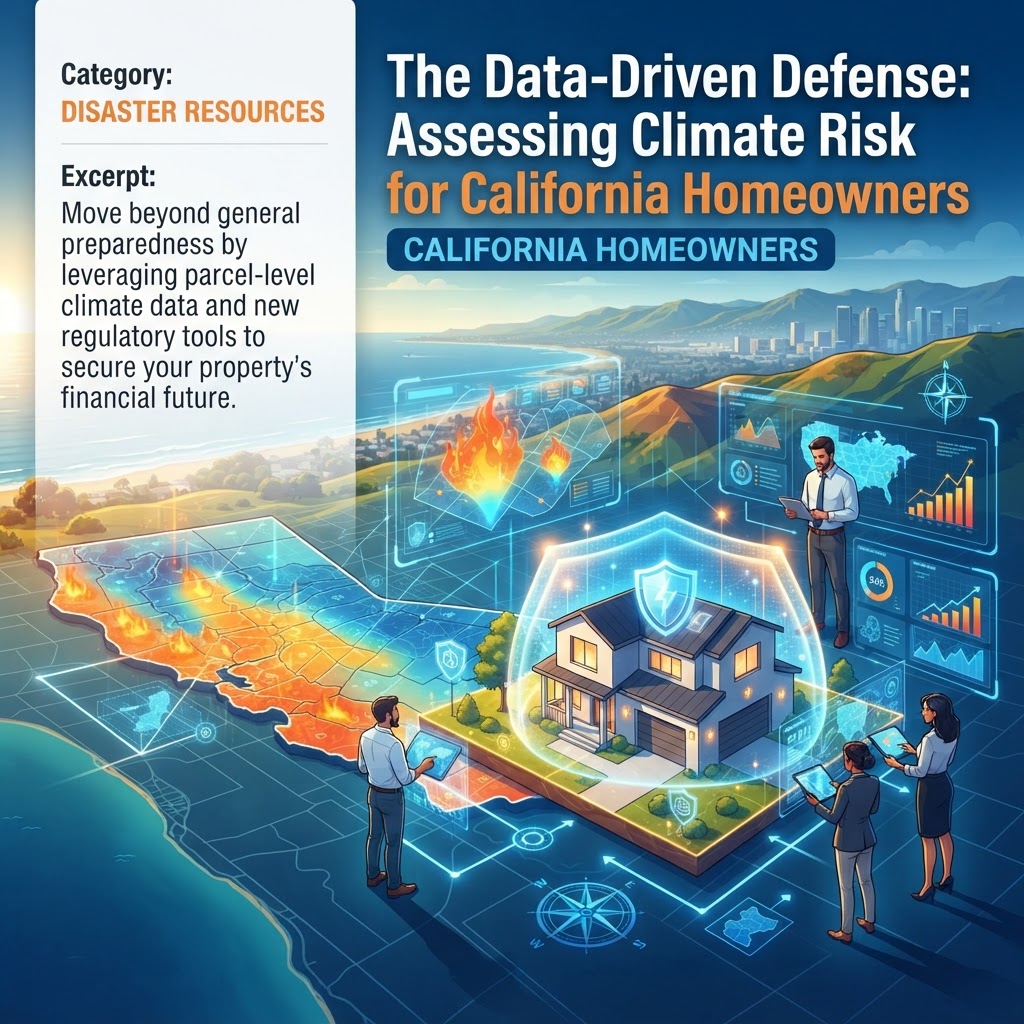
For generations, California property owners viewed disaster preparedness through an episodic lens—clearing brush before red flag warnings or stocking canned goods for the eventual ‘Big One.’ However, compounding perils and an increasingly strained insurance sector have fundamentally altered the landscape. Today, preparing a home for disasters requires a strategic, parcel-level approach that blends structural resilience, financial structuring, and proactive operational readiness.
The Convergence of Multi-Peril Risks
California presents an overlapping matrix of environmental threats. While seismic faults remain an ever-present reality across every major metropolitan region, wildfire exposure has increasingly merged into urban interface corridors and suburban footholds. According to research from the Insurance Institute for Business & Home Safety (IBHS Strategy 2026), secondary factors like building separation distances—particularly as accessory dwelling units (ADUs) proliferate across residential lots—create acute structural-ignition risks under high-wind conditions.
Moreover, parcel-level exposure extends far beyond direct flame contact. High-speed ember cast accounts for the vast majority of structure losses in wildland-urban interface (WUI) fires, penetrating standard attic venting and combustible exterior trim. Concurrently, soil subsidence following intense rain events poses immediate hazards on hillside parcels, reinforcing the need for multi-hazard planning rather than single-threat mitigation.
Navigating Insurance and Market Realities
Financial resilience is just as critical as physical hardening. According to data compiled by Pearl Certification’s 2026 Home Risk Rankings, private insurer retrenchment led to a 43% surge in California FAIR Plan enrollments over recent reporting cycles. While the FAIR Plan provides a vital safety net for fire coverage, it leaves significant gaps in comprehensive coverage, such as liability, water damage, and theft, which require a separate Difference in Conditions (DIC) policy.
Furthermore, standard property policies universally exclude ground movement and rising water:
- Earthquake Protection: Only roughly 12% of California homeowners carry dedicated earthquake insurance through the California Earthquake Authority (CEA) or private specialty carriers, largely due to high percentage-based deductibles ranging between 10% and 25%.
- Flood Underwriting: Beyond federally mandated zones, over 70% of residential flood losses remain uninsured statewide. Homeowners should independently review localized drainage patterns and consider National Flood Insurance Program (NFIP) or private flood riders.
- Valuation Gaps: Consumer advocacy group United Policyholders notes that nearly two-thirds of disaster-impacted households discover their dwelling limits fall significantly short of current reconstruction expenses. Annual policy reviews must account for post-catastrophe demand surge and modern building code compliance riders.
Physical Hardening: Moving Toward Science-Backed Standards
Rather than superficial adjustments, homeowners and investors are adopting standards aligned with the IBHS ‘Wildfire Prepared Home’ framework and Chapter 7A of the California Building Code. Key high-impact upgrades include:
- Non-Combustible Zone 0: Maintaining a zero-to-five-foot buffer around the home perimeter completely free of mulch, combustible shrubs, and wooden fences that touch the exterior walls.
- Ember-Resistant Infiltration Defense: Replacing traditional attic and foundation vents with 1/8-inch or 1/16-inch corrosion-resistant metal mesh, or retrofitting with vulcanized ember-blocking baffles.
- Roofing and Cladding: Upgrading to Class A fire-rated assemblies (such as composition shingle or concrete tile) and non-combustible fiber-cement or stucco siding.
- Seismic Anchoring: Utilizing state-backed programs to complete ‘bolt and brace’ retrofits on pre-1980 raised foundation crawl spaces, which bolsters structural integrity against horizontal shear forces during seismic events.
Operational Protocols and Immediate Resources
When an emergency unfolds, administrative readiness determines recovery velocity. California homeowners should implement three non-negotiables:
- Digital Asset Audits: Complete a room-by-room video inventory detailing serial numbers, brand names, and finishes. Upload receipts and video documentation to cloud storage and offline drives.
- Community Alert Integration: Register with county-level mass notification networks (such as Alert wildfire feeds, Genasys Protect, or local reverse-911 networks) alongside the statewide MyHazards and Earthquake Warning California systems.
- Post-Disaster Aid Literacy: Understand the sequence of relief. When localized declarations occur, early triage starts at the municipal level under the Standardized Emergency Management System (SEMS), followed by federal small-business disaster loans (SBA) and FEMA Individual Assistance grants. Having pre-organized deed records, tax filings, and insurance policies accelerates access to emergency vouchers and low-interest repair capital.
Disaster readiness is no longer a reactive checklist completed on red flag days; it is an enduring component of home asset management that safeguards equity, ensures insurability, and protects lives.