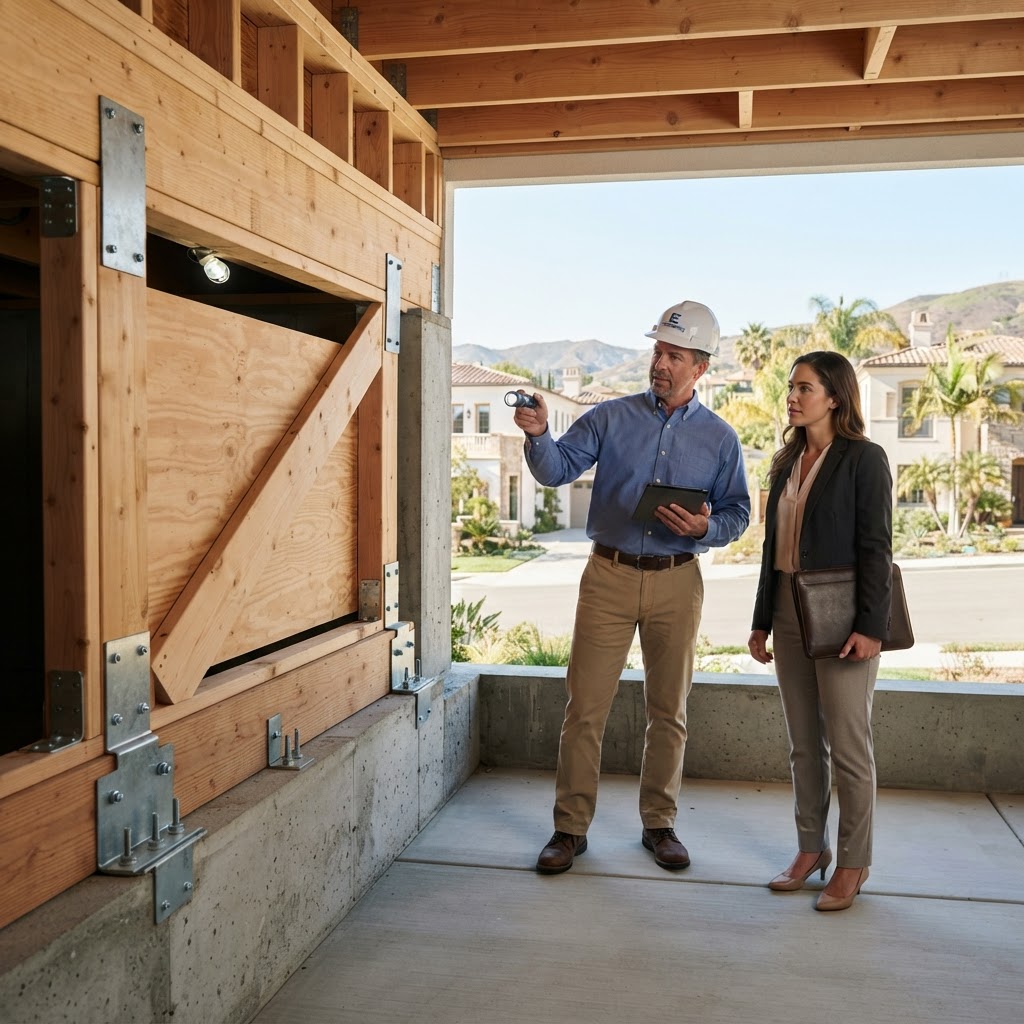
While extreme wildfire seasons and winter deluge hazards dominate recent headlines, an equally severe threat quietly underpins California property markets: seismic vulnerability. According to the California Earthquake Authority (CEA), California accounts for roughly two-thirds of the nation's total earthquake risk. Yet, Department of Insurance figures reveal that barely 10% of residential property owners statewide carry earthquake insurance policies.
The Anatomy of the Coverage Blind Spot
A prevalent misconception among new homebuyers and long-term property investors alike is that standard homeowners insurance covers seismic damage. Conventional HO-3 and HO-5 policies explicitly exclude earth movement, leaving properties exposed to catastrophic loss if a major fault rupture occurs. Spokespersons for the CEA have noted that while property owners acknowledge the broad threat of an earthquake, policy adoption remains low due to perceived deductible hurdles, premium costs, and the psychological recency bias of buyers who never experienced historic seismic events such as Loma Prieta or Northridge.
However, skipping specialized coverage leaves severe equity vulnerability on the table. Without an earthquake policy or dedicated mitigation, property owners carry the full financial burden of foundation failure, building code upgrade costs, and temporary relocation.
Mitigation Before Movement: Retrofits and Value Preservation
Seismic resilience is not solely an insurance question—it is a structural asset protection priority. U.S. Census housing data indicates a vast percentage of California's existing housing stock was built before modern seismic safety codes were enacted around 1980. Homes constructed on raised foundations, cripple walls, or soft-story configurations (such as living areas situated above garages) face elevated risks of sliding or collapsing during moderate to severe shaking.
To safeguard structural equity, homeowners can leverage established state-backed retrofit initiatives:
- Earthquake Brace + Bolt (EBB): Operated through the California Residential Mitigation Program (a joint effort between the CEA and the California Governor’s Office of Emergency Services), this program provides standard grants up to $3,000 for qualifying pre-1980 homes with raised foundations to anchor framing to concrete footings and reinforce cripple walls. Qualifying lower-income households may also access supplemental funds up to $7,000.
- Earthquake Soft-Story (ESS): Designed for homes built prior to 2000 that feature living space over an open lower level or garage, offering retrofit incentives up to $13,000 in eligible zip codes.
- Chimney Reinforcement: The California Seismic Safety Commission strongly recommends bracing or retrofitting unreinforced masonry chimneys, which frequently collapse onto roof framing during moderate ground acceleration.
Beyond life safety, completing certified retrofits unlocks direct ongoing discounts on CEA earthquake policy premiums, directly lowering recurring carrying costs.
Tactical Readiness: State Early Warning and Critical Reserves
Physical fortification must be paired with rapid response planning. In high-density or topographically isolated California neighborhoods, infrastructure failures can disrupt emergency services for days. To construct a complete resilience posture, homeowners and property managers should execute the following protocols:
- Deploy Early Warning Integrations: Enroll all household devices in the USGS ShakeAlert network or state-integrated alert platforms. These systems provide crucial seconds of warning prior to destructive shear wave arrivals, allowing occupants to drop, cover, and turn off natural gas connections.
- Emergency Cash and Communication Reserves: Power outages and cell tower congestions routinely halt ATM and digital point-of-sale systems during a disaster. Maintain physical reserve cash, battery-operated radios, and a pre-assigned out-of-state family communications contact to coordinate after local lines become overwhelmed.
- Seven-Day Off-Grid Provisions: While standard FEMA guidelines frequently cite 72-hour provisions, regional emergency managers urge California households to maintain a minimum of seven to fourteen days of shelf-stable supplies, including one gallon of potable water per person (and pet) per day.
By pairing structural retrofits, targeted insurance coverage, and practical early response protocols, California property owners can effectively protect both home equity and household safety against the state’s most enduring hazard.