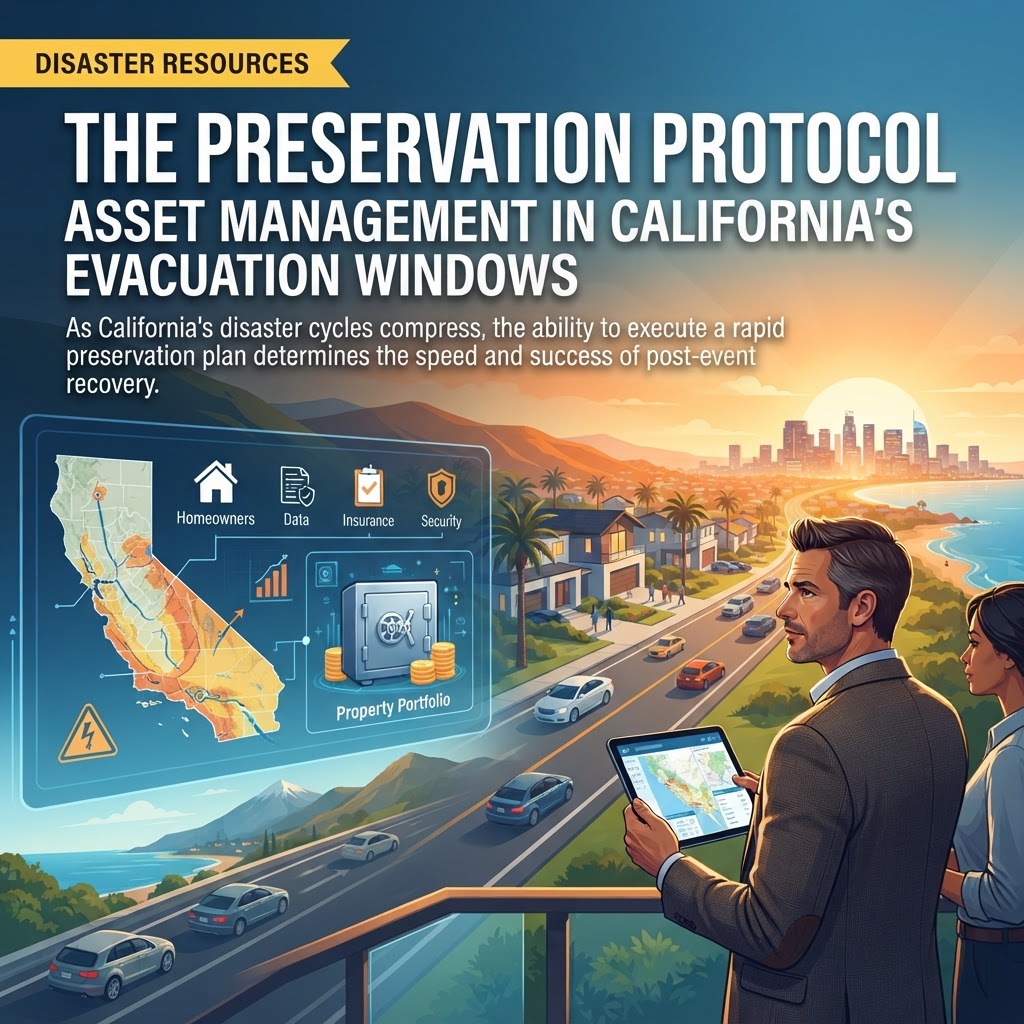
In the current California real estate landscape, disaster preparedness has evolved from a seasonal checklist into a sophisticated operational requirement for homeowners. While structural hardening—addressing embers and defensible space—is the baseline for survival, the "Preservation Protocol" represents the next frontier: the logistical mastery of the 12-to-24-hour window preceding an evacuation. In an era where fire speeds can outpace traditional emergency responses, the ability to protect mobile assets and critical documentation is the primary determinant of a homeowner’s recovery velocity.
The Documentation Gap: Quantifying the Recovery Lag
Data from the Insurance Information Institute (III) suggests that nearly 60% of homeowners do not have a comprehensive, room-by-room visual inventory of their possessions. In California, where total-loss fires are increasingly common, this lack of documentation creates a significant "recovery lag." According to industry analysis, claims supported by high-resolution digital inventories are processed up to 40% faster than those relying on manual recollection.
For the modern homeowner, the Preservation Protocol begins with the Spatial Audit. Utilizing 3D-scanning technology or detailed video walkthroughs, owners must document not just the presence of assets, but their condition and serial markers. This digital twin of the home’s contents serves as the ultimate evidence for adjusters, moving the needle from negotiation to verification.
The Golden Hour: Logistical Staging for Asset Extraction
In California’s high-risk WUI (Wildland-Urban Interface) zones, the transition from an "Evacuation Warning" to an "Evacuation Order" can occur in minutes. The Preservation Protocol prioritizes a tiered extraction strategy:
- Tier 1 (The 10-Minute Exit): Critical identification, medical necessities, and the "Digital Go-Bag" (encrypted hard drives containing deeds, titles, and insurance policies).
- Tier 2 (The 30-Minute Window): High-value portable assets, including fine art, heirlooms, and sensitive electronics that are not easily replicable via cloud storage.
- Tier 3 (The 60-Minute Window): External mitigation, such as clearing combustible patio furniture and sealing attic vents with temporary fire-resistant baffles.
National Association of Realtors (NAR) data indicates that neighborhoods with high rates of emergency preparedness retain their value better post-disaster, as the collective speed of recovery prevents the prolonged “blight phase” often seen in decimated communities.
Infrastructure Resilience: The Role of Smart Detection
Asset preservation is increasingly reliant on early detection systems that bypass traditional human observation. California homeowners are now integrating AI-driven smoke and heat sensors that link directly to local fire authority CAD (Computer-Aided Dispatch) systems. By gaining even a five-minute lead time on an ignition event, the window for successful Tier 1 and Tier 2 extraction expands significantly. Furthermore, property owners who can demonstrate the use of these integrated systems are beginning to see preferential treatment in the surplus lines insurance market, where capacity is tightest.
Practical Takeaways for Homeowners and Investors
The Preservation Checklist
- Execute a Bi-Annual Spatial Audit: Use a smartphone or 3D scanner to document every room, closet, and garage shelf. Store this data in a secure, multi-regional cloud server.
- Define the Extraction Sequence: Create a physical list (taped inside a pantry or utility closet) of exactly which items are to be loaded into vehicles during a Tier 2 window. In high-stress scenarios, cognitive load is high; pre-decided lists save critical minutes.
- Verify the "Hard Assets" Chain of Custody: Ensure that physical titles, deeds, and estate documents are stored in a fire-rated safe (rated for at least 1,700°F for one hour) or, preferably, off-site in a low-risk zone.
- Coordinate Mutual Aid: Establish a "Neighborhood Extraction Pact." If one neighbor is home during a warning and another is not, the protocol should include pre-authorized access to move vehicles or high-value exterior assets to safer staging areas.
The Macro Impact: Recovery as a Value Guard
The ultimate goal of the Preservation Protocol is to maintain the homeowner’s financial liquidity. A rapid insurance payout, facilitated by immaculate documentation and successful asset extraction, allows the homeowner to secure rebuilding contractors and materials before the inevitable post-disaster demand surge. In the California market, where construction costs can jump 20-30% following a regional disaster, being first in the recovery queue is not just a matter of convenience—it is a critical preservation of equity.