The Shift from Physical to Informational Resilience
For the modern California homeowner, disaster preparedness has traditionally focused on the physical: seismic retrofitting, clearing defensible space, and installing ember-resistant vents. However, as the state's insurance market remains in a state of flux—with major carriers like State Farm and Allstate restricting new policies—a new pillar of resilience has emerged. This is the 'Asset Information Layer,' a comprehensive, verifiable digital record of a property’s condition and mitigation efforts. In an era where 60% of American homes are underinsured by an average of 20%, according to APCIA data, the ability to provide granular data is the difference between full recovery and a permanent loss of equity.
The Documentation Deficit in High-Risk Zones
In the aftermath of California’s historic wildfires, a recurring bottleneck in the recovery process has been the verification of high-value improvements. Standard homeowners' policies often rely on 'replacement cost' estimations that fail to account for the 25-40% surge in localized construction labor costs following a disaster. For owners in WUI (Wildland-Urban Interface) zones, simply having a policy is no longer sufficient. You must possess a 'Digital Twin' of the asset. Utilizing 3D-scanning technology or high-fidelity photographic audits allows owners to prove the existence of premium materials and structural upgrades that generic algorithms might overlook during the claims process.
Quantifying the Value of Mitigation
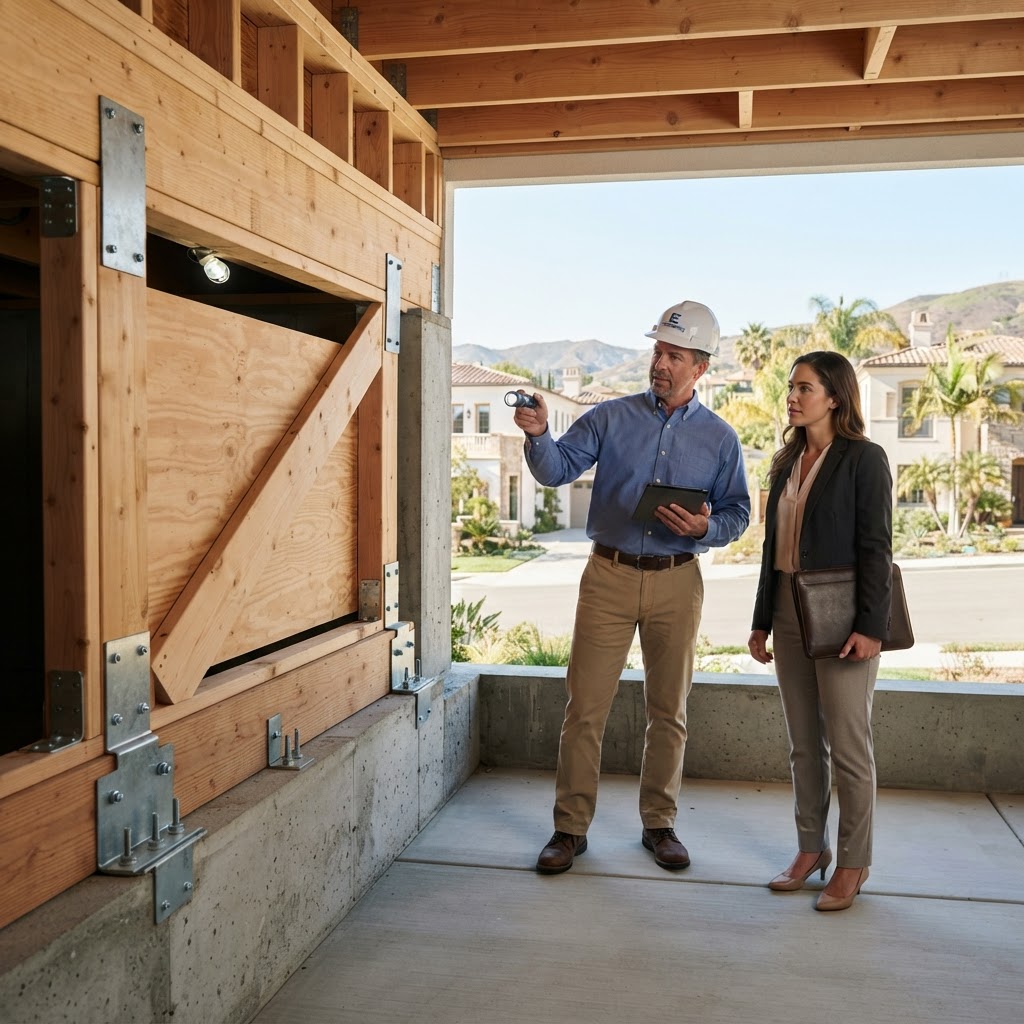
Resilience is now a measurable component of property valuation. The California Earthquake Authority (CEA) offers premium discounts of up to 25% for older homes that have been properly retrofitted. Similarly, under the 'Protecting Our Communities' framework, homeowners who can provide certified proof of 'Home Hardening'—such as Class A fire-rated roofs and multi-pane tempered glass—are increasingly positioned to access the California FAIR Plan’s preferred tiering or specialized secondary markets. Data from the National Association of Realtors (NAR) suggests that homes with documented resilience features maintain higher appraisal stability in high-risk zip codes compared to undocumented peers.
Strategic Action Plan for the California Homeowner
To bridge the gap between physical safety and financial recovery, homeowners and investors should implement the following protocols:
- Execute a Bi-Annual Digital Audit: Conduct a room-by-room video walkthrough every six months, specifically documenting high-end finishes, mechanical systems, and recent upgrades. Store these files in redundant, decentralized cloud locations.
- Secure a Certified Defensible Space Inspection: Do not wait for a sale to seek a CAL FIRE or local fire department inspection. Maintaining a rolling file of compliance certificates (specifically AB 38 documentation) serves as a 'risk-mitigation resume' for future insurers.
- Inventory the 'Hardening' Specs: Maintain a dedicated folder for all receipts, contractor licenses, and material specifications related to fire-resistant or seismic-grade renovations. This documentation is vital for challenging low-ball insurance adjusters.
- Map the Recovery Ecosystem: Identify the nearest 'Local Assistance Centers' (LACs) pre-designated by the California Governor’s Office of Emergency Services (Cal OES). Knowing the administrative landscape before a Red Flag Warning is issued reduces the 'Time-to-Liquidity' post-event.
The New Standard of Ownership
Preparedness in California has evolved into a sophisticated exercise in data management. By treating property documentation as a live asset rather than a static file, homeowners can mitigate the structural and financial risks inherent in the Golden State. In a market where 'uninsurable' is becoming a common descriptor, the most resilient owners are those who can prove their property’s worth through rigorous, verifiable data.