As of May 2026, the California real estate market has integrated climate risk into nearly every facet of valuation. While much has been written about structural hardening and community-level resilience, a critical gap remains in individual homeowner readiness: the Portability Protocol. In an era where atmospheric rivers and wildfire seasons overlap, the ability to translate physical property into a portable digital asset is the primary factor determining the speed of financial recovery.
The 2026 Digital Documentation Standard
Data from the California Department of Insurance (CDI) indicates that homeowners who maintain a cloud-synchronized, high-resolution digital inventory of their property see insurance claim settlements processed up to 40% faster than those relying on manual post-disaster assessments. In 2026, 'disaster preparedness' has moved beyond the go-bag to include 'Digital Twins'—a comprehensive photo and video record of every structural element, appliance serial number, and finish grade within the home.
For investors and homeowners alike, this documentation serves as a financial hedge. With California's average home price hovering near $900,000, a 10% discrepancy in a claim due to lack of evidence represents a $90,000 loss in equity. Utilizing blockchain-based timestamping for these inventories is becoming a recommended practice for high-value assets in the Sierra Foothills and WUI (Wildland-Urban Interface) zones.
Navigating the Sustainable Insurance Strategy
The 2026 implementation of the California Sustainable Insurance Strategy has stabilized the market, but it requires homeowners to be proactive. Under current regulations, insurers are offering 'Recapture Credits' for properties that meet the Insurance Institute for Business & Home Safety (IBHS) Wildfire Prepared Home Plus standards.
Preparedness now requires a dual-track approach:
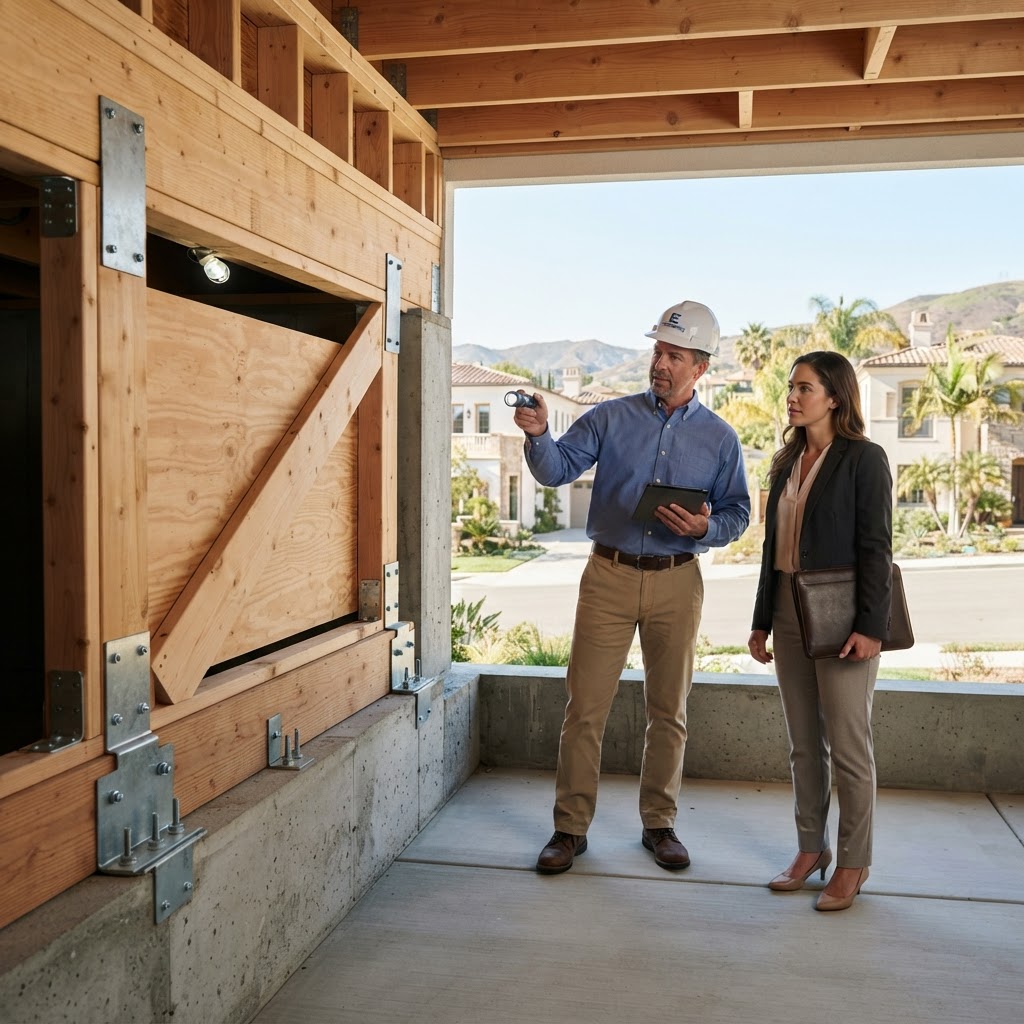
- Physical Mitigation: Maintaining the five-foot non-combustible zone and ember-resistant venting.
- Policy Portability: Ensuring digital access to the Declaration Page, the California FAIR Plan supplemental 'Difference in Conditions' (DIC) policy, and contact information for the assigned adjuster.
The Mobility of Essential Records
Disaster preparedness in 2026 is often a race against time. The 'Portability Protocol' emphasizes that the legal identity of the home must be as mobile as the occupants. This includes digitized, encrypted copies of:
- Grant deeds and recent property tax assessments.
- Trust documents and power of attorney.
- Detailed receipts for recent 'hardening' upgrades (e.g., Class A roofing, seismic retrofitting) which bolster replacement cost arguments.
Practical Takeaways for the 2026 Homeowner
To safeguard your investment against California’s specific risk profile, execute the following actions immediately:
- Conduct a Bi-Annual Digital Audit: Use a 3D scanning app to create a walkthrough of the property every six months, specifically after any renovation or high-value purchase.
- Verify 'Loss of Use' Coverage: Given the 2026 construction labor shortages, ensure your policy provides at least 24 months of 'Loss of Use' coverage to account for extended rebuilding timelines in disaster-impacted zones.
- Sync with the Response Interface: Register your property with local 'Opt-In' emergency management databases that allow first responders to see if your home has specific hazards (e.g., solar battery storage or onsite fuel) or accessibility needs.
- Hard-Copy Redundancy: While digital is primary, keep a 'Legacy Folder' in a fireproof, waterproof portable safe containing original wet-signature documents that are often required for federal disaster assistance (FEMA) applications.
Ultimately, resilience in the California market is no longer just about standing your ground; it is about the fluidity of your information. By treating your home’s data with the same defensive posture as its physical perimeter, you ensure that even if the structure is compromised, your equity remains intact.