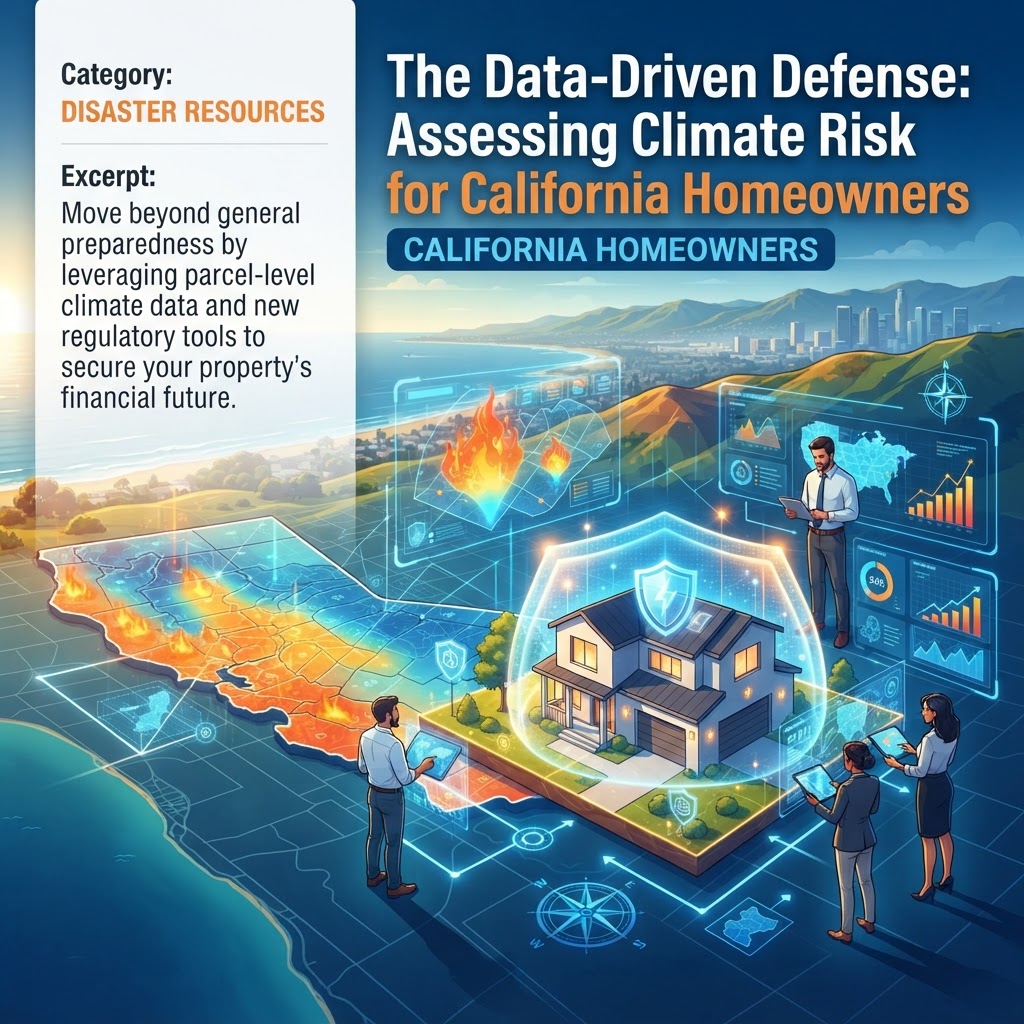
Beyond the Burn: The Rise of Hydrological Risk
For the past decade, California’s disaster preparedness discourse has been dominated by wildfire hardening. However, as of May 2026, a shift in the state’s climate profile—marked by increasingly volatile atmospheric river cycles—has introduced a secondary, often more complex threat to property values: hydrological instability. Data from the 2025 California Department of Water Resources report indicates that nearly 25% of the state's residential parcels now face a 'high' or 'extreme' risk of localized flooding or slope failure, many of which fall outside traditional FEMA-designated Special Flood Hazard Areas (SFHAs).
For homeowners and investors, this requires a pivot from fire-centric mitigation to an all-hazards approach that prioritizes water management and soil integrity. In a market where buyers are increasingly scrutinizing 'CLUE' (Comprehensive Loss Underwriting Exchange) reports, unaddressed water risk is becoming a significant drag on liquidity and valuation.
The Insurance Gap: Addressing the Landslide Exclusion
One of the most critical risks in 2026 is the widening gap between perceived and actual coverage. While the California FAIR Plan provides a safety net for fire, it offers no protection against water damage or earth movement. Standard ISO homeowners policies (HO-3 or HO-5) explicitly exclude 'earth movement,' a category that encompasses landslides, mudflows, and subsidence—the primary risks following heavy precipitation on fire-scarred terrain.
According to recent analysis by the Insurance Information Institute, less than 12% of California homeowners currently carry a private flood endorsement or a Difference in Conditions (DIC) policy. Without these, a homeowner is essentially self-insuring against the state’s most frequent disaster type. In high-value coastal and hillside markets like Malibu, the Santa Cruz Mountains, and the Sierra Foothills, the absence of earth movement coverage is increasingly viewed by lenders as a high-risk exposure, potentially complicating refinancing and sales.
Precision Mitigation: Engineering for Resilience
Physical resilience in 2026 has moved beyond clearing brush. Property owners must now consider the 'Geotechnical Footprint' of their holdings. Practical, high-impact mitigation strategies include:
- Subsurface Drainage Systems: Transitioning from surface-level gutters to engineered French drains and catch basins that direct water away from foundation piers and sensitive slopes.
- Hydro-Seeding and Soil Stabilization: Utilizing native, deep-rooted vegetation combined with biodegradable erosion control blankets to secure topsoil on gradients exceeding 15 degrees.
- Hardscape Permeability: Replacing traditional concrete driveways with permeable pavers to reduce runoff velocity and promote groundwater recharge, preventing 'urban flooding' scenarios.
Strategic Takeaways for Property Owners
To maintain market competitiveness and operational continuity, California homeowners should execute the following actions:
1. Order a Hydrological Audit
Engage a civil engineer or a specialized environmental consultant to perform a site-specific water flow analysis. Identifying 'bottlenecks' in property drainage before the autumn rainy season can prevent catastrophic foundation shifts.
2. Diversify the Insurance Stack
Move beyond the fire-and-liability mindset. Investigate surplus lines carriers for DIC policies that include landslide and mudflow coverage. Even if a property is not in a FEMA zone, private flood insurance is often a cost-effective hedge against increasingly common 'pluvial' (rain-driven) flooding.
3. Document Infrastructure Upgrades
Ensure all drainage and slope stabilization work is permitted and documented with high-resolution photography. In the 2026 market, providing a 'Resilience Dossier' to prospective buyers can justify a premium by lowering their future cost of ownership and insurance friction.
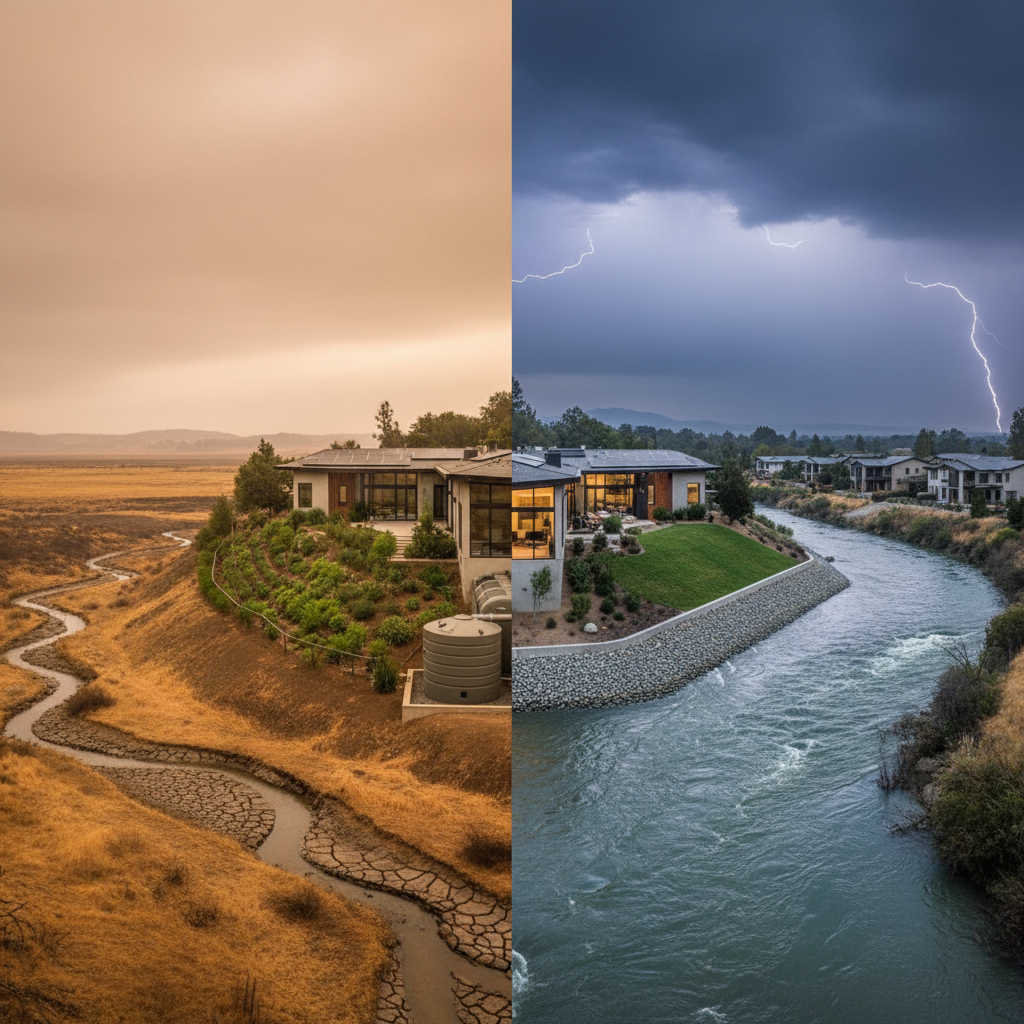
As California’s environment becomes more binary—swinging between extreme drought and extreme precipitation—the definition of a 'safe' asset is changing. Homeowners who proactively manage the hydrological integrity of their land will be best positioned to preserve equity in an era of climate-driven market volatility.