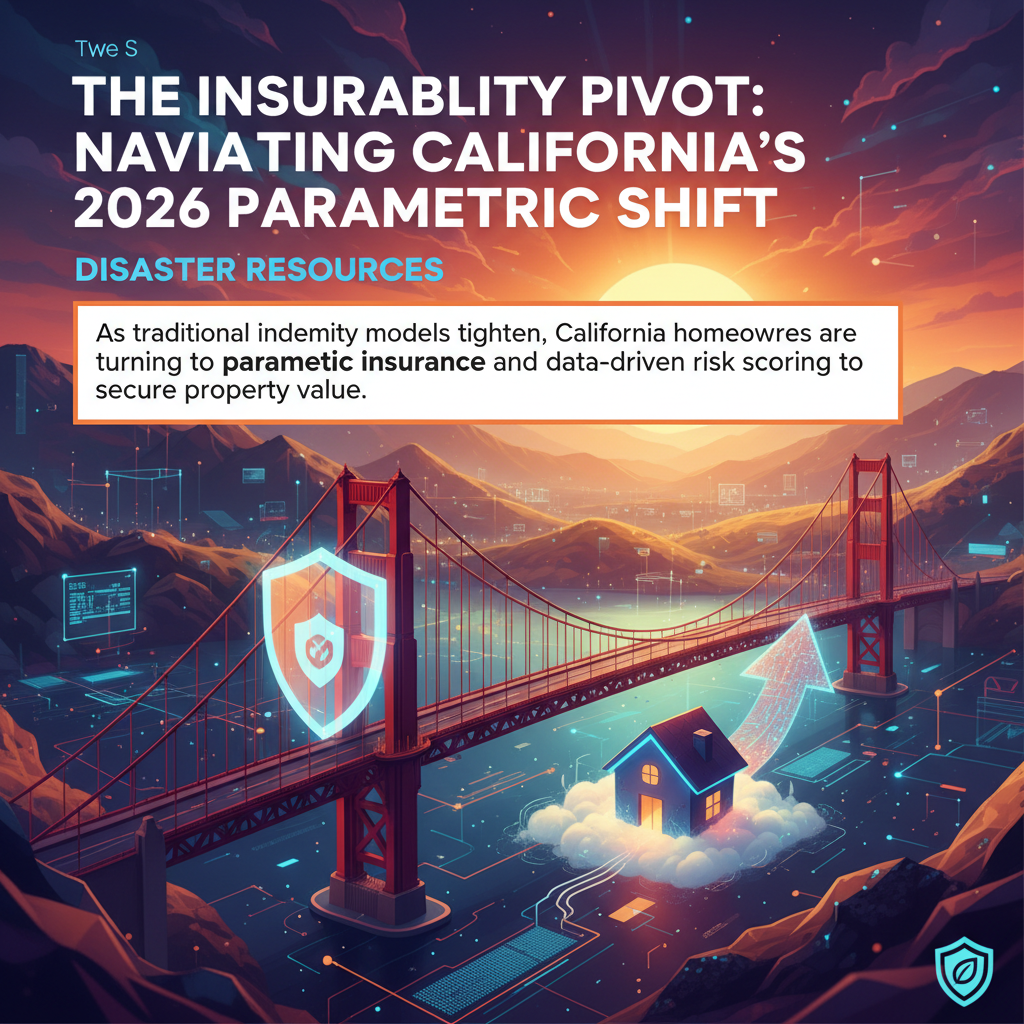
Beyond the FAIR Plan: The New Reality of California Risk
In May 2026, the California real estate landscape is no longer defined solely by coastal views or school districts, but by a property’s ‘insurability score.’ With the California FAIR Plan’s enrollment reaching historic highs—surpassing 450,000 policies according to recent Department of Insurance data—the traditional insurance market has undergone a fundamental transformation. For homeowners, the challenge is no longer just mitigating physical damage, but managing the financial volatility of climate-linked assets.
The Rise of Parametric Insurance Models
A significant shift in 2026 is the adoption of parametric insurance as a supplement to, or replacement for, traditional indemnity coverage. Unlike standard policies that pay out based on an assessment of physical damage, parametric policies trigger automatic payments based on specific event parameters, such as a 6.0 magnitude earthquake within a 10-mile radius or a wildfire reaching a predetermined GPS boundary.
According to 2025 NAR research, properties with integrated parametric layers see a 12% faster recovery time post-disaster because liquidity is delivered within days, not months. This 'speed-to-capital' is becoming a critical metric for California investors looking to protect their internal rate of return (IRR) in high-risk zones like the Wildland-Urban Interface (WUI).
Data-Driven Underwriting and the 'Resilience Score'
Institutional lenders and insurers are now utilizing high-resolution satellite imagery and AI-driven hyper-local modeling. In 2026, a homeowner’s premium is increasingly tied to a ‘Resilience Score.’ Data from firms like ZestyAI and Kettle suggest that homes following the 'Wildfire Prepared Home' standards—developed by the Insurance Institute for Business & Home Safety (IBHS)—can see insurance credits of up to 15% in the voluntary market.
These standards involve rigorous 0-5 foot non-combustible zones and specific vent upgrades that prevent ember ignition. For sellers, documenting these upgrades is no longer optional; it is a vital part of the disclosure package to ensure the buyer can secure a mortgage.
Actionable Strategies for the 2026 Homeowner
To maintain property liquidity and minimize risk, homeowners and buyers should implement the following protocols:
- Audit the Risk Geometry: Use the latest 2026 state-validated risk mapping tools to identify if your property has moved into a high-risk ‘convective storm’ or ‘extreme heat’ zone, which are the newest factors influencing California underwriting.
- Secure a 'Hardening Certification': Engage a certified inspector to validate that your home meets the updated 2025 CA Building Code standards for retrofitting. This certificate should be kept in a digital vault for both insurers and future buyers.
- Diversify Coverage Layers: If trapped on the FAIR Plan, explore 'Difference in Conditions' (DIC) policies to cover theft, liability, and water damage, which the FAIR Plan excludes.
- Monitor the Community Wildfire Protection Plan (CWPP): Ensure your municipality’s CWPP is updated. Underwriters in 2026 are granting lower premiums to homes in communities with active, funded mitigation programs compared to isolated 'hardened' homes.
The Future of Equity Protection
Disaster preparedness in California has evolved from a survivalist endeavor into a sophisticated financial strategy. As we move through the 2026 fire season, the homeowners who successfully preserve their equity will be those who treat resilience as a continuous administrative and structural audit. By aligning property improvements with the specific data points used by modern underwriters, California residents can stabilize their housing costs and ensure their assets remain viable in a tightening global reinsurance market.