The Shift Toward Energy Autonomy
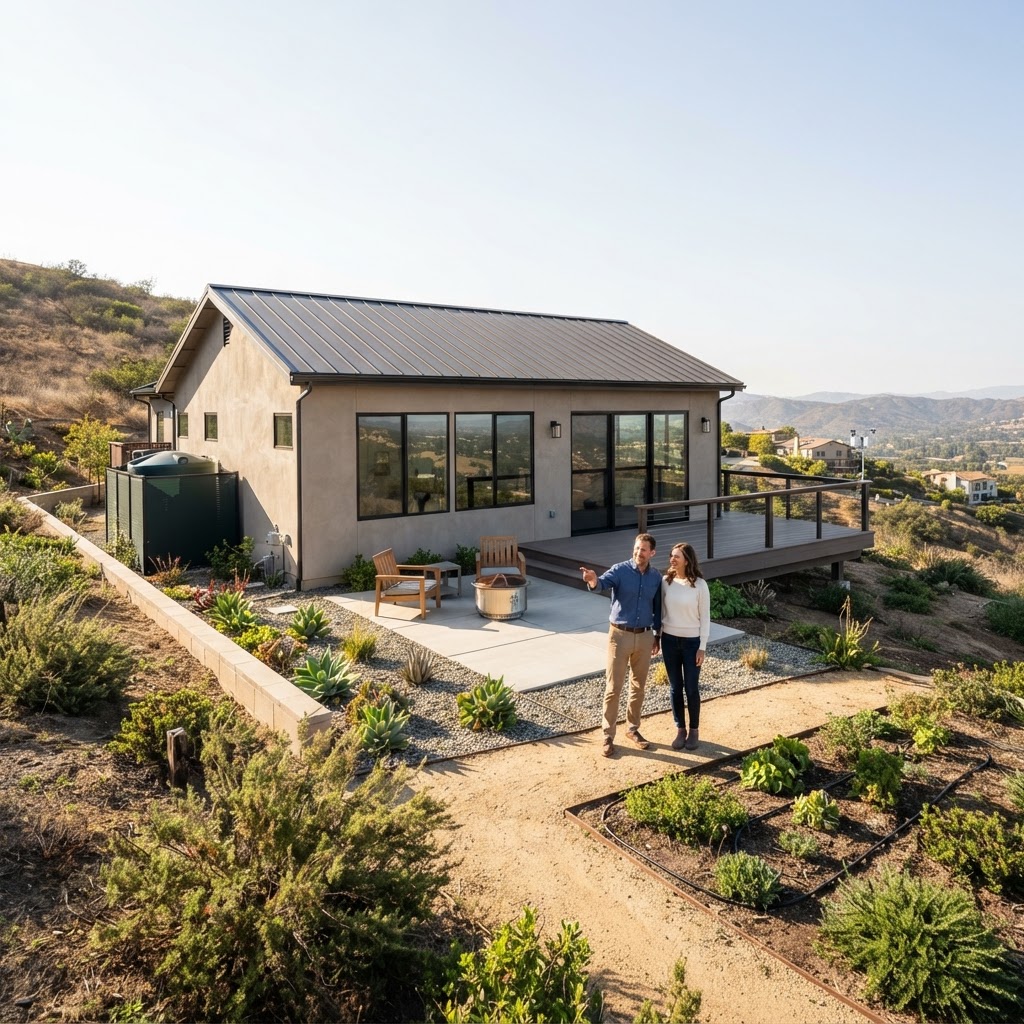
As of April 2026, California’s homeowners face a dual threat: the physical risk of wildfires and the operational risk of a fragile electrical grid. While previous resilience strategies focused heavily on exterior hardening (such as ember-resistant vents and defensible space), the current market has shifted toward 'Energy Islanding.' This refers to a property’s ability to disconnect from the main utility grid and operate independently during Public Safety Power Shutoffs (PSPS) or post-disaster recovery periods.
The Data Behind the Demand
Data from the California Public Utilities Commission (CPUC) indicates that PSPS events have increased in frequency by 18% over the last 24 months as utilities struggle with aging infrastructure and extreme weather. Simultaneously, a 2025 National Association of Realtors (NAR) Green Resource Council report found that California homes equipped with 'comprehensive energy resilience packages'—defined as solar coupled with at least 20kWh of battery storage—command a 4.2% price premium over non-equipped counterparts in high-fire-risk zones. For an average $800,000 home, that equates to over $33,000 in retained equity.
Building the Energy Island
Achieving true resilience in 2026 requires more than a standard solar array, which typically shuts down during a grid failure for safety. Homeowners are now implementing a three-tier resilience hierarchy:
- Advanced Battery Storage: Moving beyond backup to 'load shifting,' where batteries power the home during peak rate hours and provide 72+ hours of emergency life-safety power.
- V2H (Vehicle-to-Home) Integration: With California's EV mandate nearing, the 2026 market sees homeowners using their electric vehicles as mobile power plants, capable of powering a standard home for up to five days.
- Automated Load Shedding: Smart panels that automatically prioritize essential circuits (refrigeration, medical devices, well pumps) while shedding non-essential loads (HVAC, laundry) during a disaster.
The Financial and Insurance Intersection
While the California FAIR Plan remains the insurer of last resort for many, private 'surplus lines' insurers are beginning to offer credits for energy-autonomous homes. These insurers view energy independence as a mitigation factor that prevents secondary losses, such as food spoilage or frozen pipes during winter outages in the Sierras. Furthermore, the 2026 federal tax landscape continues to support these upgrades through the expanded Residential Clean Energy Credit, allowing homeowners to offset 30% of the cost of battery systems even if they are not connected to new solar installs.
Practical Takeaways for Homeowners
For those looking to secure their property’s future, the following steps are recommended: First, conduct an energy audit specifically focused on 'islanded' performance rather than just monthly savings. Second, when listing a home, ensure that the battery cycle life and storage capacity are documented in the MLS 'Green Features' fields to capture the resilience premium. Finally, investigate local Micro-grid Incentives; several Northern California counties now offer property tax abatements for homes that can serve as neighborhood 'charging hubs' during regional emergencies.