The Shift from Passive to Active Resilience
For decades, California disaster preparedness focused on the structural integrity of the home—reinforcing roofs against embers or retrofitting foundations for seismic shifts. However, as of April 2026, a new pillar of resilience has emerged: Operational Autonomy. With Public Safety Power Shutoffs (PSPS) now a multi-seasonal reality and the state's aging grid struggling under the load of total electrification, the ability to decouple from the utility provider during a disaster is no longer a luxury; it is a critical asset for property preservation.
The Grid Reliability Gap
Data from the California Public Utilities Commission (CPUC) through the end of 2025 indicates that while wildfire-related outages have become more targeted, the duration of these outages has increased in high-fire-threat districts (HFTD). For homeowners, a prolonged power loss is more than an inconvenience; it represents a failure of critical systems, including electric well pumps, smart home security, and temperature-controlled medical storage. According to recent 2026 market analysis from the National Association of Realtors (NAR), California homes equipped with a 'seamless islanding' capability now command a 4.5% price premium over comparable properties with standard solar installations.
Technological Pillars of Autonomy
Modern disaster readiness in the Golden State now centers on three technological advancements that ensure a home remains functional when the neighborhood goes dark:
- Vehicle-to-Home (V2H) Integration: By 2026, nearly 60% of new EVs sold in California support bidirectional charging. A fully charged EV can power an average California home for three to five days, serving as a massive mobile battery during regional disasters.
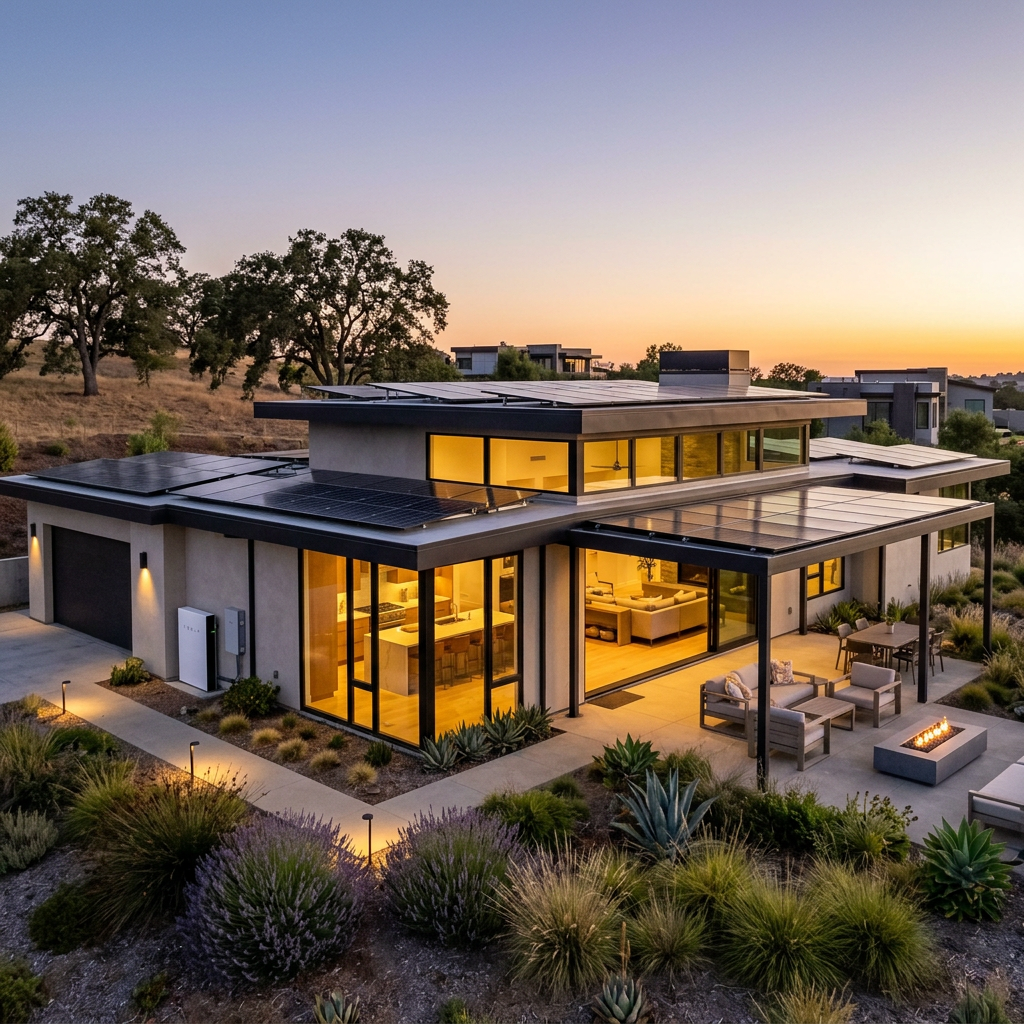
- Smart Microgrids: Unlike traditional grid-tied solar, which shuts off during a blackout for safety reasons, hybrid inverters with 'islanding' technology allow a home to safely disconnect and operate independently using local generation.
- BTM (Behind-the-Meter) Thermal Management: High-efficiency heat pump systems paired with localized storage allow homeowners to maintain survivable temperatures during extreme heatwaves or winter storms without relying on the external energy delivery system.
Investment and Practical Implementation
For homeowners and investors looking to bolster resilience, the transition to operational autonomy requires a strategic approach. Recent updates to Title 24 have streamlined the permitting process for integrated storage, but the ROI is most significant when these systems are treated as an insurance policy against displacement.
Practical Takeaways for 2026:
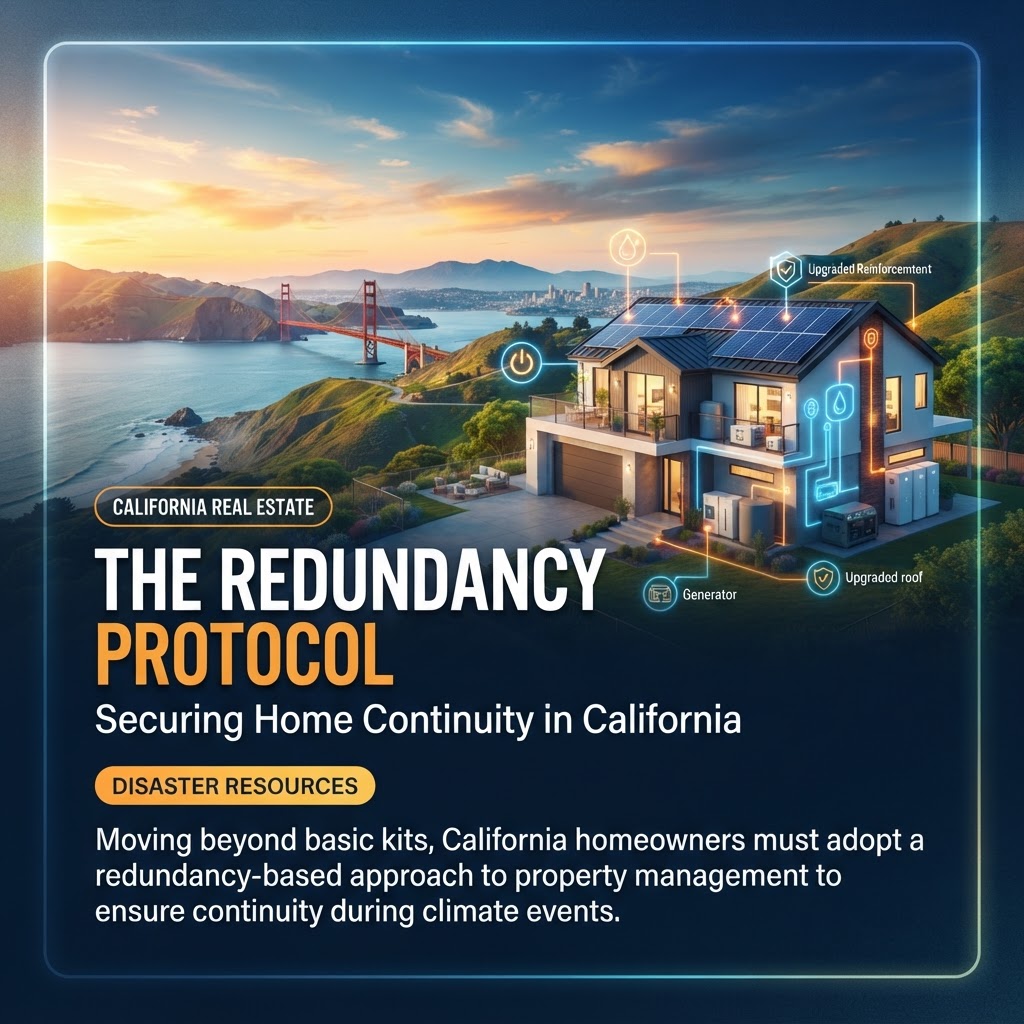
- Audit the Inverter: Standard solar arrays do not provide power during a grid failure. Homeowners should upgrade to a hybrid or grid-forming inverter to enable islanding.
- Leverage V2H: When purchasing an EV, ensure both the vehicle and the charging station are ISO 15118-20 compliant to allow for bidirectional power flow during emergencies.
- Prioritize Critical Loads: Instead of attempting to power the entire estate, wire a 'critical load panel' that keeps essential systems—refrigeration, communications, and medical devices—running indefinitely on battery and solar.
As we navigate the complexities of the 2026 real estate market, the definition of a 'safe' home has expanded. It is no longer just about standing strong against the elements; it is about staying powered when the rest of the world goes quiet.