The Yield-Spread Divergence: Why Mortgage Rates Are Decoupling from Expectations
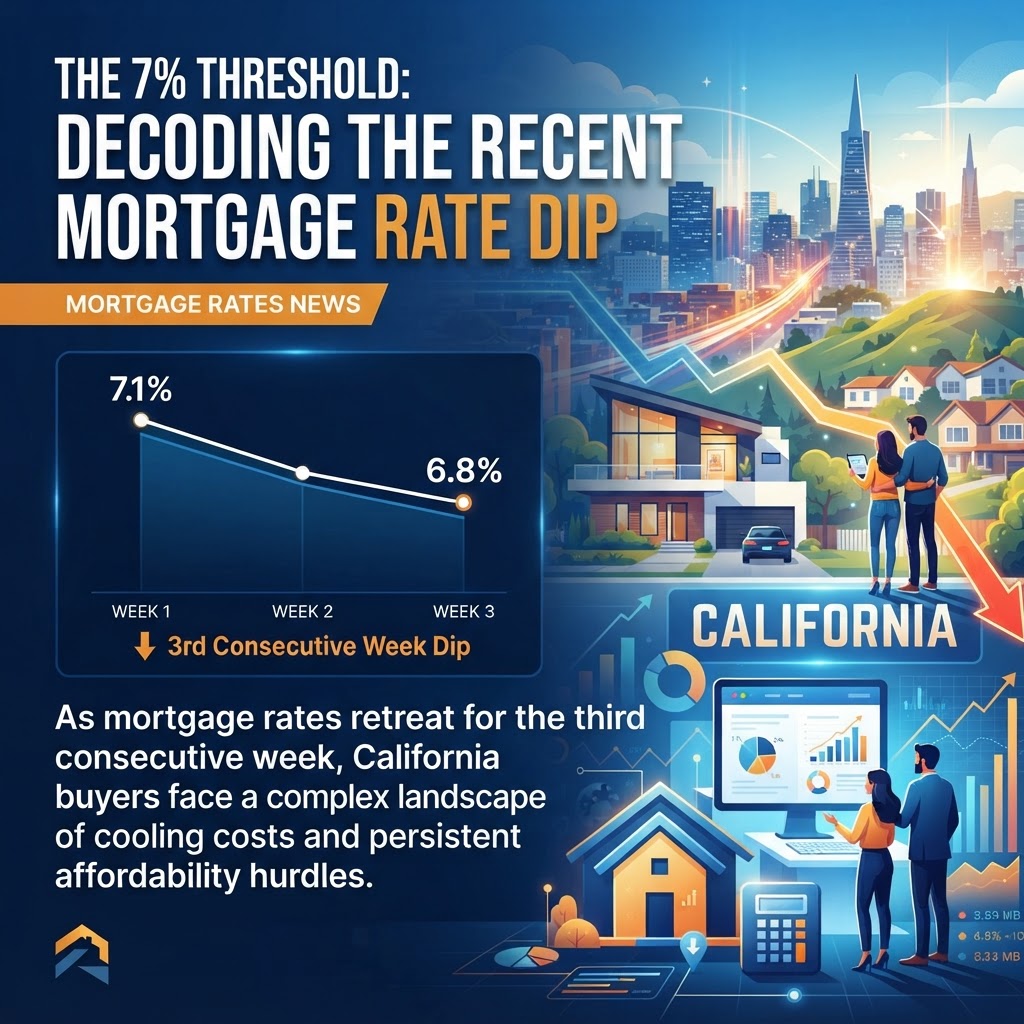
As of November 5, 2026, the 30-year fixed-rate mortgage averaged 7.18%, marking a third consecutive week of decline from the 7.24% observed in late October [1], [7]. While this downward trajectory offers a slight reprieve for prospective homeowners, the current environment is defined less by the headline rate and more by the widening gap between Treasury yields and mortgage pricing.
The Mortgage Spread Challenge
Historically, mortgage rates track closely with the 10-year Treasury yield. However, recent market data indicates that mortgage spreads—the difference between the yield on government bonds and the interest rates offered to consumers—remain elevated [2]. For California buyers, this means that even if broader economic indicators suggest rates should fall further, the actual cost of borrowing remains sticky due to lender risk premiums and market volatility [4].
Implications for the California Market
In high-cost states like California, where the conforming loan limit sits at $832,750, the persistence of rates above 7% creates a unique pressure point for buyers [4], [8]. Unlike markets with lower price points, California buyers are frequently pushed into the 'jumbo' loan category, where rates often carry an additional premium compared to standard conforming loans [3], [5].
Practical Takeaways for Buyers and Investors:
- Monitor the Spread, Not Just the Fed: Don't rely solely on Federal Reserve policy announcements. Watch the mortgage-backed securities (MBS) market, as this is where the actual 'spread' is determined. If spreads tighten, you may see lower rates even if the Fed holds steady.
- Evaluate ARM Alternatives: With 30-year fixed rates hovering near 7%, some buyers are revisiting adjustable-rate mortgages (ARMs). While they carry more risk, they can offer a lower initial interest rate, which may be a strategic bridge for those planning to refinance within 3-5 years [8].
- Focus on Loan-to-Value (LTV) Ratios: Because lenders are sensitive to risk, maintaining a strong credit profile and a down payment of at least 20% remains the most effective way to secure the best available pricing, potentially offsetting the impact of current market spreads [7].
While the recent dip provides a window of opportunity, experts suggest that rates are likely to remain elevated throughout 2027 [4]. California buyers should prioritize long-term affordability over timing the bottom of the rate cycle, focusing on properties that align with their financial capacity under current, higher-for-longer interest rate conditions.