The Inventory-Rate Paradox: Why California Sellers Are Holding the Cards
As of early November 2026, the California housing market remains locked in a complex equilibrium. While national mortgage rates have seen minor fluctuations—averaging around 7.08% to 7.26% for a 30-year fixed loan—the state’s unique landscape continues to defy simple predictions of a price collapse. According to the California Association of Realtors (C.A.R.), housing affordability has held steady at 19% throughout the third quarter, as a 2.3% dip in median home prices to $894,630 has acted as a buffer against rising borrowing costs.
The Supply-Side Standoff
The current market is characterized by a distinct lack of inventory, which prevents the price corrections many buyers anticipated. In markets like Sacramento, where price cuts are becoming more frequent, sellers are still finding leverage because the total volume of available homes remains historically low. For buyers, this means that while the 'sticker shock' of a 7% interest rate is real, the competition for well-priced, move-in-ready homes remains fierce.
Strategic Shifts for California Buyers
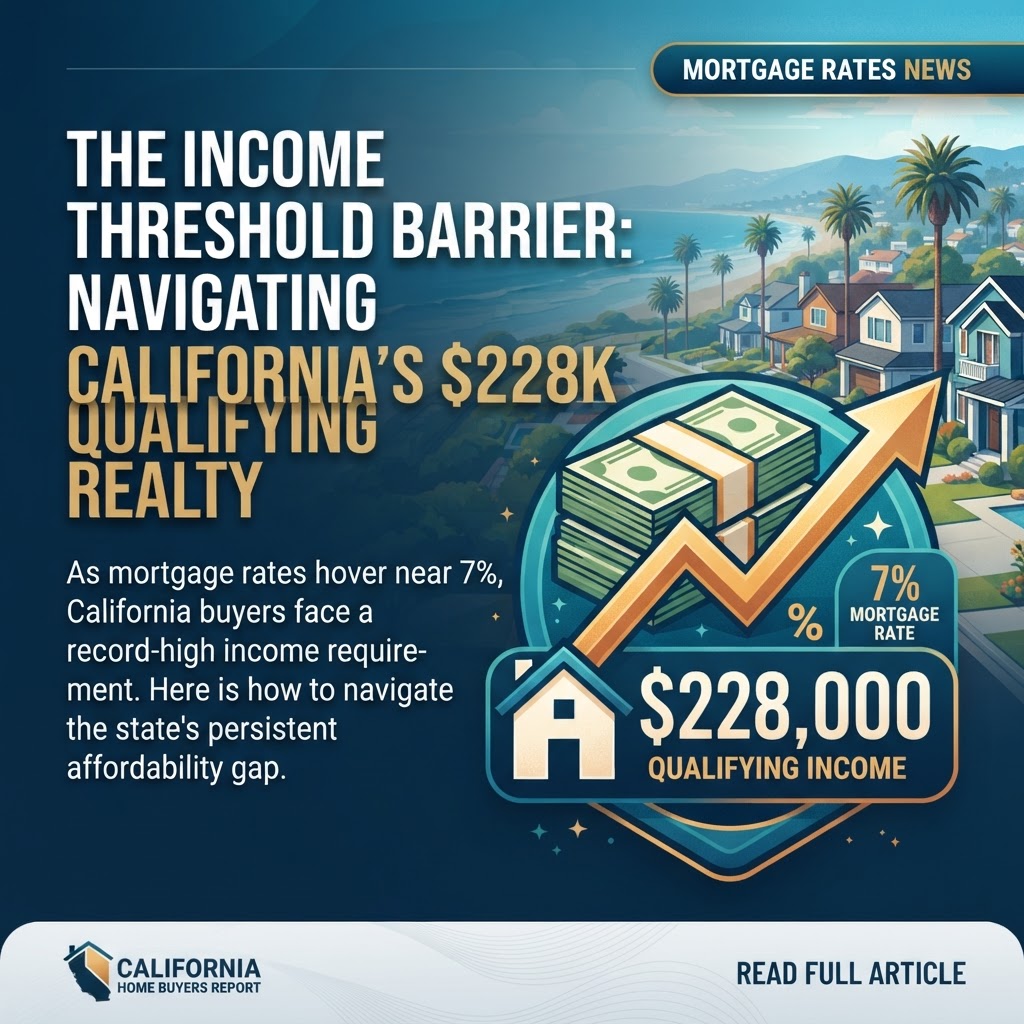
With the minimum qualifying income for a median-priced California home sitting at approximately $228,000, prospective buyers are increasingly looking beyond traditional 30-year fixed products. Data from NerdWallet indicates that 7-year and 10-year adjustable-rate mortgages (ARMs) are gaining traction as buyers seek to lower their initial monthly payments in an environment where inflation remains a persistent 3.7%.
Practical Takeaways for Market Participants:
- Prioritize Rate-Lock Timing: With upcoming economic reports, including October jobs data and the Consumer Price Index, volatility is expected. Buyers should work with lenders to secure rate locks early in the escrow process to mitigate the risk of sudden spikes.
- Geographic Arbitrage: The income required to purchase a median home varies wildly across the state. While San Francisco requires an income threshold exceeding $311,000, markets like Fresno offer a significantly lower barrier to entry, often requiring closer to $118,000.
- Focus on Total Cost of Ownership: Given that California’s average monthly housing cost is more than double the national average, buyers should look for properties with lower property tax burdens or those in areas where price reductions are trending, such as Sacramento, to negotiate better terms.
The Outlook
Experts remain divided on the immediate trajectory of rates, with a 50% consensus in recent polls suggesting a potential downward trend in the coming week. However, the broader economic reality—marked by geopolitical tensions and inflation—suggests that rates are unlikely to return to the lows of previous years. For California, the path forward is not defined by a crash, but by a slow, grinding adjustment where inventory levels will ultimately dictate the pace of the market more than interest rates alone.