The 7% Threshold: Decoding the Recent Mortgage Rate Dip
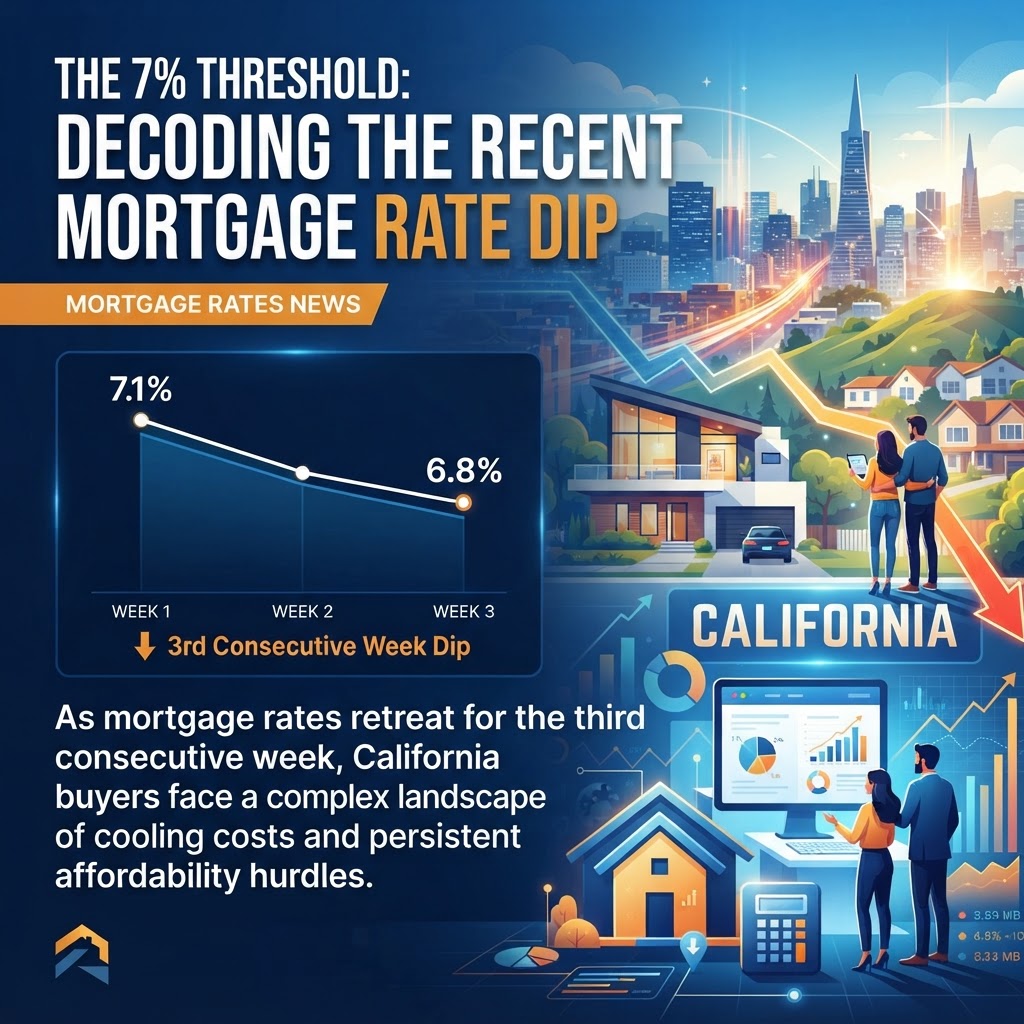
For the third consecutive week, prospective homebuyers have seen a glimmer of relief as mortgage rates continue a modest downward trajectory. According to the latest data from Freddie Mac, the average 30-year fixed-rate mortgage has declined to 7.18%, down from 7.24% the previous week. While this movement is a welcome departure from the upward pressure seen earlier this year, the broader context remains challenging for those navigating the California market.
Understanding the Current Rate Environment
The recent cooling in rates is largely tied to the performance of the 10-year Treasury yield, which serves as a primary benchmark for mortgage pricing. After a period of volatility driven by geopolitical tensions and inflationary concerns, the market is beginning to find a new equilibrium. However, it is important to note that today's rates remain significantly higher than the 6.22% average observed at this time last year, keeping the cost of borrowing elevated for the average consumer.
Implications for California Home Buyers
In California, where the median price for an existing single-family home sits near $894,630, even minor fluctuations in interest rates have outsized impacts on monthly payments. Recent reports indicate that the state's housing affordability index remains stuck at 19%, meaning only a small fraction of households can comfortably qualify for a median-priced home. With the minimum qualifying income hovering above $228,000, the recent dip in rates provides a necessary, albeit small, buffer against the high cost of entry.
Practical Takeaways for Market Participants
- Monitor the 10-Year Treasury: Because mortgage rates are highly sensitive to bond market fluctuations, tracking the 10-year Treasury yield can provide a leading indicator of where rates may head in the coming weeks.
- Focus on Total Monthly Cost: Rather than fixating solely on the interest rate, buyers should calculate the total monthly payment—including property taxes, insurance, and potential HOA fees—to ensure the purchase remains sustainable within their specific budget.
- Leverage Professional Guidance: Given the complexity of the current lending environment, working with a loan officer to explore various loan products, including ARMs or down payment assistance programs, can help bridge the affordability gap that many Californians face.
- Prepare for Competitive Micro-Markets: While the national trend shows a slight easing of rates, local inventory levels in California remain tight. Buyers should be prepared to act quickly if they find a property that fits their financial criteria, as lower rates often draw more participants back into the active buyer pool.
While the current downward trend in mortgage rates is a positive development, it is not a panacea for the state's affordability crisis. Buyers should view this period as an opportunity to re-evaluate their financial readiness and stay informed as the market continues to adjust to shifting economic signals.