Beyond Residential: The New Frontier of Adaptive Reuse in California
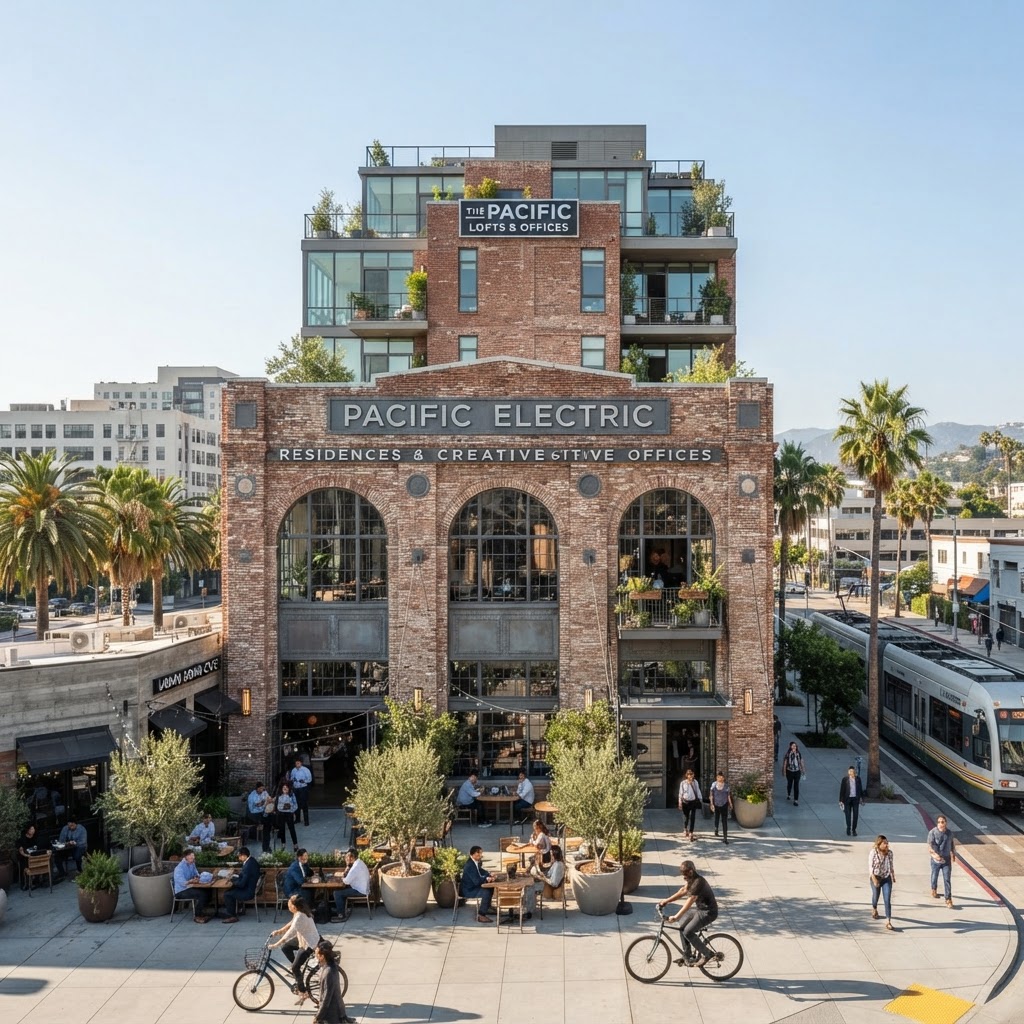
For the past two years, the commercial real estate narrative has been dominated by the "office-to-residential" conversion dream. While legislative tailwinds—such as Los Angeles’ expanded adaptive reuse ordinance and San Francisco’s Downtown Adaptive Reuse Program—have streamlined the path for developers, the reality remains complex. Engineering hurdles, such as floor-plate depth, window access, and the high cost of retrofitting plumbing for hundreds of individual units, have tempered the initial gold-rush mentality.
The Diversification of Adaptive Reuse
Savvy California investors are now pivoting toward alternative reuse strategies that bypass the intense regulatory and structural demands of residential conversion. By focusing on "good bones" rather than "perfect layouts," investors are finding success in non-residential transformations.
1. Academic and Institutional Acquisition
Higher education institutions are increasingly acting as the "buyer of last resort" for distressed office assets. According to JLL data, dozens of public and private institutions have acquired office buildings since 2018 to expand their footprints. For investors, these transactions offer a path to liquidity. Unlike residential tenants, universities often require less intensive interior reconfiguration, focusing instead on large-format classrooms and administrative space, which can often utilize existing office floor plans with minimal structural changes.
2. The Self-Storage Pivot
Self-storage REITs are actively targeting obsolete retail and office sites. As noted by industry experts, the cost to adapt an existing structure is often significantly lower than new construction. While office buildings typically support lower floor loads (under 100 lbs/sq. ft.) compared to the 125–150 lbs/sq. ft. required for storage, the lower barrier to entry—and the ability to utilize basement or core space that would be unusable for residential—makes this a compelling play for underutilized assets.
3. Industrial Land-Value Arbitrage
In some markets, the most profitable "reuse" is not the building itself, but the land beneath it. Investors are increasingly looking at "basis-reset" opportunities where the land value for industrial use exceeds the value of the existing office structure plus demolition costs. This strategy, seen in projects like the Kurv Industrial Doral, treats the office building as a temporary shell, prioritizing the underlying zoning and location for future industrial or logistics utility.
Market Implications for California Investors
The California market remains a tale of two strategies. While secondary markets like Sacramento continue to see steady demand for owner-user office buildings (particularly those under 50,000 square feet), major urban cores are seeing a permanent bifurcation of office assets.
- Underwriting for Flexibility: Investors should no longer underwrite office assets based solely on traditional lease-up scenarios. The "exit strategy" must now include a feasibility study for adaptive reuse, accounting for potential zoning incentives and the cost of structural modifications.
- Regulatory Navigation: While "by-right" permitting is expanding, investors must still navigate the California Existing Building Code. Engaging with local departments—such as the Los Angeles Department of Building and Safety—early in the due diligence phase is critical to understanding the specific mechanical and fire-safety requirements for a change of use.
- The Basis-Reset Mechanism: Lower office valuations are the primary driver of feasibility. Investors should look for assets where the purchase price allows for a significant capital expenditure budget to cover the "transformation gap"—the cost difference between maintaining an obsolete office and converting it to a higher-utility asset.
Ultimately, the most successful investors in late 2026 are those who view an obsolete office building not as a failed asset, but as a raw material. Whether the end-use is academic, storage, or industrial, the key to unlocking value lies in matching the building’s physical constraints to the most efficient, rather than the most popular, alternative use.