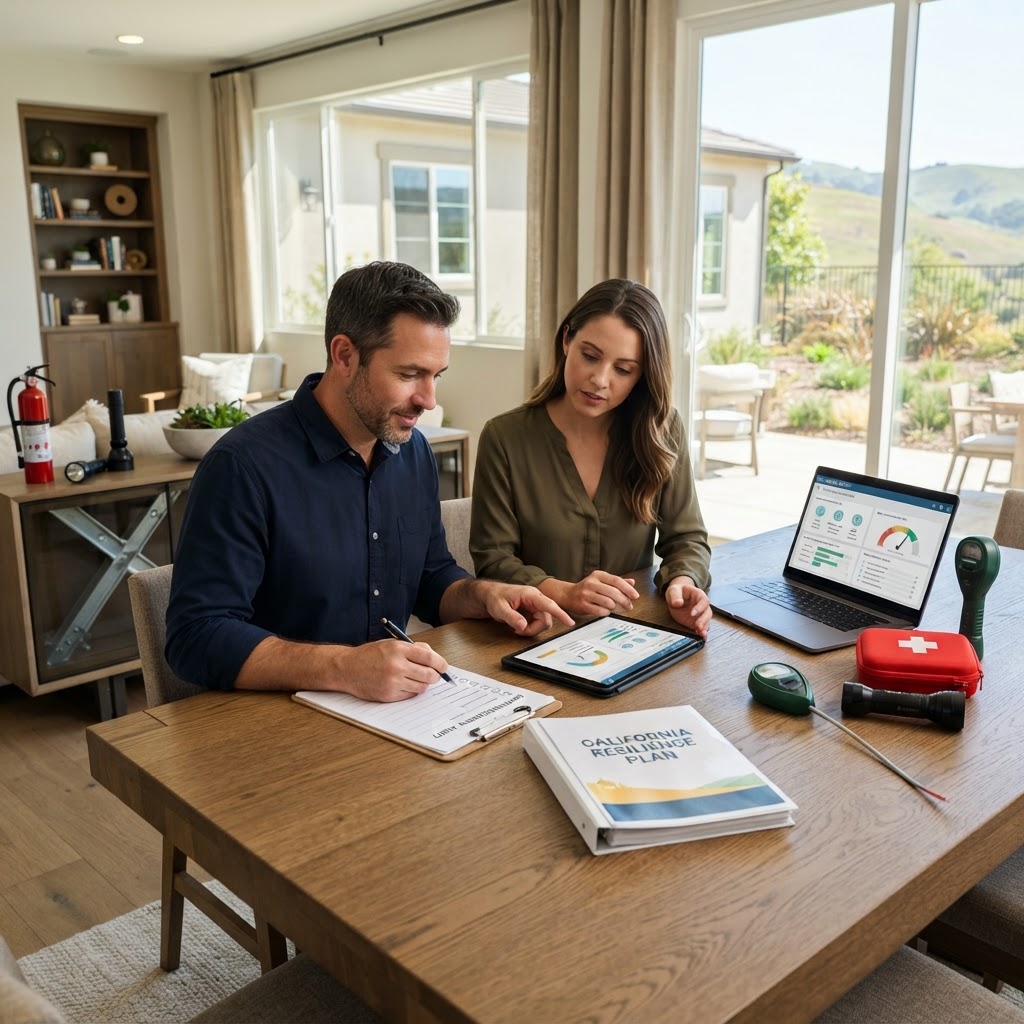
The Digital & Physical Audit: A New Framework for California Home Resilience
For the California homeowner, disaster preparedness has long been synonymous with stockpiling water and batteries. However, as climate-related risks and seismic activity evolve, the traditional 'go-bag' approach is no longer sufficient. True resilience in the modern California market requires a comprehensive audit of both physical property vulnerabilities and digital asset security.
The Digital Asset Audit
In the immediate aftermath of a disaster, the ability to prove ownership and initiate insurance claims is often hindered by the loss of physical documentation. Homeowners should transition to a 'Digital Vault' strategy:
- Cloud-Based Documentation: Store encrypted, digital copies of property deeds, homeowners insurance policies, and recent home appraisals in a secure, cloud-based environment.
- Visual Inventory: Conduct a room-by-room video walkthrough of your property annually. This serves as critical evidence for insurance adjusters, documenting the condition and contents of the home before a loss occurs.
- Utility & Service Mapping: Maintain a digital log of utility shut-off locations and service provider contact information, ensuring this is accessible even if local internet infrastructure is compromised.
Physical Vulnerability Assessment
Beyond standard retrofitting, homeowners must evaluate their property through the lens of 'operational continuity.' This involves identifying specific failure points that could render a home uninhabitable even if the structure remains intact.
1. The Power-Resilience Gap
With the increasing frequency of Public Safety Power Shutoffs (PSPS) and grid instability, homeowners should assess their reliance on the electrical grid. Practical steps include evaluating the feasibility of battery storage systems or portable power stations capable of running essential medical equipment or communication devices for 72+ hours.
2. The 'Defensible Perimeter' Audit
For properties in high-fire-hazard zones, the focus must shift from the structure to the immediate landscape. This includes clearing vegetation within the 'home ignition zone' and ensuring that exterior vents are screened to prevent ember intrusion—a common, yet often overlooked, cause of structural loss.
Financial Preparedness: The Insurance Gap
Data from the California Earthquake Authority (CEA) highlights a persistent gap in coverage: most standard homeowners insurance policies do not cover earthquake damage. Investors and homeowners must perform a 'coverage audit' to determine if their current policy reflects the actual cost of rebuilding in today’s inflationary construction market. Relying on historical property values rather than current replacement costs can lead to significant financial shortfalls during recovery.
Practical Takeaways for Homeowners
- Utilize MyHazards: Before making property improvements, use the California Governor’s Office of Emergency Services (Cal OES) MyHazards tool to identify specific risks—such as liquefaction or fire zones—associated with your parcel.
- Community Integration: Join local programs like the Community Emergency Response Team (CERT) or neighborhood-specific coalitions. These groups often provide localized intelligence that broad-scale emergency plans lack.
- Annual Drills: Treat disaster planning like a business continuity plan. Schedule an annual 'audit day' to update your digital vault, test your emergency communication plan, and verify that your insurance coverage aligns with current market replacement costs.
By shifting the focus from reactive supply-gathering to proactive asset auditing, California homeowners can significantly reduce the time and financial burden of recovery, ensuring their property remains a stable foundation regardless of the external environment.


