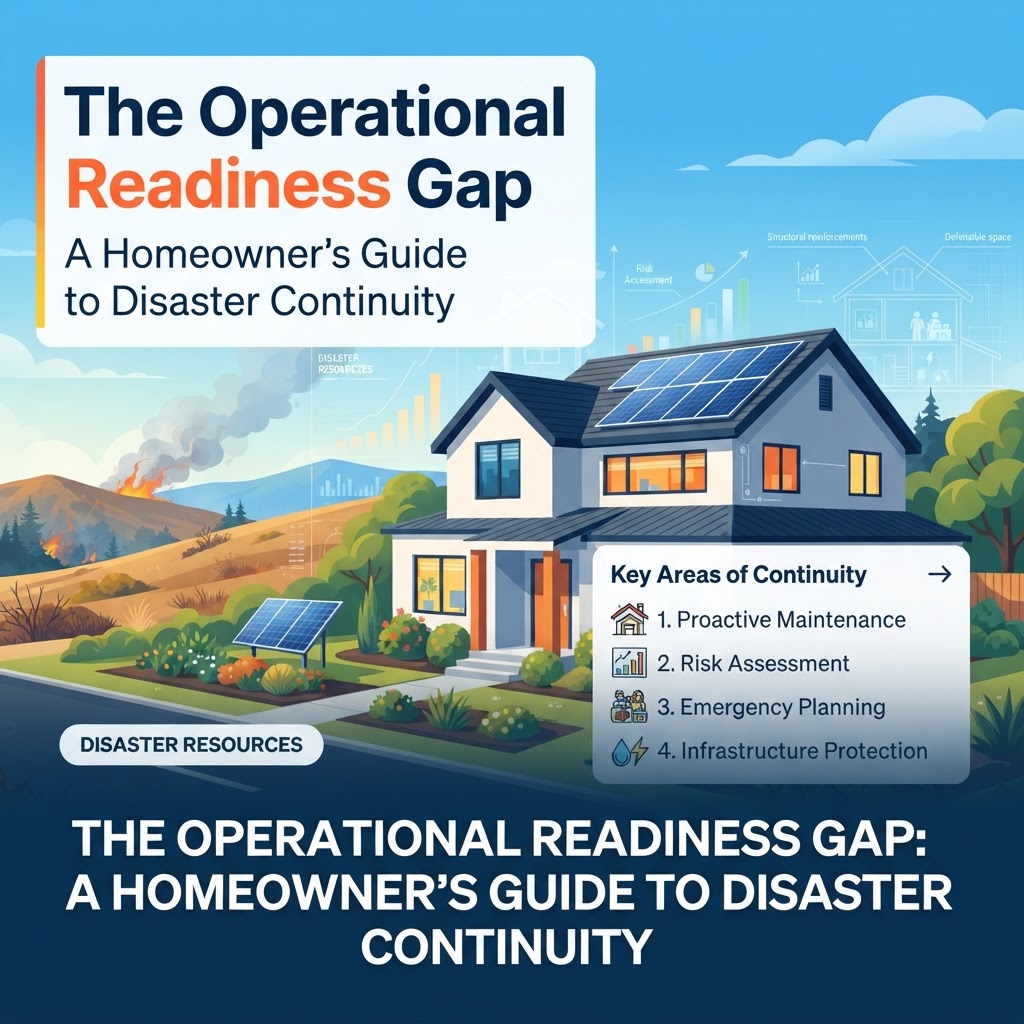
The Operational Readiness Gap: A Homeowner’s Guide to Disaster Continuity
For California homeowners, disaster preparedness has historically been framed as a reactive exercise—stocking water, batteries, and emergency kits. However, as the state’s risk landscape evolves, the focus must shift toward operational continuity. This involves treating a property not just as an asset, but as a functional system that must remain resilient during and after extreme events.
The Shift from Passive to Active Mitigation
While many homeowners rely on standard insurance policies to cover fire or seismic damage, insurance is a financial safety net, not a continuity strategy. According to the Insurance Information Institute, standard policies cover fire and smoke damage, but they do not prevent the operational failure of a home during a crisis. Proactive homeowners are now turning to certification programs, such as the Wildfire Prepared Home Plus designation, which utilizes research-backed standards to harden structures against specific environmental threats.
Data-Driven Property Management
Investors and homeowners should view property maintenance through the lens of disaster prevention. This includes:
- System Hardening: Moving beyond cosmetic upgrades to prioritize structural integrity, such as ember-resistant vents and non-combustible siding, which significantly reduce the risk of total loss during wildfire events.
- Emergency Communication Infrastructure: Ensuring that a property is registered with local emergency alert systems is a critical, often overlooked, operational step.
- Documentation Continuity: Maintaining a digital, off-site inventory of home assets and insurance policy details is essential for accelerating the recovery process, as noted by the California Department of Housing and Community Development’s focus on disaster recovery programs.
Practical Takeaways for Stakeholders
For Homeowners: Conduct an annual 'operational audit' of your home. Check the functionality of fire-suppression systems, clear defensible space, and verify that your insurance coverage limits reflect current construction costs, not just the original purchase price.
For Investors: When evaluating properties in high-risk zones, factor in the 'resilience premium.' Properties that have undergone documented mitigation efforts are increasingly viewed as lower-risk assets, potentially offering better long-term value retention in a market where insurance availability is becoming a primary driver of liquidity.
For Sellers: Transparency regarding past mitigation efforts—such as seismic retrofitting or wildfire-hardening certifications—can serve as a powerful differentiator in a competitive market, providing buyers with the assurance of operational continuity.
By shifting the focus from 'surviving' a disaster to 'maintaining operations' through rigorous, data-backed property management, California homeowners can better protect their equity and ensure their homes remain viable assets regardless of the external environment.


