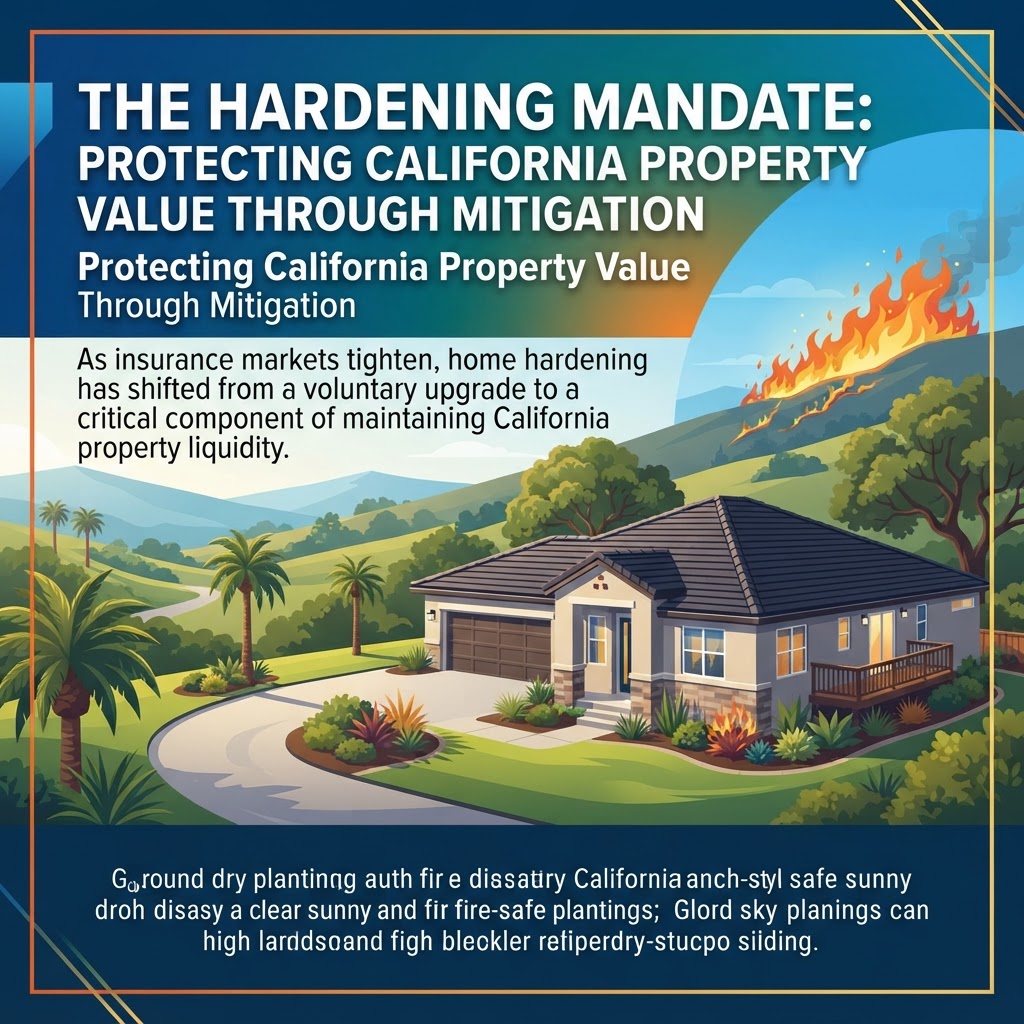
The Hardening Mandate: Protecting California Property Value Through Mitigation
For California homeowners, the intersection of climate risk and real estate liquidity has reached a critical juncture. With approximately 13% of realtors reporting canceled sales transactions in 2024 due to insurance accessibility issues—nearly double the rate from previous years—the physical condition of a property is now as vital as its location or square footage. Home hardening is no longer merely a safety precaution; it is a fundamental strategy for preserving asset value in an era of insurer withdrawal.
The New Economics of Mitigation
The California Department of Insurance’s Safer from Wildfires program has formalized the link between property-level resilience and financial stability. By adopting specific mitigation measures, homeowners may qualify for insurance discounts, providing a tangible return on investment for retrofitting projects. Industry experts, including those from the American Property Casualty Insurance Association, now categorize these upgrades as “pre-disaster mitigation,” a necessary expense to ensure a property remains insurable in the admitted market.
Prioritizing the Vulnerability Points
Data from CAL FIRE and local building departments consistently identify three primary vectors for wildfire ignition: the roof, vents, and the immediate perimeter. Homeowners should prioritize these areas to maximize the efficacy of their investment:
- Roofing Assemblies: Replacing non-fire-retardant wood shakes with Class A fire-rated materials (metal, tile, or composition) is the single most effective structural upgrade.
- Ventilation Systems: Embers are the primary cause of home ignition. Replacing standard vents with California State Fire Marshal-approved flame-resistant vents (with openings smaller than 1/8 inch) prevents ember intrusion into attics and crawlspaces.
- The Five-Foot Zone: The immediate area surrounding the home is critical. Removing combustible materials, including wood mulch, patio furniture, and flammable vegetation within five feet of the structure, significantly reduces the risk of radiant heat ignition.
Navigating Regulatory and Financial Frameworks
While the 2025 California Wildland-Urban-Interface (CWUI) Code sets the standard for new construction, existing housing stock requires proactive intervention. The California Wildfire Mitigation Program (CWMP) serves as a key resource for homeowners seeking guidance on comprehensive mitigation. Furthermore, local jurisdictions are increasingly adopting ordinances that exceed state minimums to address specific regional risks, such as seismic safety or localized fire corridors.
Practical Takeaways for Stakeholders
- For Sellers: Document all home hardening retrofits. Providing proof of compliance with modern building standards can be a decisive factor in maintaining buyer confidence and securing financing in high-risk zones.
- For Investors: When evaluating properties in the Wildland-Urban Interface (WUI), factor in the cost of immediate hardening retrofits. Properties that lack modern fire-resistant features may face higher insurance premiums or, in some cases, reliance on the California FAIR Plan, which can impact long-term cash flow.
- For Homeowners: Conduct a self-assessment using the resources provided by the California Fire Safe Council. Focus on low-cost, high-impact retrofits—such as clearing gutters and installing ember-resistant vents—before pursuing major structural renovations.
As the state continues to refine its building codes and insurance regulations, the proactive homeowner who treats resilience as a core maintenance requirement will be best positioned to navigate the evolving California real estate landscape.


