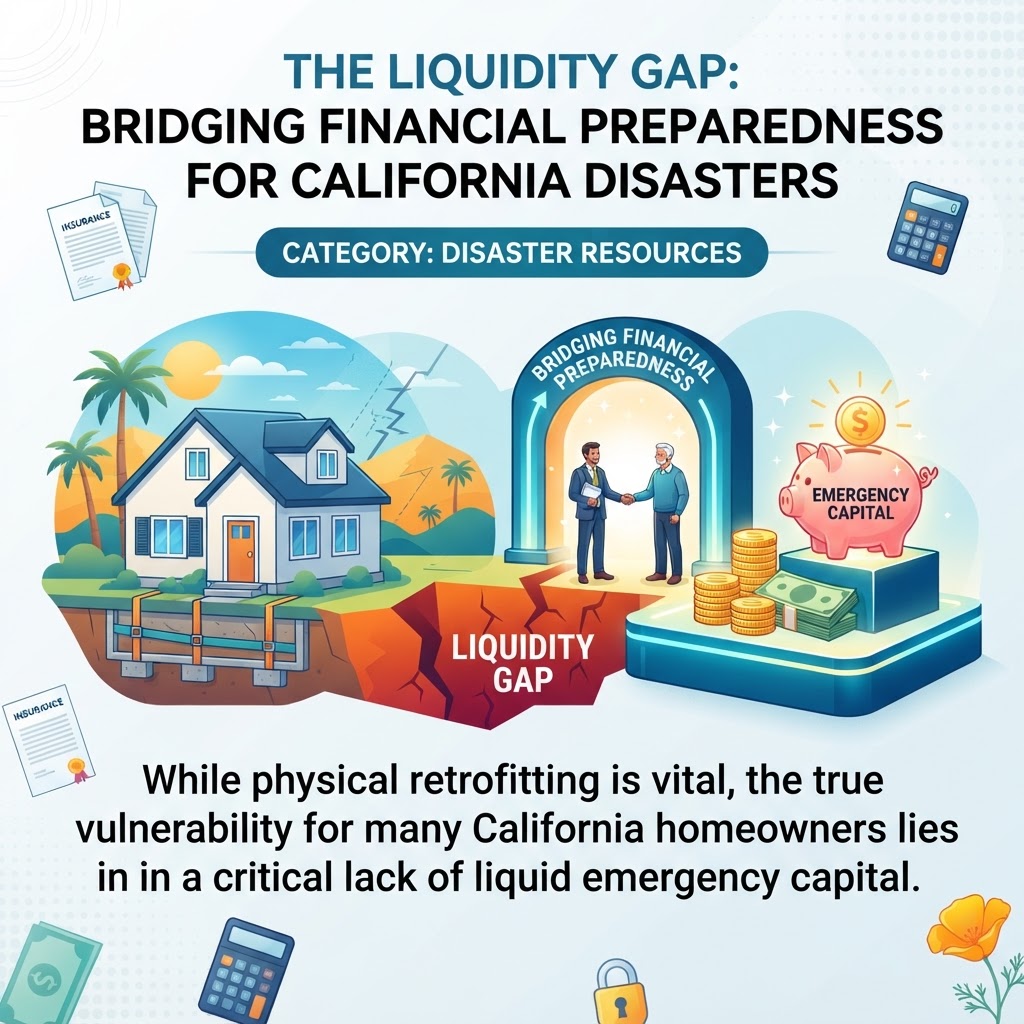
The Liquidity Gap: Bridging Financial Preparedness for California Disasters
In the California real estate market, the conversation around disaster resilience often centers on structural integrity—seismic retrofits, fire-resistant landscaping, and building codes. However, recent data suggests that the most significant threat to long-term homeownership stability is not just the physical damage, but the financial liquidity gap that follows a catastrophic event.
The Hidden Financial Vulnerability
A 2025 report by TheZebra.com revealed a sobering reality: 40% of homeowners lack the liquid capital to cover a $5,000 emergency. This financial fragility is compounded by a widespread misunderstanding of insurance coverage. Approximately 35% of homeowners incorrectly believe their standard policies cover flood or earthquake damage, risks that almost universally require separate, supplemental coverage. When disaster strikes, the average cost of restoration often dwarfs initial estimates, with homeowners spending an average of $22,100 in 2023 to recover from natural disaster impacts.
Beyond the Retrofit: Building a Financial Buffer
While programs like the California Residential Mitigation Program (CRMP) provide essential grants—such as the Earthquake Brace + Bolt (EBB) program which offers up to $3,000 for seismic upgrades—these programs address only the physical structure. Homeowners must treat financial preparedness with the same rigor as structural hardening:
- Audit Your Coverage: Do not assume standard policies are comprehensive. Review your declarations page specifically for exclusions related to seismic activity and flood zones.
- The Emergency Fund Multiplier: Given that recovery costs can exceed $20,000, aim to maintain a dedicated disaster-recovery fund separate from standard household savings.
- Document Assets: Use digital tools to catalog home contents. In the event of a claim, having a verified inventory significantly accelerates the adjustment process.
Leveraging State Resources for Long-Term Resilience
The California Governor’s Office of Emergency Services (Cal OES) emphasizes that preparedness is a shared responsibility. Beyond individual efforts, homeowners should engage with local community emergency response systems. The Standardized Emergency Management System (SEMS) provides a framework for how state and local agencies coordinate, but individual homeowners are the first line of defense.
Practical Takeaways for Stakeholders
- For Buyers: During the due diligence phase, prioritize a review of the property’s seismic history and local flood risk maps. Factor the cost of potential supplemental insurance into your long-term debt-to-income calculations.
- For Investors: View seismic retrofitting not as an expense, but as a capital improvement that protects the asset’s long-term insurability and marketability.
- For Sellers: Completing a certified seismic retrofit can be a powerful value-add in a market where buyers are increasingly risk-averse regarding climate-related liabilities.
True resilience in the California market requires a dual-track approach: hardening the physical asset through code-compliant retrofits and hardening the household balance sheet through targeted financial planning. By closing the liquidity gap, homeowners can ensure that a disaster remains a manageable event rather than a catalyst for forced divestment.


