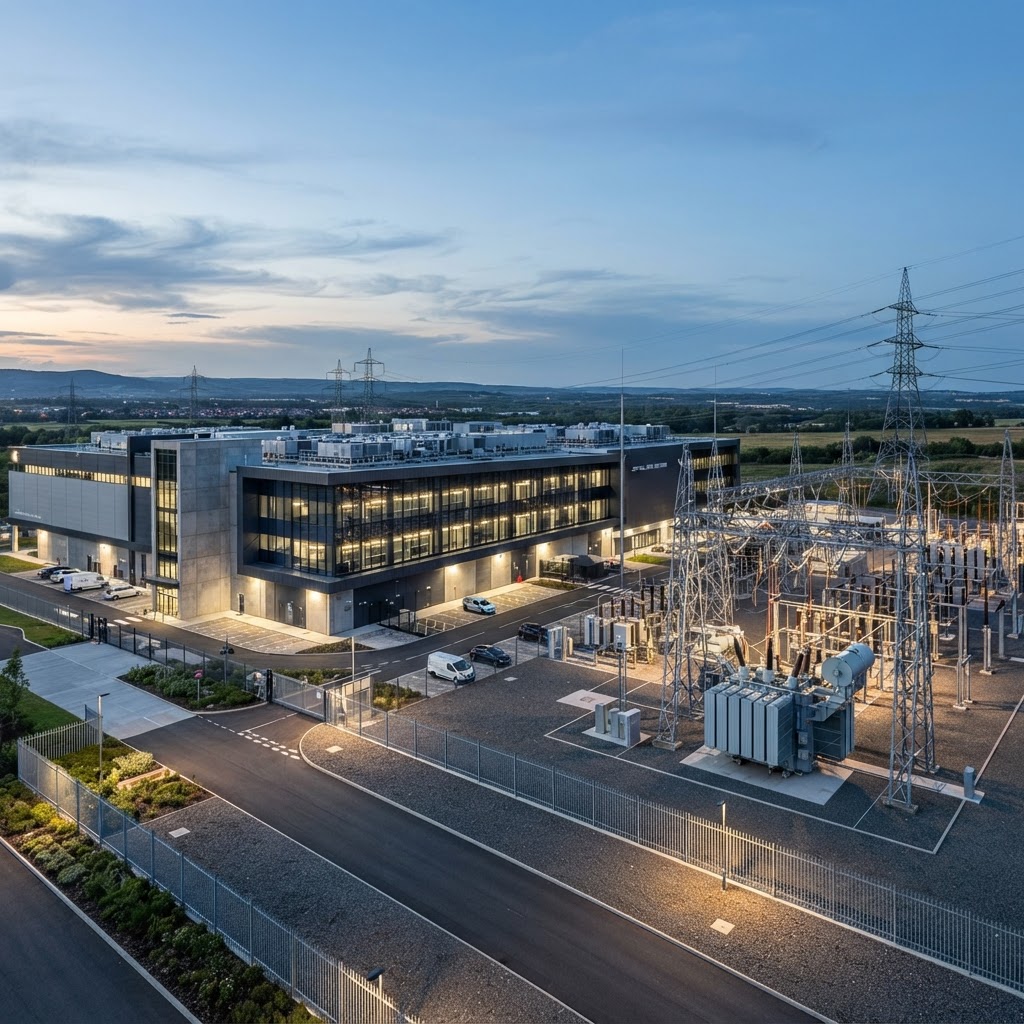
The Power-Industrial Convergence: Investing in Mission-Critical Infrastructure
In the current 2026 commercial real estate landscape, the traditional mantra of 'location, location, location' is being superseded by a new imperative: 'power, power, power.' As the digital economy and supply chain requirements evolve, the most resilient asset classes are no longer defined by foot traffic or office proximity, but by their ability to secure and manage massive energy loads. For California investors, this shift represents a fundamental move away from speculative development toward mission-critical infrastructure.
The Data Center Dominance
Data centers have emerged as the premier asset class of 2026. With vacancy rates in primary North American markets hitting record lows—dropping to 1.6% in some regions—the supply-demand imbalance is acute. According to industry data, data center construction spending reached a record annualized rate of approximately $75.2 billion by July 2026. For investors, the performance has been stark: trusts owning data centers saw values rise 33% through the first eight months of 2026, significantly outperforming broader trust assets.
However, the California market faces unique hurdles. While Silicon Valley remains a primary hub, grid capacity constraints are forcing developers to look toward secondary markets. Investors should note that Southern California has recently surpassed the New York Tri-State area in total inventory, signaling a shift in where institutional capital is deploying to bypass the bottlenecks of traditional urban cores.
Cold Storage: The Industrial Bond
Parallel to the data center boom is the maturation of cold storage as a core industrial pillar. Unlike standard warehouse space, cold storage is increasingly viewed as a bond-like investment. With rental rates often 100% to 200% higher than conventional industrial space, the asset class offers durable cash flows tied to essential goods. The underwriting for these assets is shifting; institutional buyers are now pricing the lease cash flows of long-term, triple-net (NNN) agreements rather than the underlying real estate optionality.
Strategic Takeaways for California Investors
- Underwrite the Utility Tariff: In California, wholesale power prices are often secondary to the binding constraint of utility tariffs and grid interconnection queues. Investors must conduct deep-dive due diligence on local utility capacity before committing to industrial or data center acquisitions.
- Focus on 'Bond-Like' Leases: For cold storage, prioritize assets with long-term, credit-worthy tenants. As remaining lease terms drop below 10 years, cap rates widen materially, making the credit quality of the operator the primary driver of value.
- Pivot to Emerging Hubs: With primary markets reaching capacity, the most significant growth potential lies in secondary and tertiary markets where land and power are still accessible. Monitor regions where development pipelines are outpacing traditional hubs, as these areas are becoming the new frontier for institutional-grade infrastructure.
The convergence of real estate, power, and technology is no longer a niche trend; it is the new baseline for institutional investment. Investors who successfully navigate the complexities of power-intensive infrastructure will find themselves well-positioned in a market where scarcity is the primary driver of long-term value.