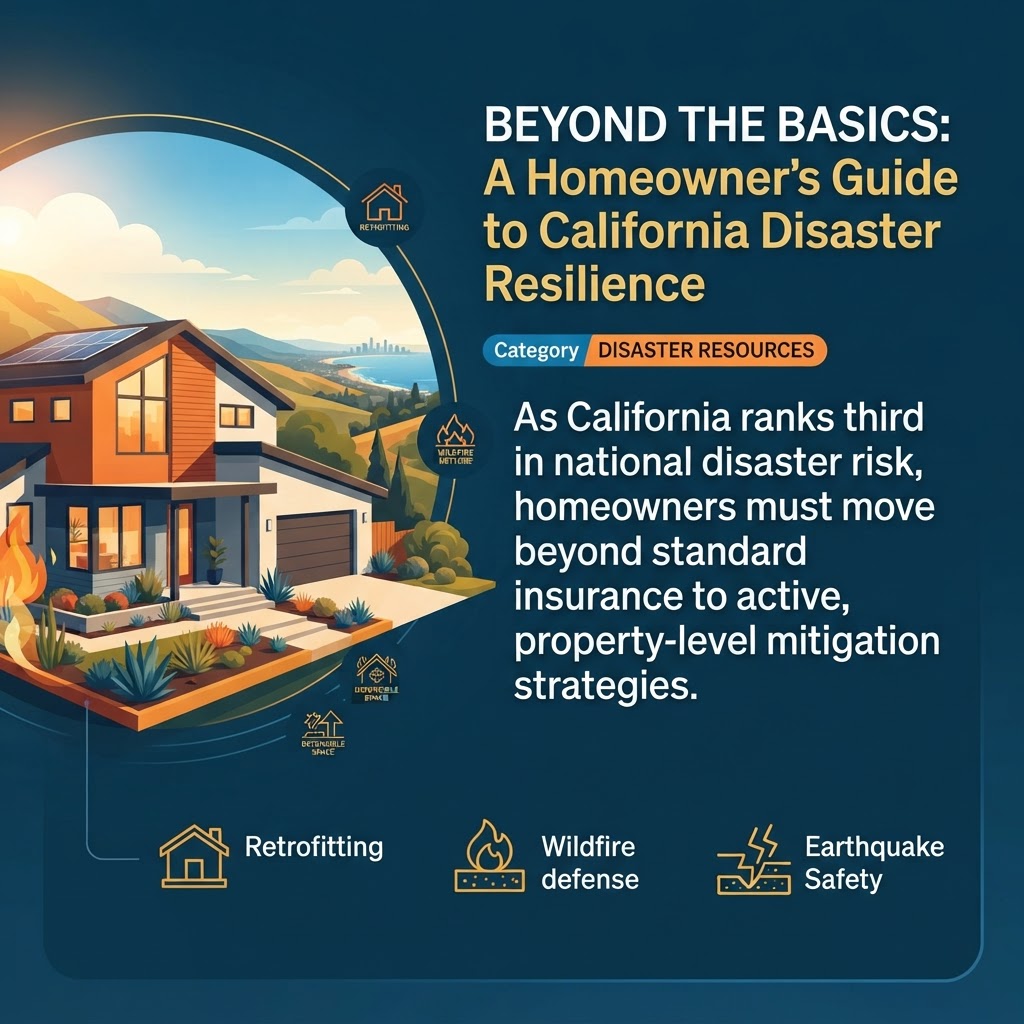
Beyond the Basics: A Homeowner’s Guide to California Disaster Resilience
For California property owners, the question is no longer if a natural disaster will occur, but when. With the state currently ranking as the third-highest in the nation for natural disaster risk—encompassing wildfires, floods, and seismic activity—the traditional reliance on standard homeowners insurance is increasingly insufficient. As of 2026, the intersection of climate volatility and real estate requires a shift from passive coverage to active, property-level resilience.
The Insurance Gap: Understanding Your Exposure
A critical oversight for many California homeowners is the assumption that standard policies provide comprehensive protection. According to the California Department of Insurance, standard homeowners policies typically exclude damage from floods, mudslides, and debris flows. Furthermore, the California FAIR Plan does not cover storm-related damage without supplemental 'difference in conditions' (DIC) coverage. Homeowners must proactively assess their specific geographic risk, as even traditionally low-risk areas are seeing increased exposure to climate-driven events.
Active Mitigation: Property-Level Defense
Resilience begins with physical modifications that reduce the vulnerability of your structure. For wildfire-prone areas, the principles of 'defensible space' are paramount:
- Vegetation Management: Maintain a 30-foot clearance of dead plants and debris. Trim tree branches 6–9 feet from the ground to prevent ground fires from reaching the canopy.
- Structural Hardening: Cover vents with fine metal mesh to prevent ember intrusion and install spark arrestor caps on chimneys.
- Strategic Landscaping: Plant trees and shrubs at least 8–10 feet from the home, increasing this distance on sloped terrain to account for fire behavior.
Leveraging State and Federal Resources
The state has expanded its support infrastructure to assist homeowners in navigating these risks. Programs such as the Insurance Resilience Planning Program (IRPP) are designed to address insurance gaps in disaster-impacted areas. Additionally, the California Governor’s Office of Emergency Services (Cal OES) provides resources like the 'Listos' campaign, which offers actionable data for household emergency planning. For those impacted by recent events, the state has also expanded mortgage relief programs, such as CalAssist, to provide a one-year buffer for affected homeowners.
Practical Takeaways for Owners and Investors
- Inventory Your Assets: Maintain a digital, updated inventory of your possessions. This is essential for expedited claims processing.
- Audit Your Coverage: If you have completed home additions or renovations, ensure your insurance coverage is updated to reflect the current replacement cost.
- Identify Water Sources: Clearly mark emergency water sources on your property, such as pools or wells, for first responders.
- Monitor Local Mitigation Grants: Keep track of Community Development Block Grant (CDBG-MIT) funds, which often provide resources for local governments to improve infrastructure, indirectly benefiting property values and safety.
By integrating these structural and administrative strategies, California homeowners can better protect their equity and ensure their property remains a viable asset in an era of increasing climate uncertainty.


