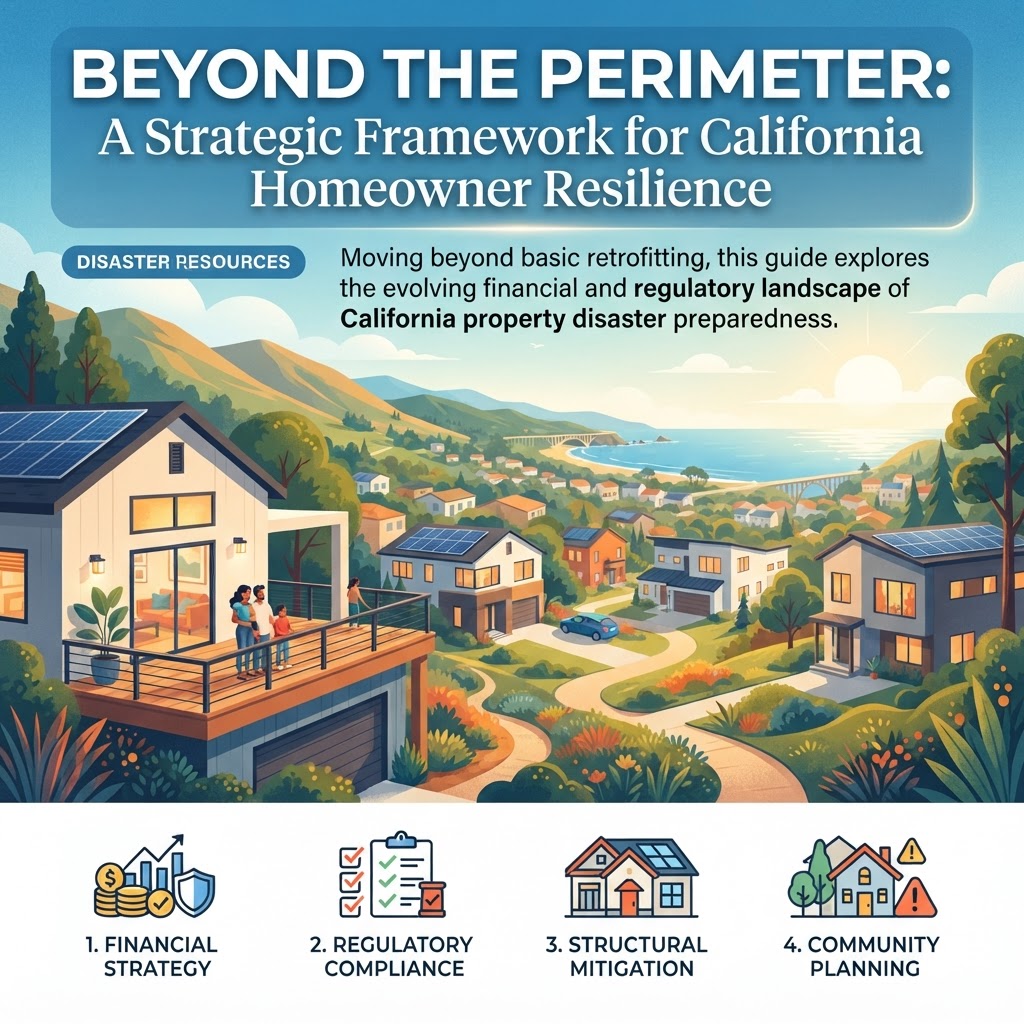
Beyond the Perimeter: A Strategic Framework for California Homeowner Resilience
For California homeowners, disaster preparedness has evolved from a simple checklist of emergency supplies into a complex financial and structural mandate. As climate risks intensify, the intersection of property value, insurance availability, and state-led mitigation programs requires a more sophisticated approach to home ownership.
The New Financial Landscape of Mitigation
Recent legislative shifts, such as Assembly Bill 888 (2025), have begun to address the financial burden of home hardening. Rather than viewing mitigation solely as an individual cost, the state is moving toward a cost-distribution framework. Homeowners should now view investments in fire-safe roofing and vegetation management not just as safety measures, but as essential components of property valuation and insurability. According to the Terner Center, the goal is to stabilize the insurance market by incentivizing these upgrades through mandated discounts from insurers, as required by Assembly Bill 1.
Navigating the Regulatory and Insurance Ecosystem
The California Department of Insurance (CDI) has emphasized that homeowners must be proactive in understanding their policy coverage before a disaster occurs. Key takeaways for property owners include:
- Documenting Upgrades: Maintain detailed records of all home-hardening improvements. Under new regulatory shifts, these records are critical for securing premium discounts.
- Policy Audits: Regularly review coverage limits to ensure they reflect current replacement costs, which often outpace standard inflation adjustments in high-risk zones.
- Leveraging State Programs: Utilize resources like the California Wildfire Mitigation Program (CWMP) to identify if your property qualifies for state-supported hardening grants, which can significantly offset out-of-pocket expenses.
Community-Level Resilience and HOA Integration
Disaster readiness is increasingly a collective effort. For those in Homeowners Associations (HOAs), the California Lawyers Association notes that creating an emergency preparedness committee is a vital step. These committees serve as the primary point of contact during crises, ensuring that community-wide infrastructure—such as shared defensible space and evacuation routes—is maintained to a standard that individual efforts cannot achieve alone.
Practical Steps for Property Owners
To move beyond basic readiness, homeowners should adopt a three-pillar strategy:
- Data-Driven Assessment: Use tools like the Cal OES Fire Hazard Severity Zone maps to understand your specific risk profile.
- Financial Planning: Treat disaster mitigation as a capital improvement project. Consult with tax professionals regarding potential deductions or credits associated with state-mandated hardening measures.
- Communication Infrastructure: Register with CalAlerts.org and establish a multi-modal communication plan that functions even if cellular networks are compromised.
By integrating these structural, financial, and community-based strategies, California homeowners can better navigate the state's volatile risk environment, protecting both their physical assets and their long-term financial stability.


