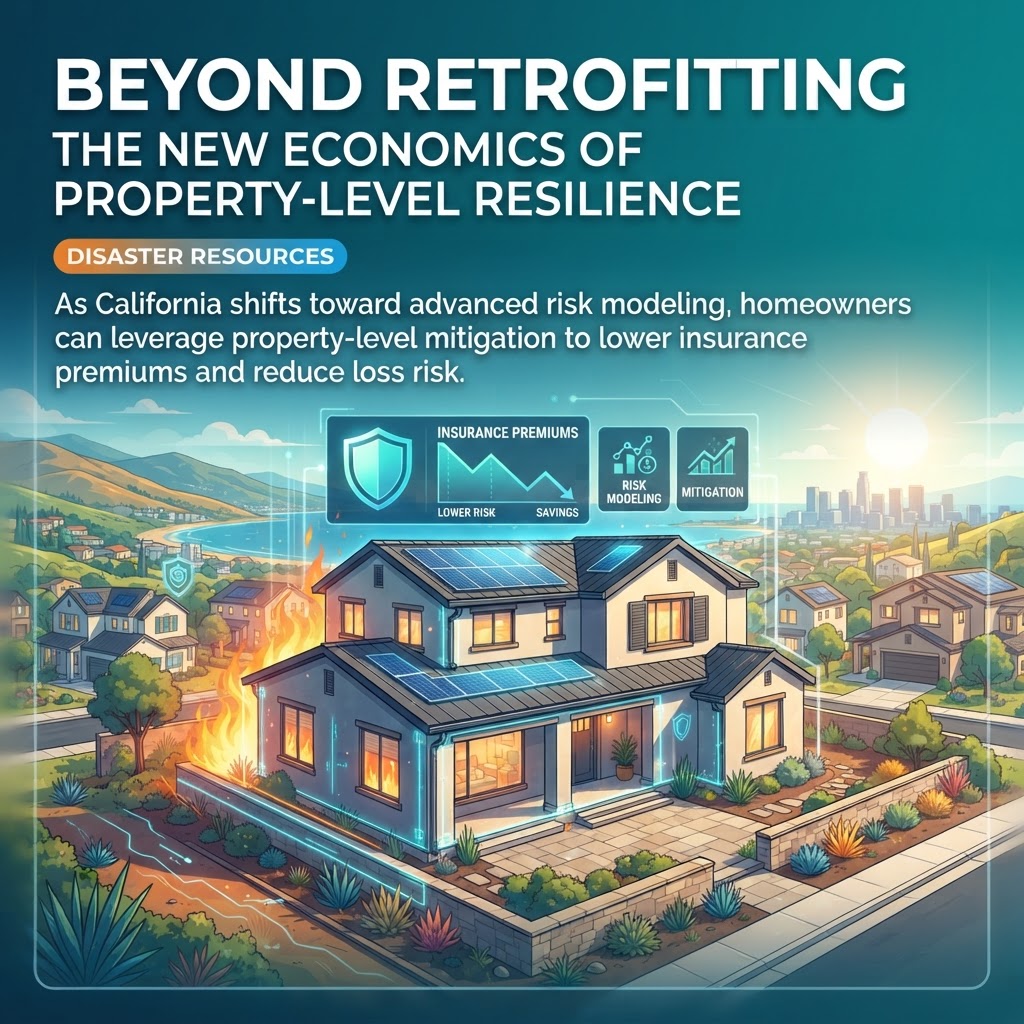
Beyond Retrofitting: The New Economics of Property-Level Resilience
For California homeowners, the conversation around disaster preparedness has historically focused on structural survival. However, as of late 2026, the focus has shifted toward the economics of resilience. With over one million California homes currently classified as being at very high wildfire risk, the state’s insurance market is undergoing a fundamental transformation driven by advanced computer modeling and data-backed mitigation incentives.
The Data-Driven Shift in Insurance
The California Sustainable Insurance Strategy is currently integrating sophisticated risk modeling that allows insurers to price risk with unprecedented precision. According to recent data from Guidewire HazardHub, comprehensive property-level mitigation—such as ember-resistant vents, non-combustible siding, and defensible space management—can reduce expected wildfire losses by up to 70%. This shift is critical because it moves the insurance conversation from broad geographic risk to individual property performance.
Practical Takeaways for Homeowners and Investors
To navigate this new landscape, homeowners and investors should prioritize the following actions:
- Leverage Parcel-Level Intelligence: Insurers are increasingly using parcel-level data to recognize individual mitigation efforts. Before renewing or shopping for a policy, document all structural hardening improvements. Providing this data to your carrier can be the difference between a policy non-renewal and a competitive premium.
- Understand the "California Safe Homes" Framework: Legislative efforts like the California Safe Homes Act are designed to fund critical mitigation efforts. Homeowners should monitor local grant programs and the California Residential Mitigation Program (CRMP) for "Brace + Bolt" or wildfire-hardening subsidies that offset the upfront costs of resilience.
- Utilize Official Risk Mapping: Use tools like the FEMA National Risk Index and the state’s MyHazards portal to assess your property’s specific risk profile. Understanding your home’s vulnerability is the first step in determining which mitigation investments will yield the highest return in terms of insurability and asset protection.
- Explore Cost-Distribution Models: As noted by the Terner Center, new policy frameworks are exploring ways to share the financial burden of home hardening between homeowners, insurers, and the government. Stay informed on local hazard mitigation plans, which may offer pathways to financial assistance for community-wide or individual property upgrades.
The Path Forward
The era of "passive" homeownership in high-risk zones is ending. Today, the most resilient properties are those that actively participate in the state’s evolving risk-modeling ecosystem. By treating property hardening as a financial investment rather than just a maintenance expense, California homeowners can better protect their most valuable assets while contributing to the long-term stability of the state’s housing market.


