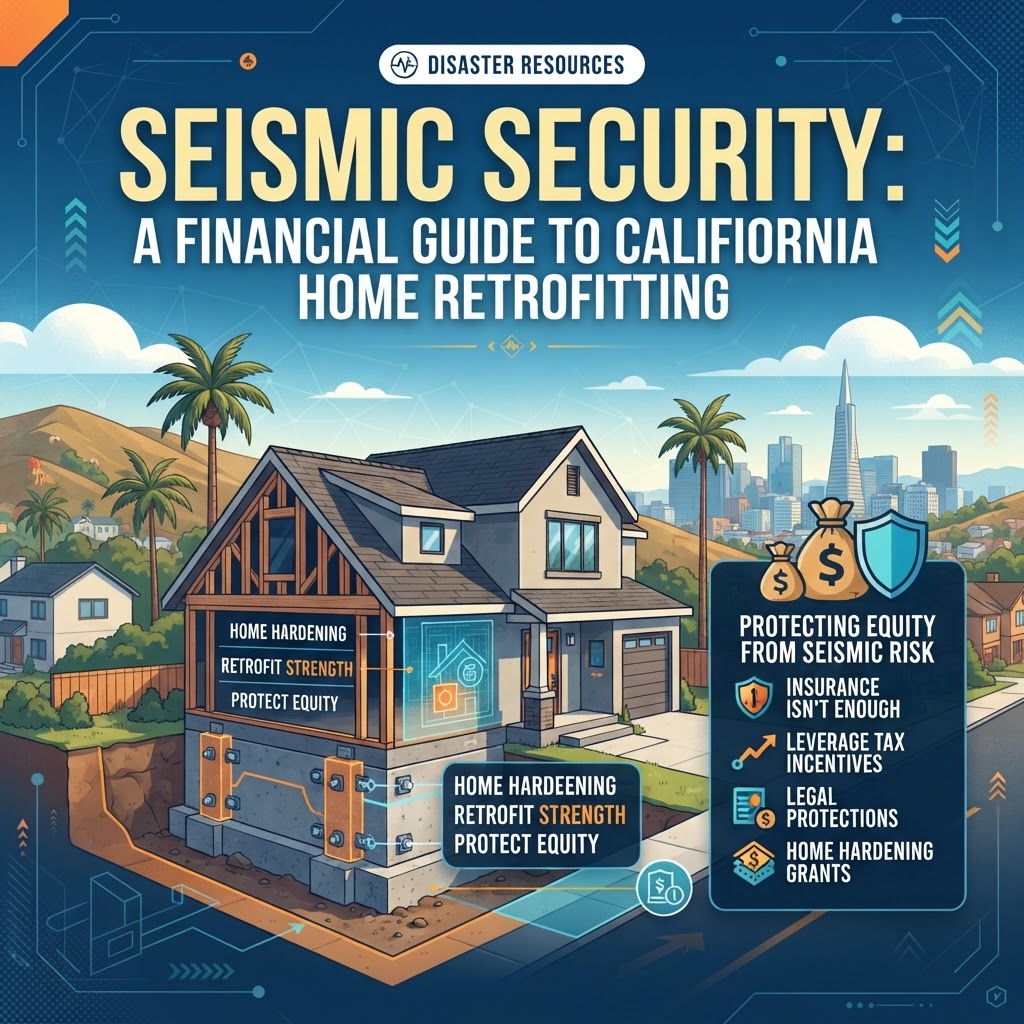
Seismic Security: A Financial Guide to California Home Retrofitting
For California homeowners, the threat of a major earthquake is not merely a theoretical risk but a statistical certainty. With California holding the nation’s highest property damage losses due to seismic activity, the financial stability of a household is inextricably linked to the structural integrity of the home. While insurance is a critical safety net, true resilience is built through proactive mitigation.
The Financial Case for Retrofitting
Many homeowners delay seismic upgrades due to perceived costs, yet the financial landscape for retrofitting has evolved to favor the proactive owner. Under California Revenue and Tax Code Section 74.5, homeowners can implement seismic-strengthening measures without triggering a property tax reassessment. This exclusion ensures that the value added by your safety improvements does not result in a higher annual tax burden.
Furthermore, local jurisdictions are increasingly exploring tax abatement programs, where up to 35% of the cost of seismic rehabilitation can be deducted from real property taxes over a 10-year period. By treating retrofitting as a capital investment rather than a maintenance expense, owners can preserve their home equity against the catastrophic loss of a major seismic event.
Navigating the Regulatory Landscape
Recent legislative shifts have made the path to recovery and resilience more accessible. Senate Bill (SB) 625, enacted in 2026, provides a significant win for homeowners in common interest developments (CIDs). The law prohibits homeowners’ associations (HOAs) from enforcing CC&Rs that would prevent a resident from rebuilding a structure damaged in a declared disaster. This ensures that homeowners are not trapped by restrictive covenants when attempting to restore their property to modern, safer standards.
Additionally, the state has streamlined the rebuilding process through ministerial approval pathways. If your property is damaged in a disaster, these rules reduce local agency discretion, allowing for faster reconstruction that complies with current, more rigorous building codes.
Practical Takeaways for Owners and Investors
- Document Everything: Keep detailed records of all seismic retrofits. These documents are essential for insurance disclosures and can significantly enhance the marketability of your property to risk-aware buyers.
- Leverage State Programs: Utilize the California Earthquake Authority’s Earthquake Brace + Bolt program, which provides financial assistance for qualifying retrofits.
- Verify Tax Exclusions: Before starting work, consult with your county tax assessor to file the necessary claim forms for the Section 74.5 tax reassessment exclusion.
- Community Engagement: Participate in local Listos California initiatives. These programs provide resources for neighborhood-level emergency planning, which is vital for functional recovery in the immediate aftermath of a disaster.
By integrating seismic hardening into your long-term real estate strategy, you are not just protecting a structure; you are safeguarding your financial future against the inevitable shifts of the California landscape.