Quantifying Resilience: The Data-Driven Case for Home Hardening
For California homeowners, the conversation around disaster preparedness has shifted from abstract risk management to a quantifiable investment strategy. As the state faces an era of increasingly intense wildfire activity, recent research from the UC Berkeley Fire Research Lab provides a clear, data-backed roadmap for protecting property value and structural integrity.
The Math of Mitigation
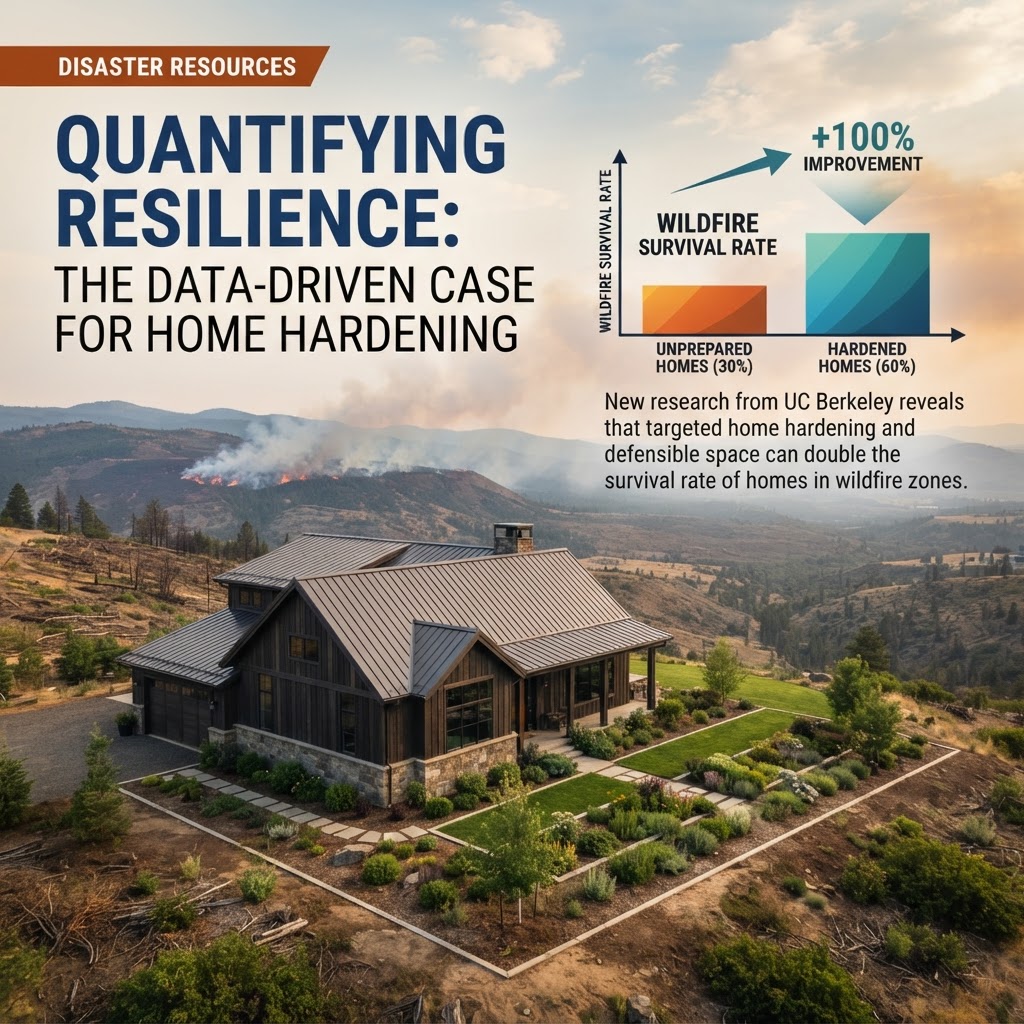
A 2025 study from the UC Berkeley Fire Research Lab has moved the needle on how we understand home survival. The data is compelling: while home hardening alone—such as installing fire-resistant roofing and siding—can raise a structure's survival rate to 25%, the combination of hardening and a 5-foot noncombustible 'Zone 0' perimeter improves survivability to 40%. This represents a doubling of the number of homes saved compared to properties without these specific interventions.
The study identified three primary predictors of loss: the distance between buildings, the quality of exterior siding, and the year of construction. For owners of homes built before 2008, when California Building Code Chapter 7A introduced stricter fire-resistant material requirements, these retrofits are not merely aesthetic upgrades; they are essential risk-mitigation assets.
Leveraging State and Financial Resources
The financial barrier to entry for comprehensive retrofitting remains a primary hurdle for many. However, the landscape is evolving. The California Wildfire Mitigation Program (CWMP) continues to provide resources for homeowners to assess and harden their properties. Furthermore, legislative efforts like Senate Bill 894 aim to establish the California Wildfire Resilience Loan Program, which would provide low-interest financing to turn significant upfront costs into manageable monthly payments.
Homeowners should also be aware of the intersection between mitigation and insurance. The California Department of Insurance now requires carriers to offer discounts to policyholders who participate in verified programs, such as the Insurance Institute for Business & Home Safety’s (IBHS) 'Wildfire Prepared Home' initiative. This creates a dual-benefit scenario: reduced insurance premiums and a statistically higher probability of property survival.
Practical Takeaways for Property Owners
- Prioritize the 5-Foot Perimeter: Clearing vegetation and combustible materials within 5 feet of the structure is the most cost-effective action a homeowner can take, reducing structure loss by 17% according to recent models.
- Audit Your Exterior: Replace combustible roof coverings with Class A-rated materials and install State Fire Marshal-approved ember-resistant vents to prevent ignition from wind-blown embers.
- Verify Eligibility for Assistance: Check the California Governor’s Office of Emergency Services (Cal OES) portal for current CWMP grant opportunities or local county-specific hardening initiatives.
- Document for Insurance: Maintain detailed records of all retrofits and certifications. These documents are critical when negotiating premium discounts with your insurance provider.
By treating home hardening as a long-term capital improvement rather than a reactive expense, California homeowners can better navigate the state's evolving risk landscape while protecting their most significant financial asset.


