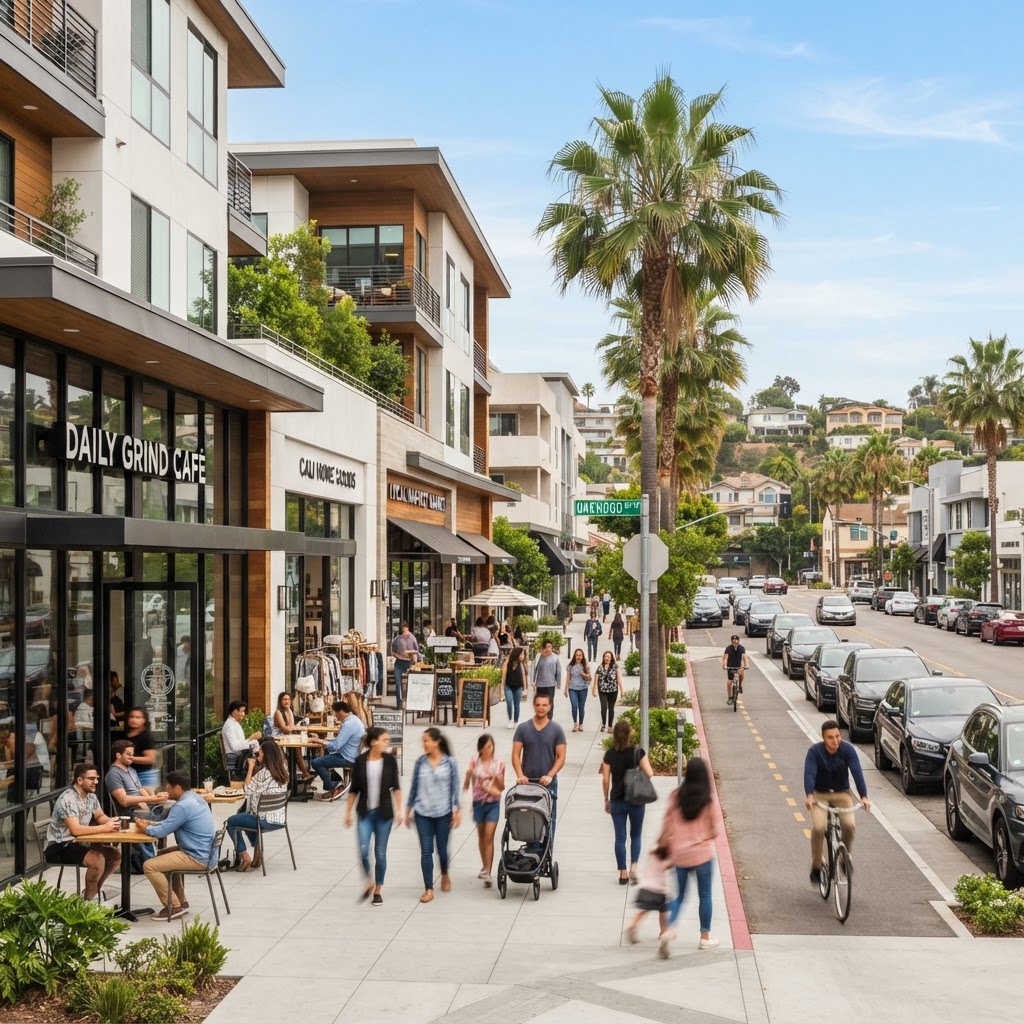
The Neighborhood Pivot: Why Retail is California’s New Defensive Play
As the California commercial real estate market moves through the second half of 2026, the investment landscape is defined by a shift toward precision and stability. While much of the industry has been preoccupied with the office sector's ongoing transformation, a quieter, more strategic trend has emerged: the rise of neighborhood-serving retail as a primary defensive asset class.
The Shift in Retail Strategy
According to the Summer 2026 Allen Matkins/UCLA Anderson Forecast, developers and investors are increasingly moving away from large-format retail in favor of centers that cater to everyday consumer needs. Data shows that 62% of Northern California respondents and 59% of Southern California respondents expect retail demand to outpace supply over the next three years, with 46% of market participants identifying neighborhood-serving retail as their preferred development focus.
This pivot is not merely a preference; it is a response to the broader economic environment. With capital markets remaining selective and interest rates holding at elevated levels, investors are prioritizing assets with predictable, non-discretionary cash flows. Neighborhood centers—anchored by grocery stores, pharmacies, and essential services—offer a level of resilience that traditional retail malls struggle to match in a high-rate environment.
Navigating the Cap Rate Disconnect
The investment climate remains complicated by a persistent gap between buyer and seller expectations. While market fundamentals in sectors like multifamily and industrial remain strong, the broader CRE market is still grappling with the aftermath of the 2022 tightening cycle. As of Q1 2026, actual market cap rates for retail assets have hovered in the 6.4% to 6.5% range, yet some analysts suggest that cap rate spreads could still expand if economic uncertainty persists.
For the California investor, this creates a dual-sided reality:
- The Refinancing Cliff: Owners of legacy assets facing near-term debt maturities must contend with higher borrowing costs, which may force further price adjustments or asset sales.
- The Opportunity for Precision: Investors with access to capital are finding success in acquiring stabilized assets. For example, the recent $27.8 million sale of the 135,308-square-foot Fairway Center II in Brea demonstrates that well-positioned assets continue to attract competitive interest, even when occupancy levels are not at 100%.
Practical Takeaways for California Investors
To succeed in the current market, investors should consider the following strategies:
- Prioritize Essential Services: Focus acquisitions on properties with high concentrations of "sticky" tenants—businesses that provide essential goods and services that are less sensitive to economic downturns.
- Monitor the Bid-Ask Gap: With actual market cap rates sitting roughly 60 basis points above potential cap rate models, patience is a virtue. Investors should focus on assets where the current income stream can support debt service without relying on aggressive exit cap rate assumptions.
- Leverage Localized Demand: California’s housing shortage continues to drive demand in the multifamily sector, which in turn supports the viability of nearby neighborhood retail. Look for development or acquisition opportunities in supply-constrained submarkets where residential density is increasing.
Ultimately, the 2026 market is rewarding those who move away from speculative plays and toward assets that serve the immediate, daily needs of the local population. By focusing on neighborhood-serving retail, California investors can build a portfolio that is better equipped to withstand the "noise" of the broader economic and political landscape.