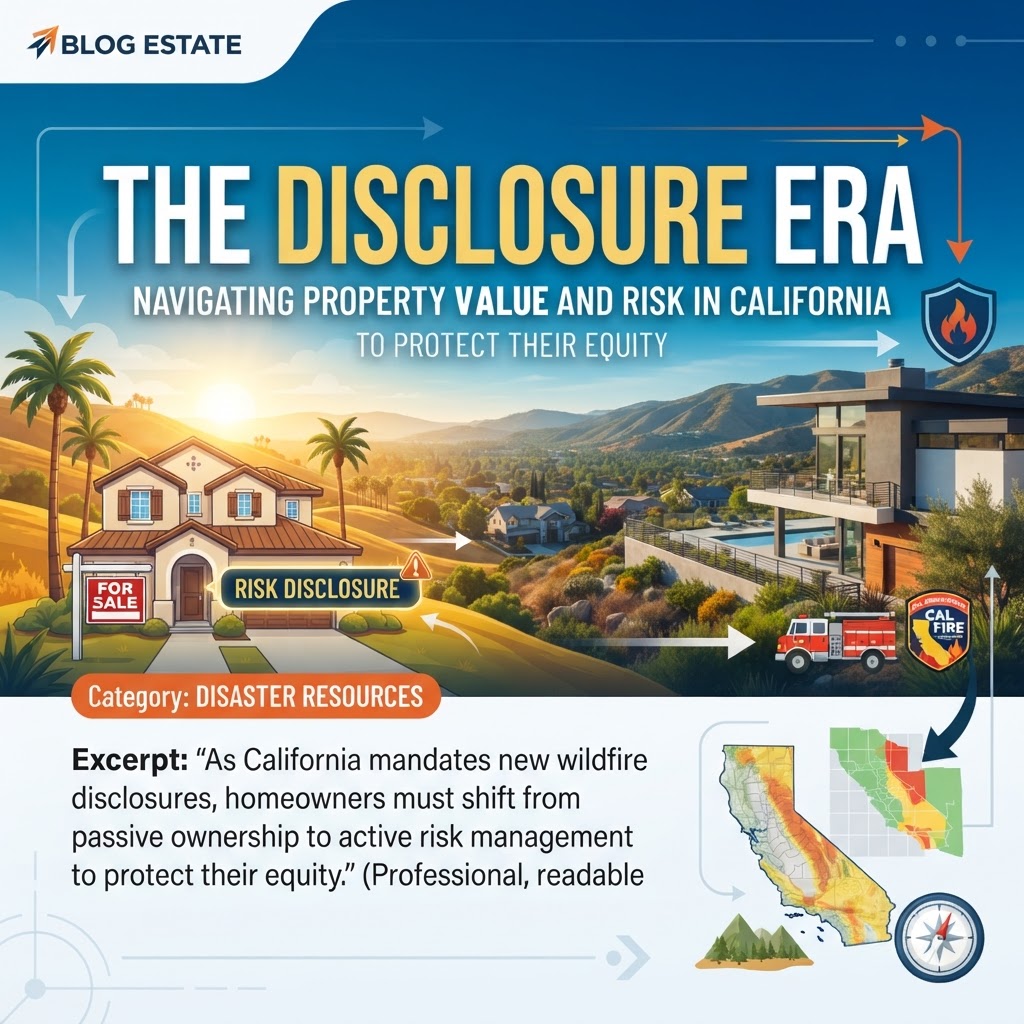
The Disclosure Era: Navigating Property Value and Risk in California
For decades, California real estate was defined by location and appreciation. Today, a third pillar has emerged: resilience. With the state now requiring sellers of older homes in high-risk areas to disclose wildfire mitigation efforts [2], the market is entering a new phase where structural preparedness directly influences property value and insurability.
The New Disclosure Mandate
The recent shift toward mandatory wildfire risk disclosure marks a fundamental change in how homes are valued. Buyers are no longer just looking at square footage; they are scrutinizing the 'defensible space' and structural hardening of a property [2]. For sellers, this means that investments in home hardening are no longer just safety measures—they are essential components of a competitive listing strategy.
The Resilience-Insurance Nexus
The California insurance market remains in a state of flux, with many carriers limiting exposure in high-risk zones [5]. However, a critical link has formed between mitigation and coverage. The California Department of Insurance (CDI) now requires insurers to offer discounts to homeowners who implement science-backed protections [4]. Programs like the Insurance Institute for Business & Home Safety’s (IBHS) Wildfire Prepared Home provide a roadmap for these upgrades, ranging from Class A roof installations to noncombustible siding [4].
Key Mitigation Tiers
- Base Level: Focuses on ember resistance, including Class A roofing, 5-foot noncombustible perimeters, and deck maintenance [4].
- Plus Level: Adds protection against direct flame and radiant heat, such as enclosed eaves, gutter covers, and upgraded windows [4].
Beyond Fire: The Seismic Reality
While wildfire dominates the headlines, California remains 'earthquake country' [10]. Unlike fire, which is typically included in standard homeowners policies, earthquake damage requires separate coverage [10]. The California Earthquake Authority (CEA) emphasizes that homeowners should not assume their standard policy covers seismic events [10]. For older properties, a seismic retrofit—strengthening the connection between the foundation and the frame—is the most effective way to mitigate potential loss [8].
Practical Takeaways for Stakeholders
- For Homeowners: Audit your current coverage. Many homeowners face a 'protection gap' where their policy limits fail to cover the actual cost of rebuilding [3]. Ensure your policy reflects current construction costs, not just the purchase price.
- For Sellers: Proactively document all hardening measures. Under the new disclosure laws, having a clear record of your home’s fire-resistant features can prevent price concessions during escrow [2].
- For Investors: Prioritize properties that qualify for state-backed mitigation programs. The California Wildfire Mitigation Program (CWMP) offers financial assistance for retrofitting, which can significantly lower the long-term operating costs of a rental property [9].
In this new era, the most valuable homes in California will be those that demonstrate a documented, verifiable commitment to disaster resilience. By aligning property maintenance with state-recognized standards, homeowners can protect both their physical assets and their financial future.


