Beyond the Office: The Rise of Specialized Industrial Assets in California
The commercial real estate (CRE) landscape in California is undergoing a fundamental transformation in late 2026. While the office sector continues to navigate a complex recovery marked by tenant flight-to-quality and owner-user acquisitions, savvy investors are increasingly shifting their focus toward specialized industrial assets that offer more resilient cash flows.
The Shift Toward Industrial Outdoor Storage (IOS)
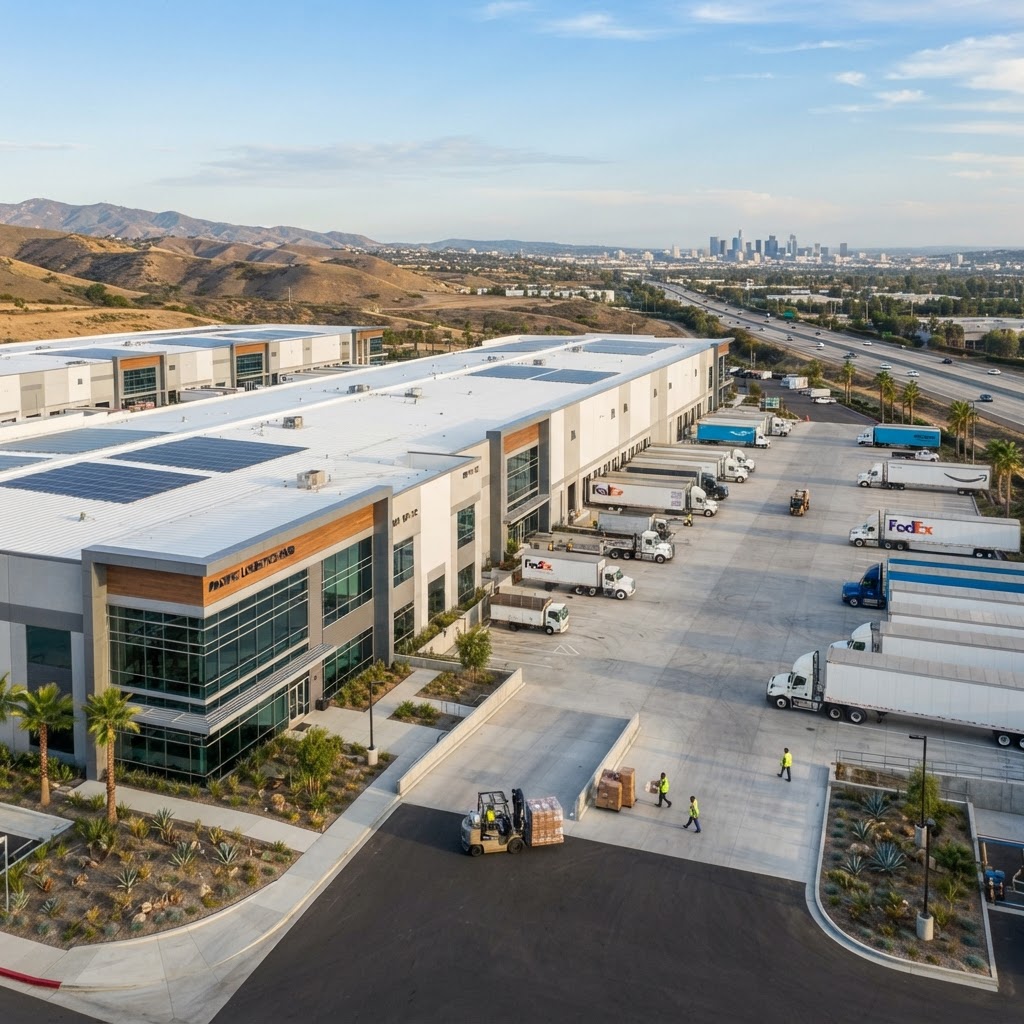
While traditional warehouse space remains a staple of the industrial sector, Industrial Outdoor Storage (IOS) has emerged as a high-performing sub-asset class. Unlike standard distribution centers, IOS properties—which include land for equipment storage, container yards, and fleet parking—are seeing heightened institutional interest. According to recent market reports, IOS is currently outperforming the broader industrial sector due to its lower maintenance requirements and critical role in the modern supply chain [10].
Data Centers and the AI-Driven Demand
Artificial Intelligence is no longer just a tech-sector buzzword; it is a primary driver of physical real estate demand. In hubs like San Francisco, technology investment is fueling a surge in demand for data center infrastructure [7, 8]. For California investors, this represents a departure from traditional retail or office plays. Data centers require specialized power and cooling capabilities, creating a high barrier to entry that protects existing owners from the oversupply issues currently plaguing other commercial segments.
Market Analysis: The Bid-Ask Gap and Adaptive Reuse
The elevated interest rate environment has fundamentally reset the math for California CRE [6]. With debt costs significantly higher than they were in the early 2020s, cap rates that once made sense no longer pencil out for many investors. This has led to a persistent bid-ask gap, slowing transaction volume across the state [6].
However, this environment has created a unique opportunity for adaptive reuse. As office vacancy rates remain elevated, developers are increasingly looking at converting underutilized commercial assets into life sciences facilities or mixed-use hubs [3, 6]. In Southern California, we are seeing a meaningful shift where companies are moving from renting to owning, particularly in urban cores like Downtown Los Angeles, as they seek to optimize their real estate footprints [9].
Practical Takeaways for California Investors
- Prioritize Functional Utility: When evaluating industrial assets, look beyond square footage. Focus on functional metrics like clear height, dock-door ratios, and the potential for outdoor storage, which is currently commanding a premium [2, 10].
- Monitor Owner-User Trends: The uptick in owner-user acquisitions is a strong signal of market stabilization in specific submarkets [9]. Investors should track where major regional employers are planting roots, as these areas often precede broader neighborhood revitalization.
- Factor in the Risk Premium: With the all-asset cap rate spread narrowing to near-historic lows, investors must be more disciplined than ever [3]. Ensure your underwriting accounts for higher long-term debt service costs rather than relying on the compressed cap rates of the previous cycle [6].
- Explore Niche Infrastructure: As AI continues to scale, the demand for data-adjacent real estate will likely persist. Investors with the capital to participate in specialized infrastructure projects may find more stability than those chasing traditional retail or office yields [7].
By moving away from the "one-size-fits-all" approach to CRE, California investors can better navigate the current cycle, focusing on assets that provide tangible utility in an increasingly digital and supply-chain-dependent economy [5].