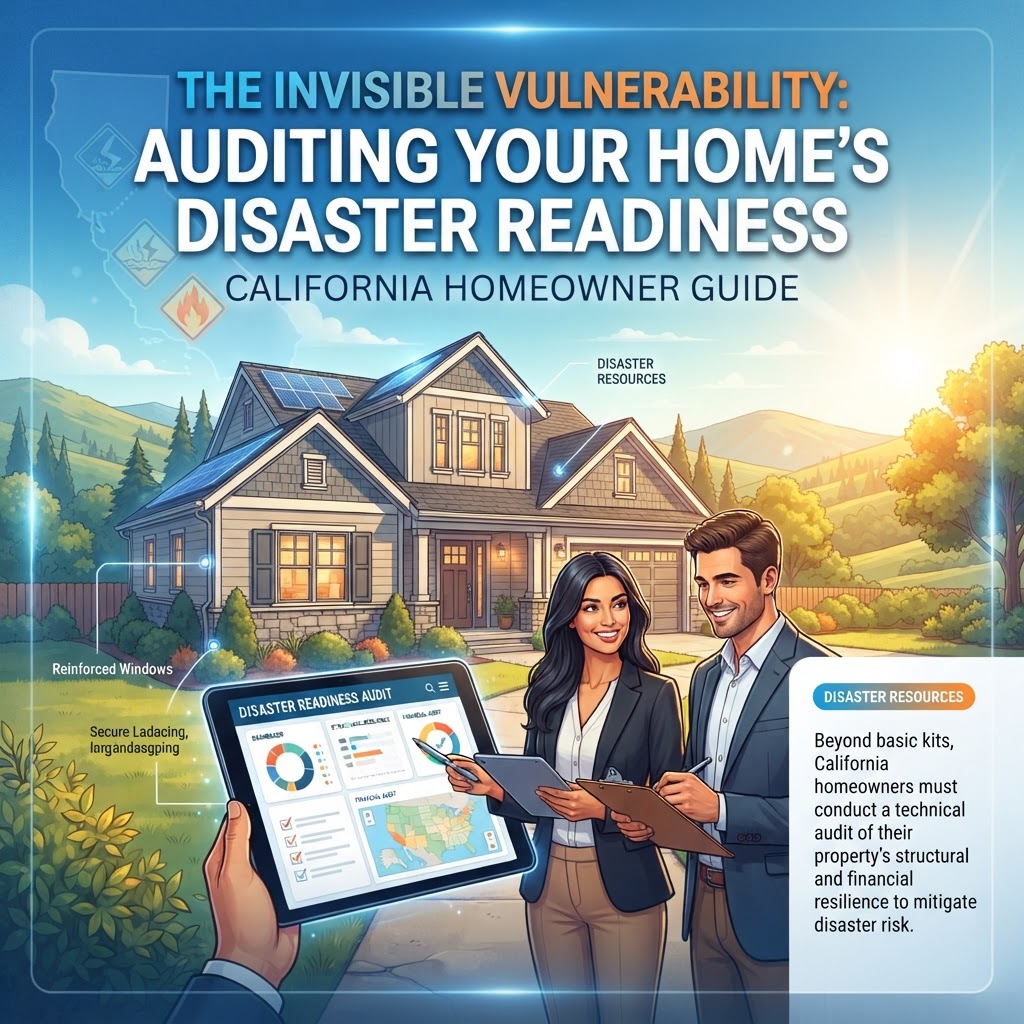
The Invisible Vulnerability: Auditing Your Home’s Disaster Readiness
For the California homeowner, disaster preparedness has historically been synonymous with "having a go-bag." However, as climate volatility increases, the focus must shift from reactive survival to proactive property auditing. With only 32% of Californians expressing high confidence in government response capabilities, the burden of resilience rests increasingly on the individual property owner.
The Structural Audit: Beyond Cosmetic Hardening
While "home hardening" is a common term, few homeowners perform a technical audit of their property's specific vulnerabilities. According to the California Governor’s Office of Emergency Services (Cal OES), understanding your specific hazard profile—whether it be seismic, flood, or wildfire—is the first step in any mitigation strategy. Homeowners should utilize the MyHazards tool to map their parcel against state-identified risk zones. For older properties, this often means prioritizing seismic retrofitting, which remains one of the most effective ways to protect equity against the state's "ever-present" earthquake risk.
The Financial Audit: Closing the Coverage Gap
A critical, often overlooked aspect of preparedness is the "insurance tune-up." Many homeowners operate under the assumption that their standard policy covers all natural disasters. In reality, standard policies often exclude flood and earthquake damage, requiring separate, specialized coverage. Homeowners should:
- Review Replacement Costs: Ensure your policy reflects current construction costs, not just the original purchase price or current market value.
- Document Assets: Maintain a digital inventory of home contents, stored in a secure, cloud-based environment.
- Verify Policy Triggers: Understand the specific "loss of use" provisions in your policy, which cover temporary living expenses during displacement.
Practical Takeaways for Homeowners
To move from passive readiness to active resilience, consider these three actionable steps:
1. The Communication Redundancy Plan
Do not rely on cellular networks during a crisis. Establish a household communication plan that includes an out-of-state contact who can serve as a central hub for family members. Ensure every member of the household has this information written down, as digital devices may fail or lose power.
2. The "Three-Day" Sustainability Standard
While standard advice suggests a three-day supply of water and food, homeowners should audit their specific needs—including medical devices, pet supplies, and infant care—to ensure they can sustain their household independently for at least 72 hours. This is not just about survival; it is about reducing the strain on local emergency services.
3. Digital Documentation
In the event of a disaster, the recovery process is often delayed by missing paperwork. Keep digital copies of insurance policies, property deeds, and medical records in a secure, accessible location. If you are a homeowner, verify your contractor's license status before signing any post-disaster repair agreements to avoid common fraud schemes.
Conclusion
Resilience is not a static state; it is a continuous process of auditing and updating. By treating your home as a critical asset that requires ongoing maintenance against environmental threats, you protect not only your physical safety but your long-term financial stability in an unpredictable climate.


