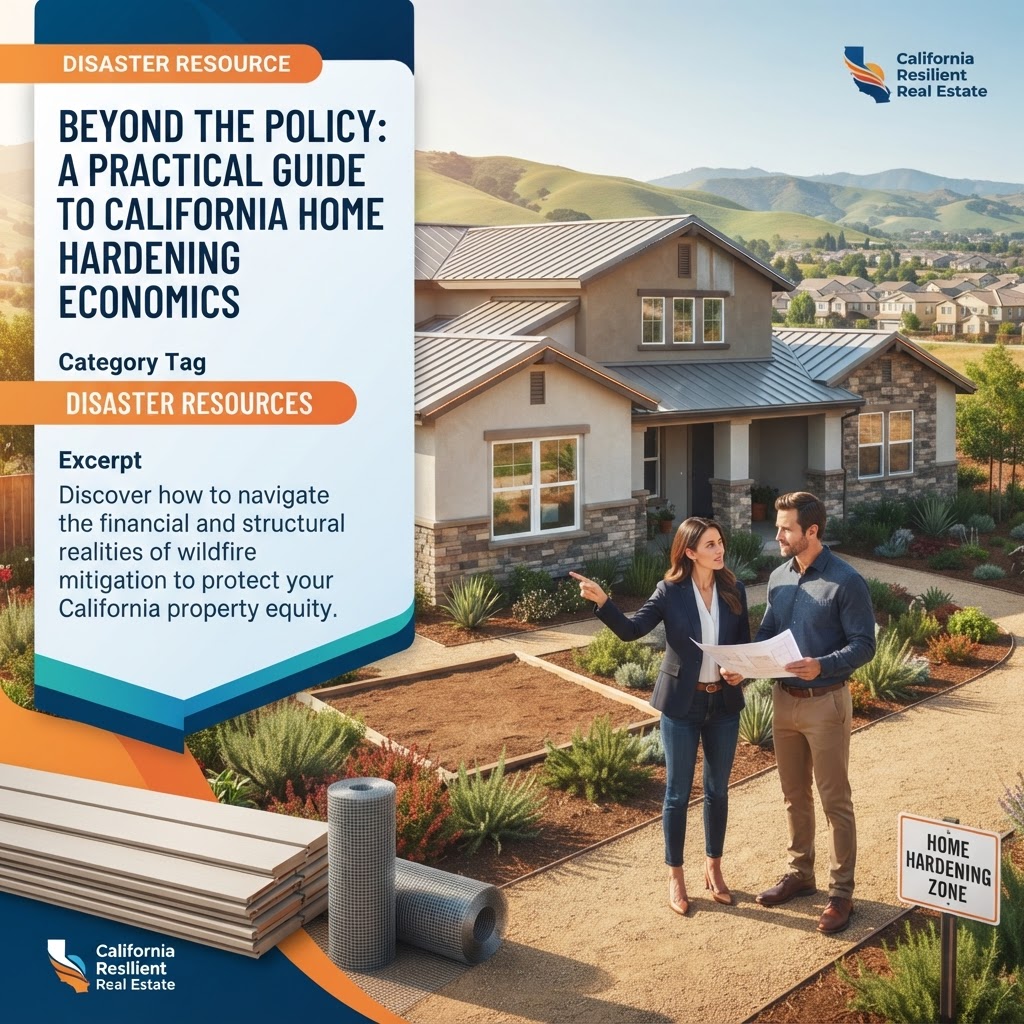
Beyond the Policy: A Practical Guide to California Home Hardening Economics
For California homeowners, the conversation around disaster preparedness has shifted from simple emergency kits to the structural and financial fortification of the home itself. As the state grapples with an evolving insurance landscape, understanding the intersection of building science and property economics is essential for long-term asset protection.
The Economics of Home Hardening
While the prospect of retrofitting a home can feel daunting, research indicates that mitigation is often more affordable than commonly perceived. According to University of California Cooperative Extension experts, effective retrofitting strategies for a standard 2,000-square-foot home can range from $2,000 to $10,000, with higher-end protections reaching upwards of $100,000 for comprehensive structural upgrades. These investments are increasingly viewed as 'pre-disaster mitigation'—a critical step in maintaining insurability and reducing the risk of underinsurance, a phenomenon where rebuilding costs significantly exceed policy limits.
Navigating the Regulatory and Financial Landscape
California is actively incentivizing these upgrades through programs like the California Wildfire Mitigation Program (CWMP). This initiative, managed by Cal OES and CAL FIRE, focuses on providing financial assistance for home hardening and defensible space creation, particularly in high-risk and socially vulnerable communities. Furthermore, recent legislative efforts, such as the 2026 wildfire prevention package, aim to codify home hardening certification programs and provide tax exemptions for property owners who invest in fire-resistant improvements.
Practical Takeaways for Homeowners
- Audit Your Vulnerabilities: Focus on Chapter 7A building code standards. Simple, high-impact retrofits—such as installing ember-resistant vents, upgrading to multi-pane tempered glass windows, and clearing combustible vegetation within the 'defensible space' zone—often yield the highest return on investment.
- Leverage State Resources: Before beginning major work, check the California Wildfire Mitigation Program portal to see if your property qualifies for financial assistance or grant programs.
- Insurance Transparency: Engage with your insurance provider regarding your mitigation efforts. Under current regulations, insurers are increasingly required to recognize the benefit of safety measures, such as upgraded roofs and community-wide Firewise USA designations, when calculating premiums.
- Plan for Infrastructure Resilience: For those in rural or semi-rural areas, ensure that critical systems—such as water pumps and backup generators—are fire-hardened and capable of operating during public safety power shutoffs.
By treating disaster preparedness as a capital improvement project rather than a reactive expense, California homeowners can better insulate their equity against the state's unique environmental risks.


