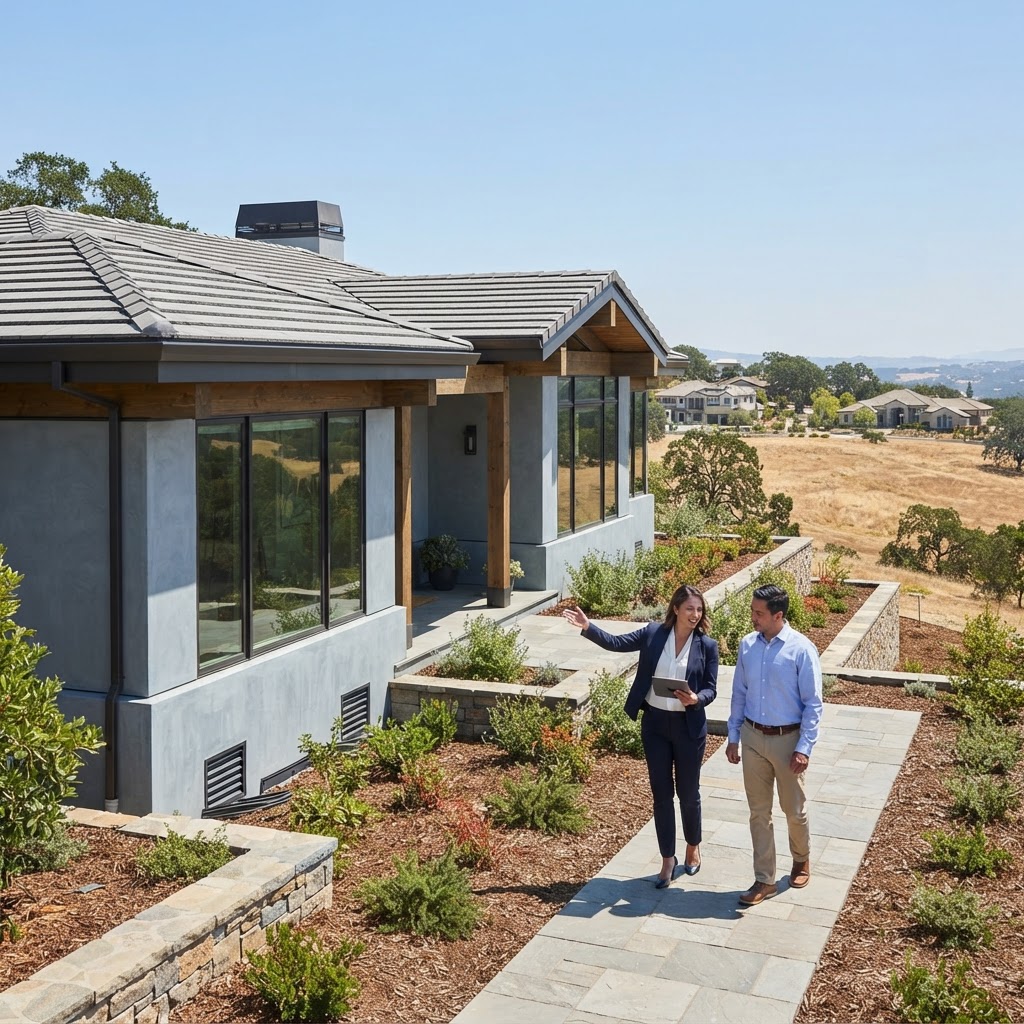
Across the Golden State, natural catastrophe readiness has transitioned from a seasonal checklist into the cornerstone of property finance and home preservation. Geospatial analysis and market findings published by McKinsey & Company reveal that California’s single-family residential market faces a private insurance coverage gap between $800 billion and $1.3 trillion for wildfire perils alone. Total market exposure—encompassing the fast-expanding footprint of the California FAIR Plan—reaches as high as $2.0 trillion. For homeowners, real estate buyers, and long-term property investors in 2026, understanding how to close this protection gap through verified physical hardening and multi-layered policy structuring is vital to maintaining equity.
The Dual-Threat Reality: Atmospheric Rivers and WUI Wildfires
California property owners face an overlapping matrix of natural perils. In the Wildland-Urban Interface (WUI), dense combustible fuel loads and Santa Ana or Diablo wind patterns exacerbate ignition risks. Simultaneously, recent winter seasons have underscored the compound threat of atmospheric rivers driving severe flood conditions, rapid snowmelt, and post-burn hillside mudslides. According to emergency guidance from Listos California (under the California Governor’s Office of Emergency Services, Cal OES), localized emergency readiness requires accounting for secondary perils: when extreme heat or wildfires strip topsoil, subsequent severe precipitation drastically amplifies flash flooding and foundation-scouring runoff.
The Modern Insurability Equation: Beyond the FAIR Plan
With private admitted carriers restricting underwriting books across high-severity risk zones, the state's insurer of last resort has witnessed surging volume. FAIR Plan policy liabilities have climbed well above historic norms, operating alongside a state-approved 35-plus percent rate filing cycle. However, a FAIR Plan dwelling policy exclusively covers direct fire, smoke, and lightning damages—leaving substantial gaps for flood, water backup, and personal liability. Homeowners seeking comprehensive solvency must pair FAIR Plan coverage with a companion Difference in Conditions (DIC) policy or examine surplus lines coverage.
Crucially, California Department of Insurance (CDI) mandates now require carriers to provide transparent wildfire risk scores and rate credits to homeowners who execute certified mitigation. The key for property owners is transforming physical upgrades into documented premium reductions.
The Cost-Effective Hardening Matrix
Structural hardening does not necessarily demand a complete rebuild. Economic studies from Headwaters Economics demonstrate that high-impact retrofits range between $2,000 and $15,000, systematically mitigating ember vulnerabilities:
- Ember-Resistant Ventilation ($300 – $1,200): Over 80% of homes lost in wildfire disasters ignite due to windborne embers penetrating attic, soffit, or crawlspace vents. Installing 1/16-inch to 1/8-inch noncombustible wire mesh or ember-deflection baffled vents (complying with Cal Fire standards) prevents internal ignition.
- Zone Zero Creation ($500 – $2,500): The immediate 0-to-5-foot envelope around a structure represents the most sensitive ignition perimeter. Replacing bark mulch with noncombustible river rock, masonry, or pea gravel and removing combustible wood fences directly abutting exterior siding interrupts ground-fire transmission.
- Eaves and Flashing Upgrades ($1,500 – $5,000): Enclosing open eaves (soffits) and installing metal valley and drip-edge flashing ensures airborne cinders have no combustible crevices to lodge against wood sheathing.
- Roofing Assemblies: Upgrading to Class A fire-rated materials—such as asphalt composition shingles, concrete tile, or treated metal—forms the baseline requirement for most carrier underwriting reviews under Title 24, Chapter 7A building standards.
Actionable Takeaways for Homeowners and Investors
- Obtain a Cal Fire Home Hardening Assessment: Request a localized defensible space inspection via CAL FIRE or your local fire protection district. Documenting Zone 0 compliance and ember-resistant retrofits establishes an auditable file for insurance mitigation credits.
- Audit Gap Vulnerabilities: If utilizing the California FAIR Plan, confirm active placement of an associated DIC endorsement to secure liability, theft, water damage, and storm exposure. Review flood map revisions through the National Flood Insurance Program (NFIP), particularly if located down-gradient from recent burn scars.
- Tap Financial Assistance Programs: Explore municipal and state initiatives, including the California Wildfire Mitigation Program and regional resource conservation district grants, which offer financial match assistance for structure hardening and hazardous vegetation clearance.
- Establish Multichannel Emergency Redundancies: Register mobile numbers and neighborhood coordinates with municipal Cal OES-integrated alert services (such as AlertCalifornia and Genasys Protect), and maintain mechanical water-shutoff wrenches and battery-backed satellite communications before peak fire weather seasons.


