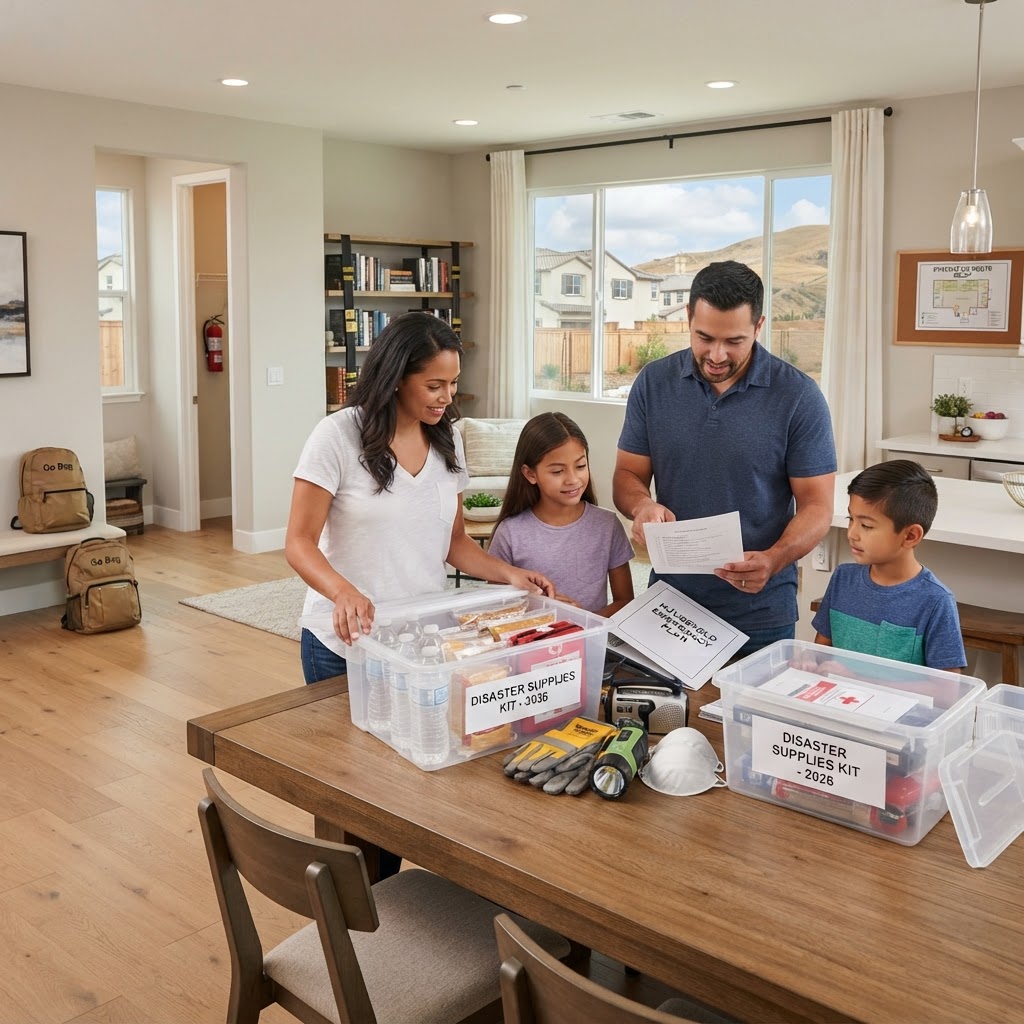
Across California, disaster preparedness is frequently discussed in macro terms—budget allocations, statewide emergency declarations, or structural insurance regulations. Yet the front line of disaster resilience begins and ends at the household level. While two-thirds of state residents acknowledge natural disasters as a serious threat to their personal and financial wellbeing, survey research from the Public Policy Institute of California (PPIC) reveals that only 35% of adult Californians consider themselves prepared for a disaster, with homeowners registering just 42% readiness. This widespread readiness deficit leaves millions of households exposed to multi-hazard liabilities—from fast-moving wildland-urban interface fires to atmospheric river flooding and seismic disruptions.
Understanding California's Compound Peril Profile
For California homeowners, disaster readiness is no longer an exercise in preparing for an isolated, once-in-a-generation event. The state’s geography demands a multi-hazard operational posture. High-risk zones frequently overlap:
- Ember-Driven Wildfires: The vast majority of structure ignitions originate not from wall-of-flame fronts, but from wind-driven embers penetrating attic vents or landing on combustible roofs and gutters, as noted in guidelines from CAL FIRE's Ready for Wildfire program.
- Secondary Post-Fire Debris Flows: Burn scars stripped of native vegetation lose cohesive root structure, converting subsequent heavy winter rain events into rapid mudslides and flash floods.
- Seismic Disruptions: Beyond structural shaking, moderate-to-severe seismic activity routinely severs municipal water lines, cripples electrical infrastructure, and ruptures residential natural gas connections, inducing secondary fire ignitions.
Closing the Preparation Deficit: A Step-by-Step Household Playbook
Overcoming the gap between perceived risk and practical readiness requires shifting from passive worry to systematic execution. California emergency management agencies, including the California Governor's Office of Emergency Services (Cal OES) and Listos California, emphasize dividing household preparedness into tactical categories: life safety, envelope protection, and financial resilience.
1. Immediate Life-Safety Infrastructure
Every household must establish basic off-grid autonomy designed for at least 72 to 96 hours:
- Localized Emergency Notification: Relying solely on wireless emergency alerts can fail during cellular tower outages. Homeowners should register with their county's emergency warning system (e.g., Everbridge, AlertSCC, AlertLA) and maintain a hand-crank NOAA weather radio.
- Redundant Evacuation Mapping: Plan at least two distinct vehicular egress paths and one pedestrian route out of your immediate neighborhood. Ensure driveway clearances maintain a minimum vertical clearance of 13.5 feet and clear widths for first responder apparatus access.
- Dedicated Utility Shutoff Familiarity: Install a manual wrench adjacent to your exterior natural gas meter, or fit an automated seismic shutoff valve. Every adult resident should know how to safely disconnect the main water shutoff valve and the central breaker panel.
2. Practical Home Envelope Mitigations
Homeowners do not need five-figure renovation budgets to meaningfully reduce ignition and structural vulnerability. Cal OES and CAL FIRE recommend focusing first on high-ROI physical interventions:
- Venting Retrofits: Replace standard attic and crawlspace exterior vents with 1/16-inch to 1/8-inch noncombustible, corrosion-resistant metal mesh, or install California State Fire Marshal-listed flame-and-ember-resistant vent assemblies.
- The Zero-to-Five-Foot Perimeter (Zone 0): Clear all dead vegetation, dried mulch, leaves, and combustible storage from the immediate five-foot perimeter of the foundation. Replace wood mulch with noncombustible stone, gravel, or pavers.
- Roof and Gutter Clearance: Maintain clear rain gutters and install noncombustible metal drip edges beneath the roofline to keep embers from reaching sub-roof plywood sheathing.
3. Insurance and Documentation Continuity
Physical survival is paramount, but rapid economic recovery hinges on proper asset documentation before an emergency strikes:
- Comprehensive Digital Inventory: Record a high-resolution, narrated video walkthrough of every room, closet, and storage structure on your property. Upload the encrypted file, alongside appraisals and purchase receipts, to secure cloud storage.
- Annual Policy Reconciliation: Verify whether your policy includes Extended Replacement Cost coverage and Ordinance or Law coverage (which pays for modern building code compliance upon reconstruction). Keep hard copies of policy declarations and adjuster claims hotlines in an evacuation “go-bag.”
- Explore Policy Incentives: As outlined in home hardening insurance guidance, mitigation measures—such as noncombustible gutters, Class A roofing, and ember-resistant vents—can qualify dwelling policies, including California FAIR Plan coverage, for discounts of up to 16.4% on the wildfire portion of premiums.
State and Local Resilience Resources
Homeowners do not have to tackle disaster preparedness in isolation. State and municipal resources exist to offset logistical and financial friction:
- Listos California: Offers accessible emergency plan templates, multilingual disaster guides, and neighborhood readiness kits.
- Local Fire Safe Councils & Chipper Programs: Grassroots community groups frequently provide free or heavily subsidized neighborhood brush disposal and wood chipping to facilitate defensible space compliance.
- California Wildfire Mitigation Program (CWMP): Managed jointly by Cal OES and the California Department of Forestry and Fire Protection, this initiative directs grant funds toward high-hazard communities for structural hardening.
Disaster preparedness is not an all-or-nothing milestone, but an ongoing maintenance discipline. By methodically addressing early life-safety measures, hardening structural vulnerabilities, and securing policy documentation, California homeowners can dramatically improve household survival rates and protect their life’s largest physical asset.


