The Shift from Mitigation to Operational Autonomy
In the California real estate market of August 2026, disaster preparedness has evolved beyond the \"hardened shell\" of fire-resistant siding and seismic retrofits. While structural integrity remains foundational, a new valuation driver has emerged: Infrastructure Autonomy. As utility rates climb and Public Safety Power Shutoffs (PSPS) become a recurring summer reality, the ability of a property to function independently of centralized systems is no longer a niche preference—it is a liquidity requirement.
According to data from the California Public Utilities Commission (CPUC), residential electricity rates have seen a cumulative increase of 38% since 2023, driven largely by the massive capital expenditures required for grid hardening. For homeowners, preparedness now means insulating oneself not just from the fire itself, but from the systemic failures that follow.
The Energy Island: Solar + Storage as a Disaster Necessity
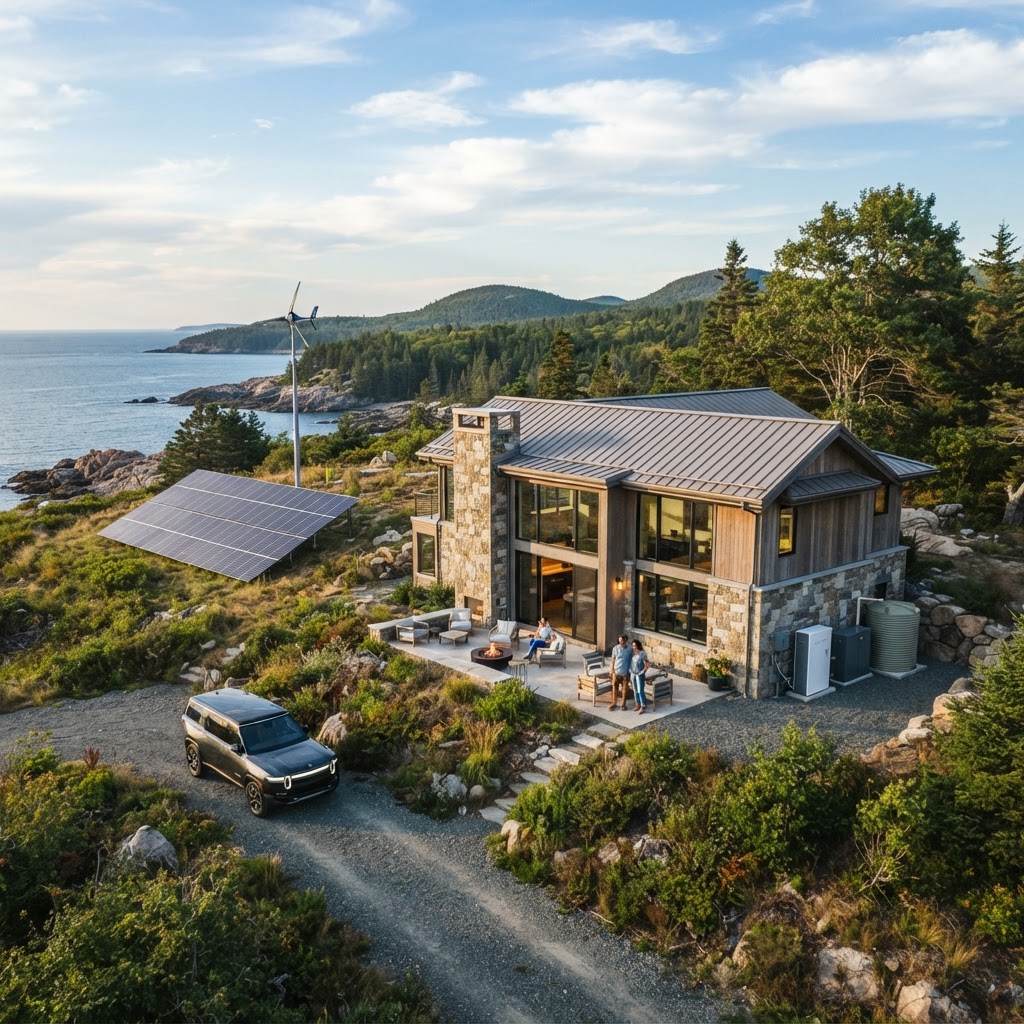
The 2026 market recognizes solar-plus-storage systems not merely as green upgrades, but as essential life-safety equipment. Research from the Lawrence Berkeley National Laboratory (LBNL) indicates that homes equipped with at least 20kWh of battery storage and smart-load management now command a 4.5% to 7% premium over non-equipped counterparts in high-fire-threat districts (HFTDs).
During active wildfire events, grid de-energization often precedes the fire front by hours. A home that can maintain HVAC filtration systems, communications, and refrigeration during these windows avoids the \"survival gap\" that forces premature evacuation. For investors and homeowners, this autonomy significantly reduces the likelihood of Additional Living Expense (ALE) insurance claims, which have seen stricter limits and higher deductibles in recent policy renewals.
Water Security: The Next Frontier of California Resilience
While energy autonomy is well-documented, 2026 has seen a surge in \"Water Independence\" features. With California’s groundwater management acts (SGMA) reaching critical implementation phases, properties with redundant water sources are seeing increased buyer competition. These include:
- Atmospheric Water Generation (AWG): Extracting humidity from the air to provide potable water when municipal lines are compromised or shut down for fire suppression.
- Greywater Recapture: Systems that divert shower and laundry water to maintain defensible space hydration during drought-induced water rationing.
- Smart Leak Detection: MLS data from early 2026 shows that homes with integrated shut-off valves and moisture sensors sell 12 days faster in urban-wildland interface zones, as these features directly lower the risk of secondary water damage during seismic events.
Insurance Implications: The \"Off-Grid\" Credit
The California Department of Insurance has increasingly pressured carriers to acknowledge owner-led mitigation. However, a specific trend in 2026 is the emergence of \"Resilience Endorsements\" for homes that can prove 72 hours of operational autonomy. Carriers are beginning to view these homes as lower risks for \"loss of use\" payouts. For a homeowner, documenting these systems through a certified resilience audit can be the difference between a standard policy and a non-renewal notice from a Tier-1 carrier.
Practical Takeaways for the 2026 Homeowner
1. Prioritize \"Black-Start\" Capability
Ensure your solar and storage system is configured for \"black-start\" (the ability to restart the system using only solar power after a total battery drain). Without this, your system may remain dormant during an extended multi-day grid outage, even in full sun.
2. Quantify Autonomy in Appraisals
When selling or refinancing, provide the appraiser with a \"Resilience Data Sheet.\" This should include the system’s kilowatt-hour capacity, the estimated days of autonomy based on baseline loads, and the specific insurance premium reductions achieved. Do not assume the appraiser will intuitively value a home’s ability to function off-grid.
3. Diversify Communication Redundancy
In California, disaster preparedness includes digital resilience. Satellite-based internet (such as Starlink) integrated with a home’s backup power system is now a standard expectation for remote work continuity during regional disasters. Verify that your hardware is protected by high-grade surge suppression, as grid fluctuations during fire-related switching are a leading cause of hardware failure.
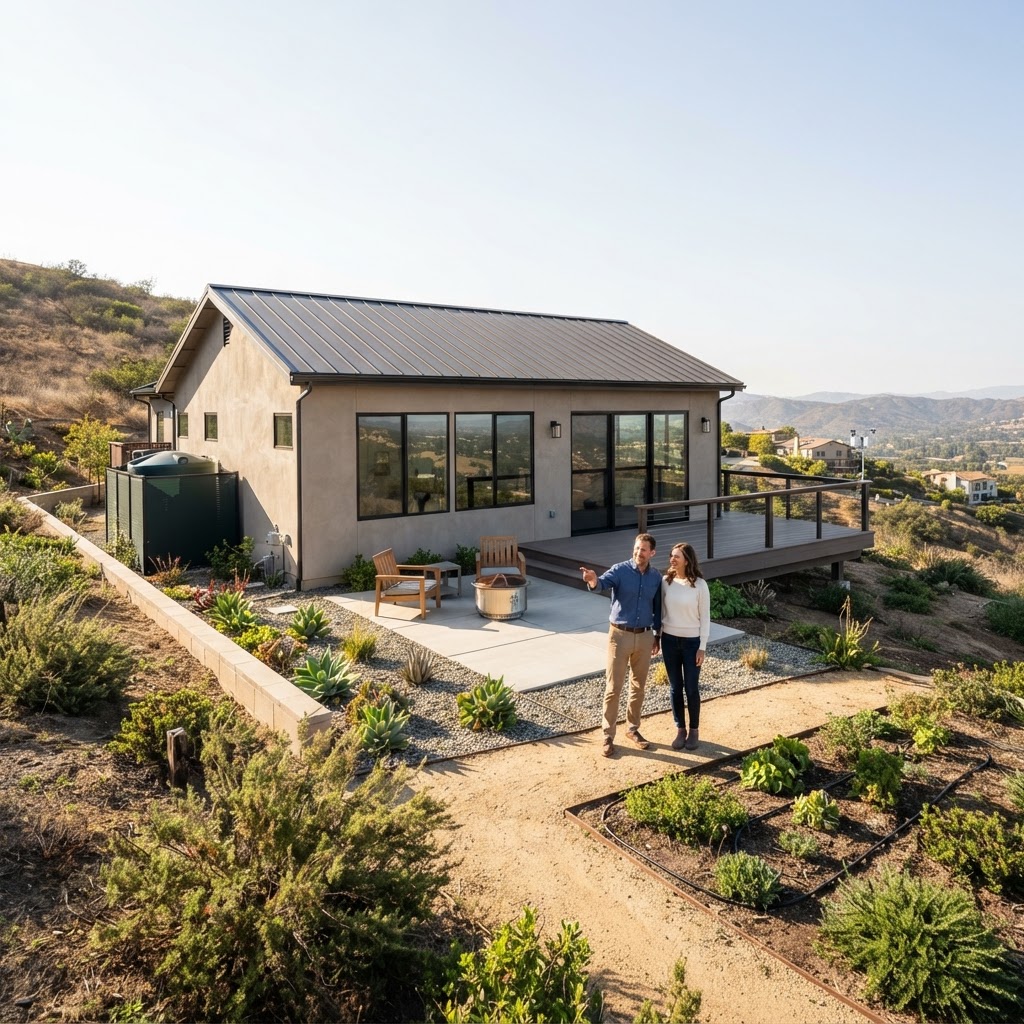
4. Integrate Defensible Space with Water Recycling
Invest in automated, gravity-fed greywater systems to maintain the 0-5 foot non-combustible zone and the 5-30 foot lean-clean-and-green zone. Keeping vegetation hydrated without relying on the municipal grid is a critical tactical advantage when water pressure drops during firefighting operations.