Beyond Hardening: The New Metric of Recovery Velocity
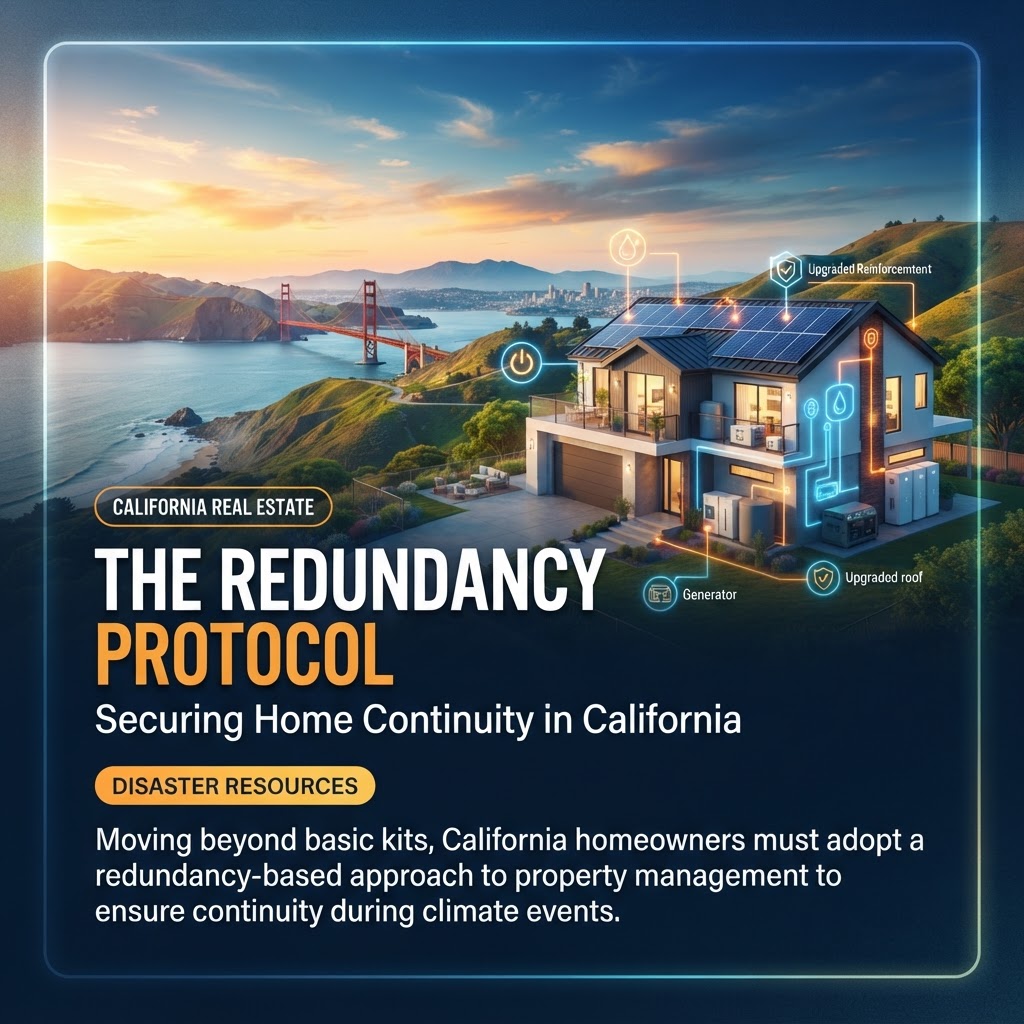
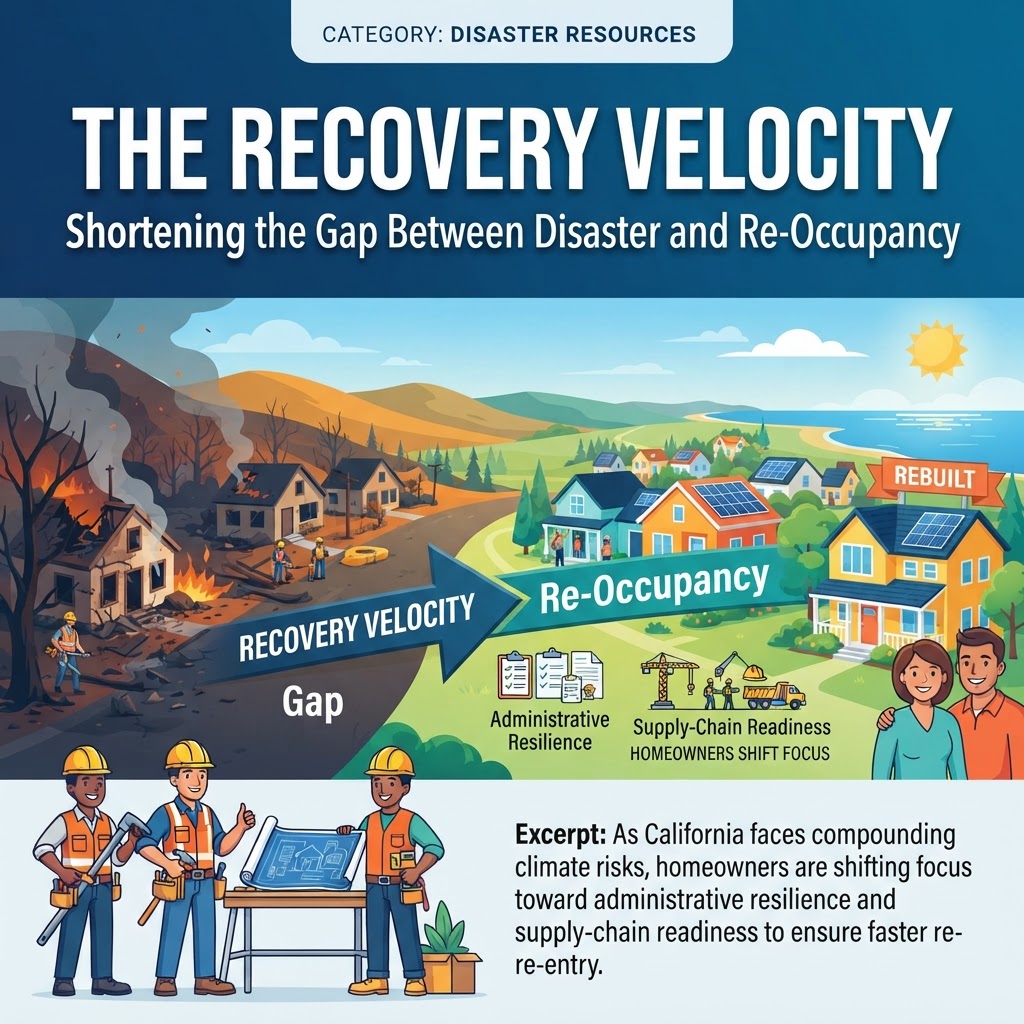
For years, the California real estate narrative has focused on 'hardening'—the physical reinforcement of structures against fire, flood, and seismic activity. However, as we enter late 2026, a new metric has emerged for the savvy homeowner: Recovery Velocity. This concept measures the time elapsed between a catastrophic event and the moment a household returns to functional normalcy. With the California Department of Insurance reporting that administrative and logistical delays now account for nearly 30% of total displacement time, resilience is being redefined by how quickly a homeowner can navigate the post-disaster friction.
The Administrative Vault: Digital Parity in a Physical Crisis
Data from the Federal Emergency Management Agency (FEMA) suggests that homeowners who maintain 'digital twins' of their property records, insurance policies, and asset inventories secure claims settlements up to 40% faster than those who do not. In the California market, where property values often outpace standard inflation, having a precise, time-stamped digital record is essential for avoiding under-insurance disputes.
Practical Takeaway: Establish an 'Administrative Vault' using encrypted cloud storage. This should include high-resolution video walkthroughs of every room, scans of major appliance receipts, and a pre-signed 'Right of Entry' agreement with a trusted contractor. In the immediate aftermath of a disaster, these documents are often the only way to bypass the initial triage delays that paralyze local government and insurance adjusters.
Supply Chain Pre-Positioning: The Vendor Roster
The 2024-2025 construction labor shortages in the Inland Empire and Sierra Foothills highlighted a critical vulnerability: the scarcity of qualified labor following a regional disaster. Homeowners who wait until a disaster occurs to find a contractor often face a 12-to-18-month backlog for repairs. Resilience in 2026 requires 'pre-positioning' professional relationships.
Real estate investors and homeowners should maintain a 'Resilience Roster' of at least three pre-vetted, licensed contractors who specialize in disaster restoration. According to recent California Association of Realtors (CAR) surveys, properties with existing service contracts or established relationships with local trades see a marked increase in 'resumption speed,' a factor that is beginning to influence the resale value of homes in high-risk WUI (Wildland-Urban Interface) zones.
The Maintenance Lag: Protecting Your Mitigation Investments
Many homeowners invest in wildfire-resistant vents or seismic shut-off valves only to let them fall into disrepair. A clogged ember-resistant vent is no more effective than a standard one. The California Building Standards Commission emphasizes that the efficacy of resilience upgrades degrades by approximately 15% annually without proper maintenance. A home's disaster readiness is only as good as its last inspection.
Practical Takeaway: Integrate disaster-specific maintenance into your seasonal home care. This includes checking the seals on flood-proofing barriers, testing seismic gas shut-off valves, and ensuring that 'defensible space' hasn't been compromised by new growth or decorative mulch. A quarterly 'Resilience Audit' should be as routine as changing HVAC filters.
Conclusion: The Strategic Shift to Resilience Agility
In the current California landscape, surviving a disaster is the baseline; thriving afterward is the goal. By focusing on Recovery Velocity—through administrative digitization, vendor relationship management, and rigorous maintenance—homeowners can minimize the financial and emotional toll of displacement. In a market where stability is the ultimate luxury, these strategies provide a competitive edge that goes far beyond mere structural integrity.