The Shift from Fire to Water: California’s New Hazard Landscape
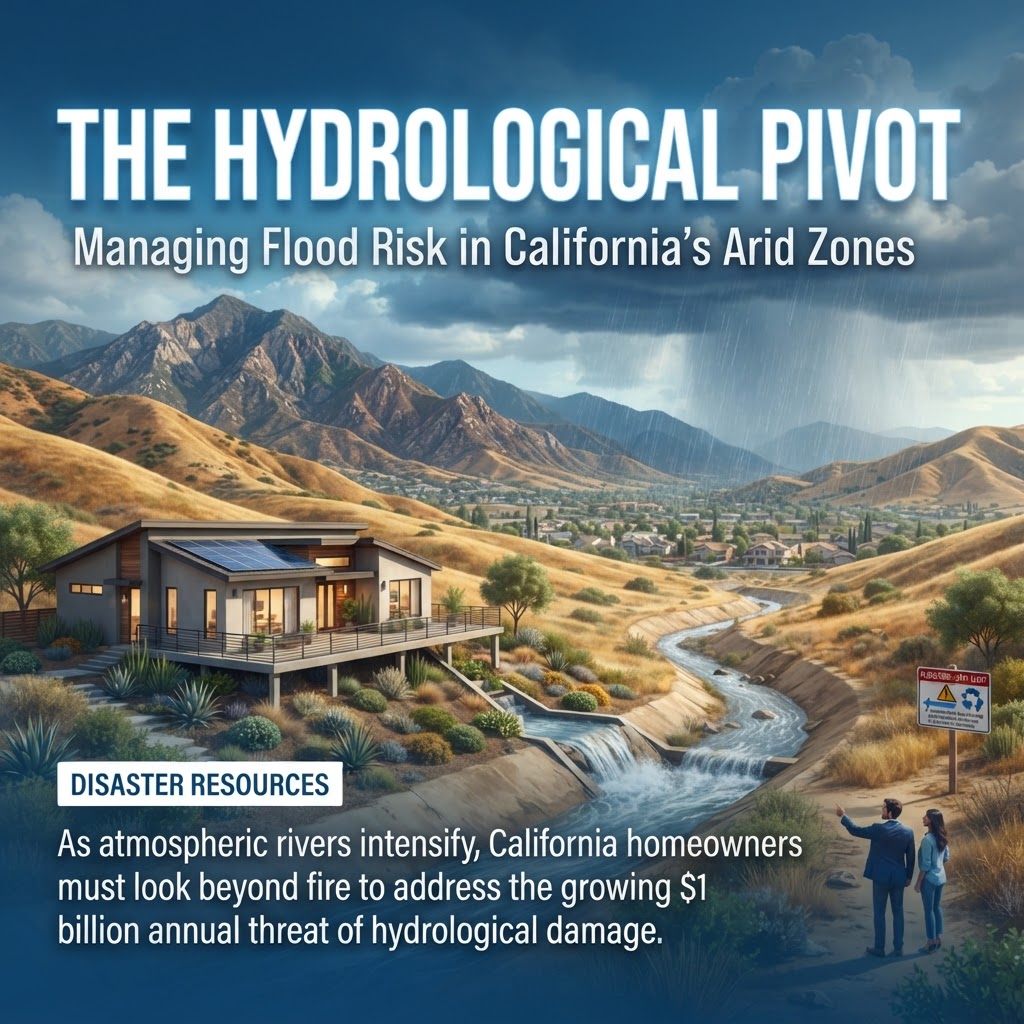
While the state’s resilience efforts have historically focused on the 'Zero-Zone' defensible space and seismic retrofitting, a new hazard is rapidly climbing the priority list for California homeowners: extreme precipitation. By mid-2026, data from the California Department of Water Resources (DWR) indicates that atmospheric rivers now account for nearly 50% of the state’s annual precipitation, often arriving in high-intensity bursts that overwhelm traditional drainage systems. For the modern homeowner, disaster preparedness now requires a 'hydrological pivot'—recognizing that even properties outside traditional floodplains are at risk.
The Zone X Fallacy: Why FEMA Maps Are Only a Starting Point
A significant portion of California’s residential real estate is located in 'Zone X'—areas FEMA designates as having a moderate-to-low risk of flooding. However, recent data from the First Street Foundation suggests that nearly 25% of all flood-related insurance claims in California now originate from these supposedly safe zones. Urban flooding, driven by 'pluvial' events (surface water flooding caused by rain independent of an overflowing body of water), is the primary culprit.
Homeowners must recognize that FEMA maps are retrospective and often fail to account for the increasing frequency of short-duration, high-intensity storms. In cities like Los Angeles and Sacramento, where aging infrastructure struggles to move surface water, the risk of localized inundation is significantly higher than historical maps suggest. For investors and sellers, proving a property has superior drainage capacity is becoming as critical as a fire-hardened roof.
Hardscaping for Infiltration: Beyond the Sandbag
Traditional disaster preparedness often focuses on temporary barriers like sandbags. However, long-term resilience requires engineering the property to absorb, rather than just divert, water. In many California jurisdictions, the trend toward 'impermeable' luxury landscaping—massive concrete patios and non-porous driveways—has exacerbated local flood risks.
- Permeable Pavers: Swapping standard asphalt or concrete for permeable interlocking concrete pavers (PICP) allows water to infiltrate the soil, reducing the load on municipal storm drains and preventing pool-back against the foundation.
- Bioswales and Rain Gardens: Strategic grading that directs runoff into planted depressions can manage thousands of gallons of water during a 24-hour storm event, while simultaneously recharging local groundwater.
- Sump Pump Redundancy: For homes with crawlspaces or basements, a single sump pump is no longer sufficient. Resilience standards now dictate dual-pump systems with battery backups, as power outages frequently coincide with heavy rain events.
Closing the Insurance Gap: The NFIP vs. Private Market
As of 2026, the standard California HO-3 homeowners policy still strictly excludes flood damage. With the average cost of just one inch of water in a 2,500-square-foot home exceeding $25,000, the lack of flood coverage is a major financial vulnerability. While the National Flood Insurance Program (NFIP) remains the primary source of coverage, the private flood insurance market in California has matured, offering higher limits for luxury properties that exceed the NFIP’s $250,000 structural cap.
Homeowners in Zone X should consider 'Preferred Risk Policies,' which are significantly more affordable than high-risk zone premiums but provide the same critical coverage for mudflows—a secondary risk that often follows California wildfires.
Practical Takeaways for Homeowners
- Conduct a Topographical Audit: Hire a surveyor or use high-resolution LiDAR tools to identify low spots where water may pond during extreme rain.
- Verify Gutter Capacity: Upgrade to 6-inch K-style gutters and oversized downspouts. Most California homes were built with 4-inch systems designed for moderate rainfall, not the 3-inch-per-hour deluges seen in recent seasons.
- Secure a Flood Rider: Contact your insurance broker to price out a flood endorsement or a standalone policy, even if your lender does not mandate it.
- Monitor Groundwater Levels: In regions like the Central Valley or coastal basins, rising water tables can cause hydrostatic pressure that cracks foundations. Professional waterproofing of the exterior foundation wall is a high-ROI resilience investment.