Shifting the Paradigm: From the Individual Lot to the Shared Perimeter
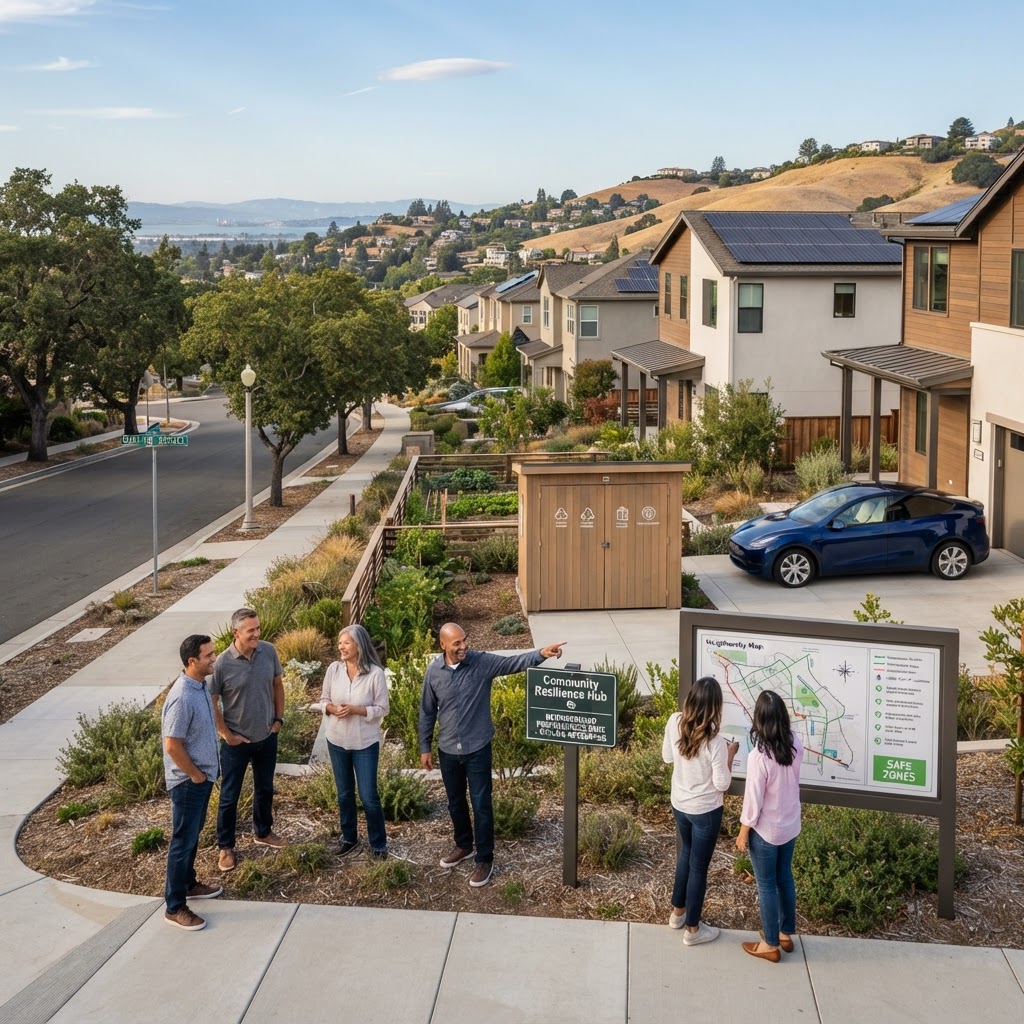
For years, California homeowners have focused on the 'defensible space' within their own property lines. However, as of July 2026, the insurance market and state regulatory bodies have signaled a definitive shift. The 'The Structural Synthesis' and individual '96-hour autonomy' are no longer the ceiling of preparedness; they are the floor. To truly mitigate risk and preserve equity in high-hazard zones, the focus has moved to The Collective Perimeter—neighborhood-scale resilience that treats a community as a single, defensible ecosystem.
The Insurance Mandate for Community Action
The California Department of Insurance (CDI) now requires all insurers under the 2024 'Safer from Wildfires' framework to provide discounts not just for individual home hardening, but for community-level certification. Data from the National Fire Protection Association (NFPA) indicates that neighborhoods enrolled in the Firewise USA program have seen a 12-18% higher rate of insurance renewal compared to adjacent non-certified neighborhoods. In a market where non-renewals were once the norm, collective action has become a primary driver of liquidity.
Data-Backed Resilience: The Power of Proximity
According to 2025 CAL FIRE incident reports, structures within communities that maintained a unified Community Wildfire Protection Plan (CWPP) experienced 40% less damage during high-wind embers storms. This is because ember ignition—the cause of 60% to 90% of home losses—is a neighborhood problem, not an individual one. If a neighbor’s wood fence or unmaintained vegetation ignites, the radiant heat poses an existential threat to even the most hardened 'Grade A' home next door.
Practical Takeaways for the 2026 Homeowner
- Audit the Neighborhood CWPP: Before purchasing or selling, verify if the community has an active Community Wildfire Protection Plan. This document dictates federal and state grant eligibility for fuel reduction projects that protect property values.
- Leverage the Firewise USA Framework: Homeowners should spearhead a local Firewise committee. This requires as few as eight individual dwellings to participate and can result in mandatory insurance premium credits ranging from 5% to 15% across the board.
- Infrastructure Collective: Beyond fire, look for communities investing in shared microgrids and hardened ingress/egress routes. Modern MLS listings in California now frequently include a 'Resilience Score' that factors in the redundancy of community utilities.
- Common Area Accountability: If your property is part of an HOA, ensure that the 'Reserve Study' includes specific line items for vegetation management and exterior maintenance of shared structures to meet current 2026 state hardening standards.
Conclusion: The Valuation of Social Capital
In the current California real estate landscape, the most resilient asset is no longer just the home built of non-combustible materials; it is the home situated within a coordinated, mitigated neighborhood. By moving from individual defense to collective resilience, homeowners are not just protecting their lives—they are securing the long-term financial viability of the California dream.