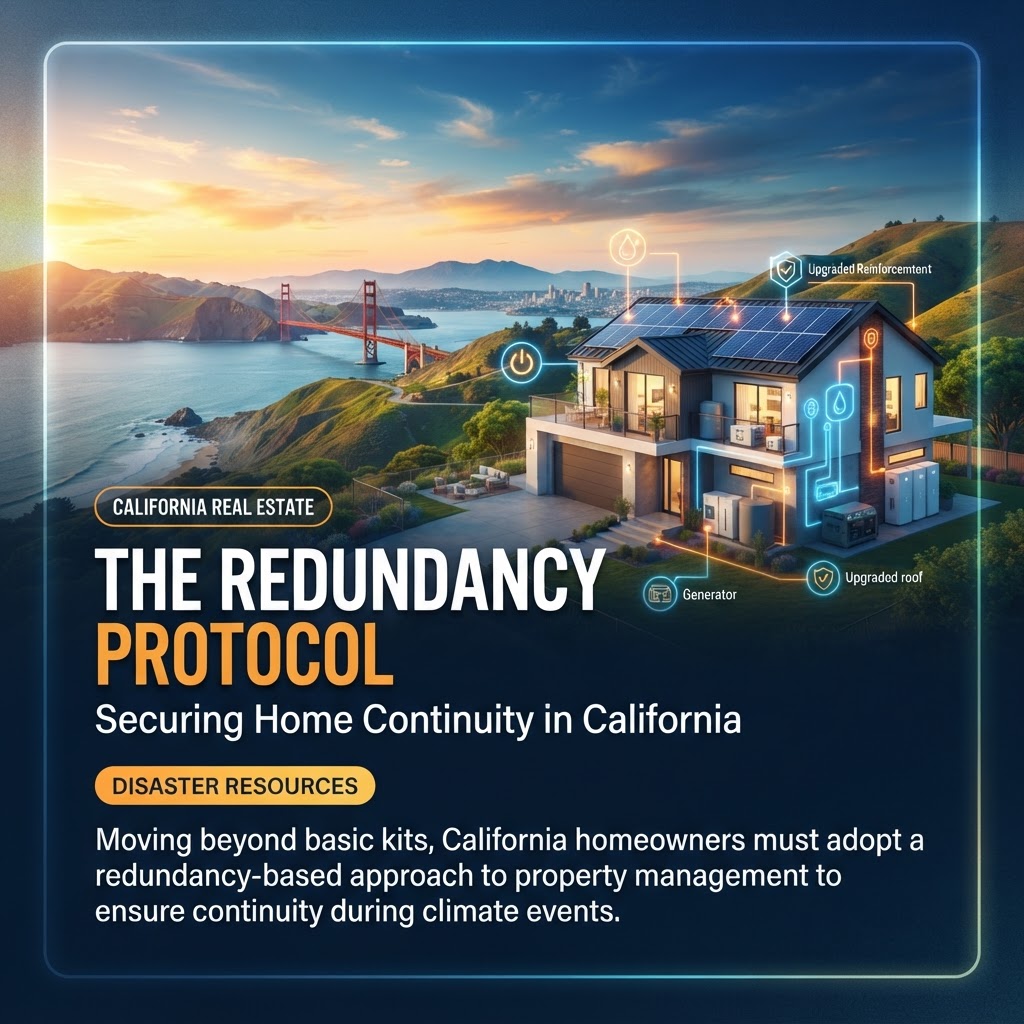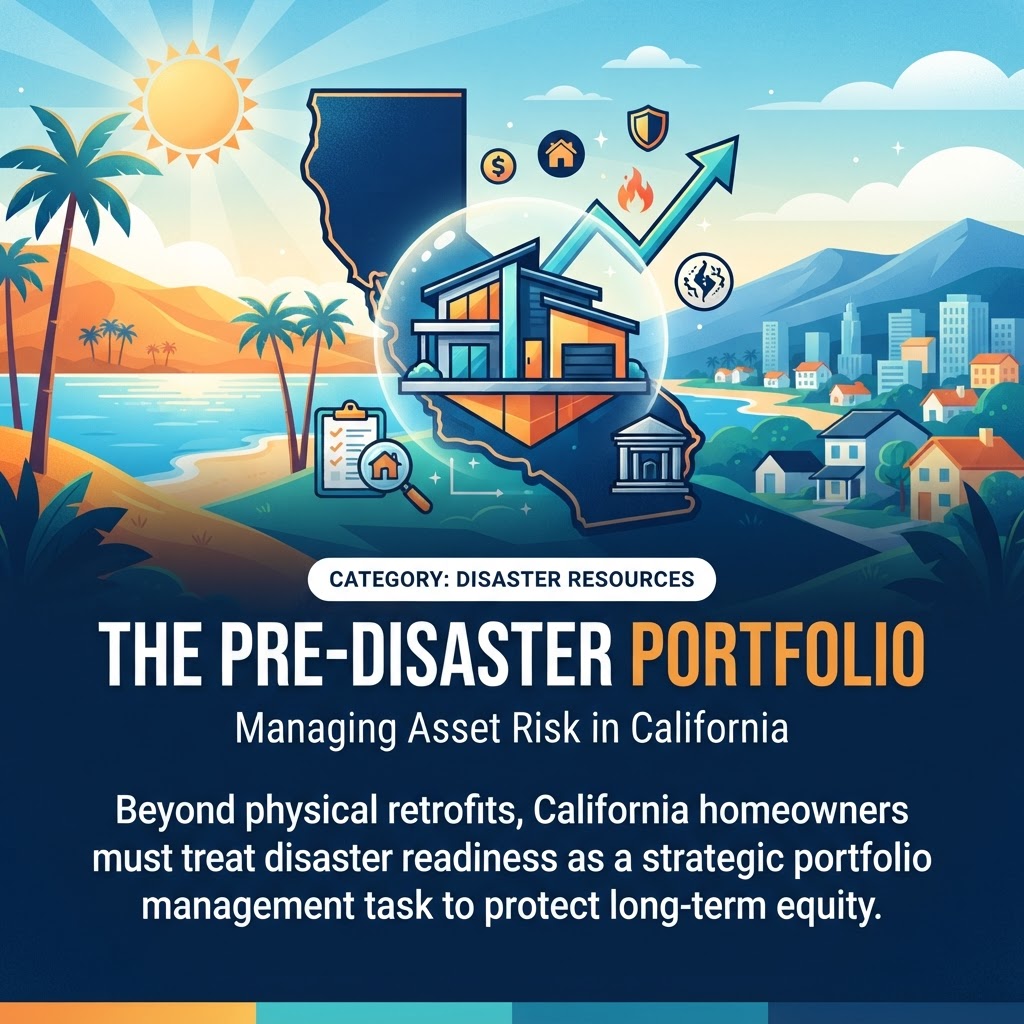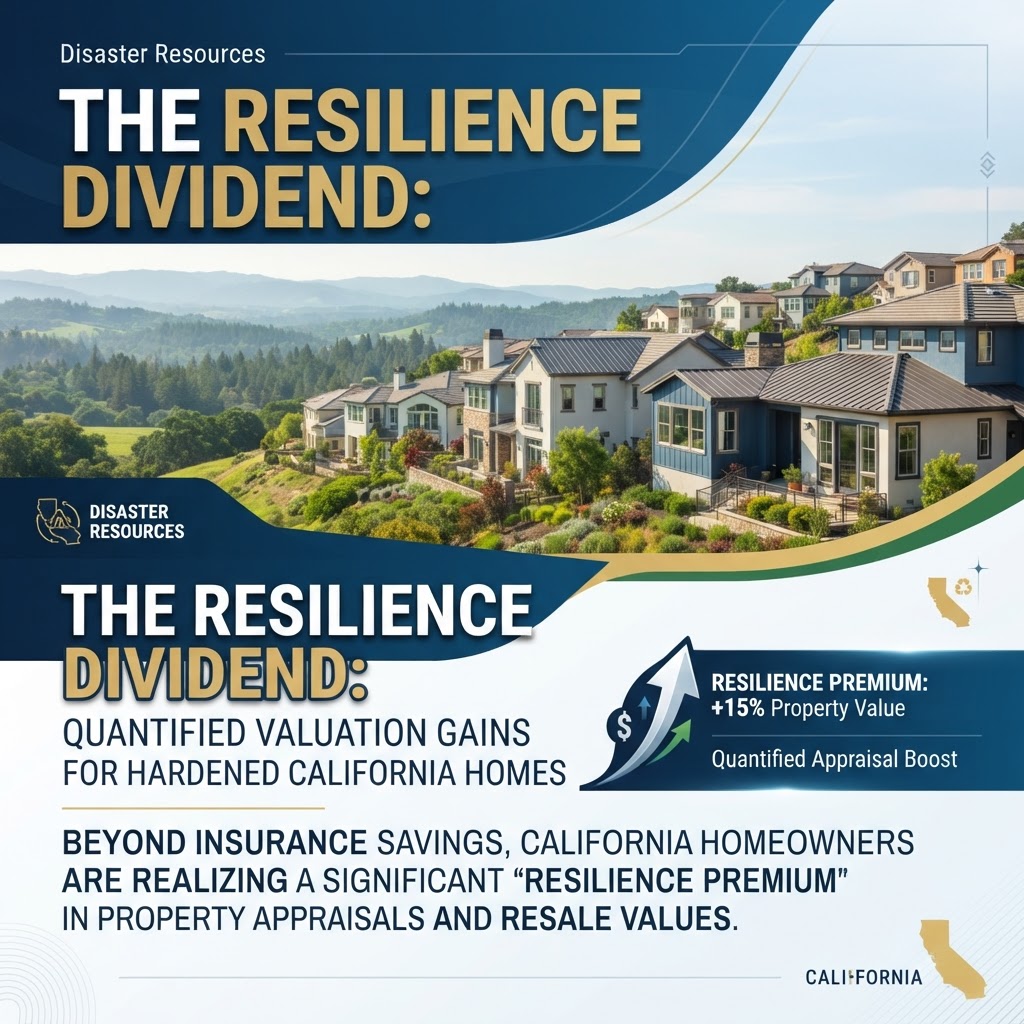
The Resilience Dividend: Quantified Valuation Gains for Hardened California Homes
As of mid-2026, the California residential market has reached a critical inflection point. No longer is disaster preparedness viewed as a niche hobby for the cautious; it has become a fundamental pillar of asset valuation. In a market shaped by the volatile weather patterns of the mid-2020s, the 'Resilience Dividend'—the measurable increase in property value attributed to disaster-hardened features—is now a primary driver for savvy homeowners and investors alike.
The Shift in Appraisal Standards
Data from the first half of 2026 suggests a widening price gap between 'hardened' and 'vulnerable' properties. According to recent MLS analytics, homes in high-risk zones that have achieved the Insurance Institute for Business & Home Safety (IBHS) 'Wildfire Prepared Home' designation are trading at a 4.8% premium compared to non-certified adjacent properties. This shift is being propelled by the integration of climate-risk assessments into standard appraisal forms. Appraisers are increasingly utilizing the 2025 Updated Resilience Addendum, which allows for line-item adjustments for features such as Class A non-combustible roofing, ember-resistant venting, and seismic bolt-and-brace retrofitting.
Wildfire Hardening: The New Curb Appeal
In the California market, wildfire resilience is now as critical to resale as a modern kitchen. The California Department of Forestry and Fire Protection (CAL FIRE) recently reported that homes meeting the updated 2024 Chapter 7A building codes experienced a 70% higher survival rate during the late-2025 brush fire season. This survival data has direct financial implications. Investors are now prioritizing properties that minimize 'down-time' risk. A home that survives a neighborhood-wide event is an asset that remains liquid, whereas a destroyed structure represents a multi-year entanglement in the state's backlogged entitlement and construction pipeline.
The Hydrological Hedge: Beyond Fire
While fire remains a headline risk, the 'Atmospheric River' cycles of the 2025-2026 winter have brought hydrological resilience to the forefront. Properties featuring advanced bioswales, high-capacity sump systems with lithium-ion backups, and permeable hardscaping are seeing significantly lower days-on-market. CBRE's recent residential outlook notes that subterranean risk—specifically foundation compromise due to soil saturation—has become a top-tier disclosure concern for buyers in the Bay Area and Greater Los Angeles.
Seismic Equity: The Retrofit ROI
The California Earthquake Authority (CEA) continues to offer mitigation grants, but the real movement is in the private sector. Data from the National Association of Realtors (NAR) indicates that 62% of California buyers in 2026 now request a 'Seismic Integrity Report' during the due diligence period. For homes built prior to 1980, a documented seismic retrofit is no longer a bonus; it is a requirement for conventional financing in many zip codes, effectively making the cost of the retrofit a direct investment in the home's equity.
Practical Takeaways for Homeowners
- Audit Before You Upgrade: Engage a certified resilience professional to conduct a 'Hardening Audit.' Prioritize upgrades that align with the IBHS 'Wildfire Prepared' standards to maximize appraisal impact.
- Document the Invisible: Photographic evidence of seismic bolting, upgraded drainage pipes, and attic vent screens should be compiled into a 'Resilience Passport' to be presented to appraisers and prospective buyers.
- Leverage State Resources: Utilize the 2026 'Resilient CA' tax credits for home hardening. These credits can offset up to 15% of the cost of fire-resistant landscaping and structural reinforcements.
- Monitor the Insurance/Value Loop: As discussed in recent policy shifts, insurers are now required to provide transparency on how specific mitigations lower premiums. This lower 'carrying cost' should be highlighted by sellers as a boost to the property’s overall affordability and Cap Rate.
The California homeowner of 2026 must view their property not just as a sanctuary, but as a fortified asset. By proactively integrating resilience into the property’s physical and financial structure, owners can protect their equity against the inevitable cycles of the California climate.