The Administrative Chasm: The Hidden Risk in California Recovery
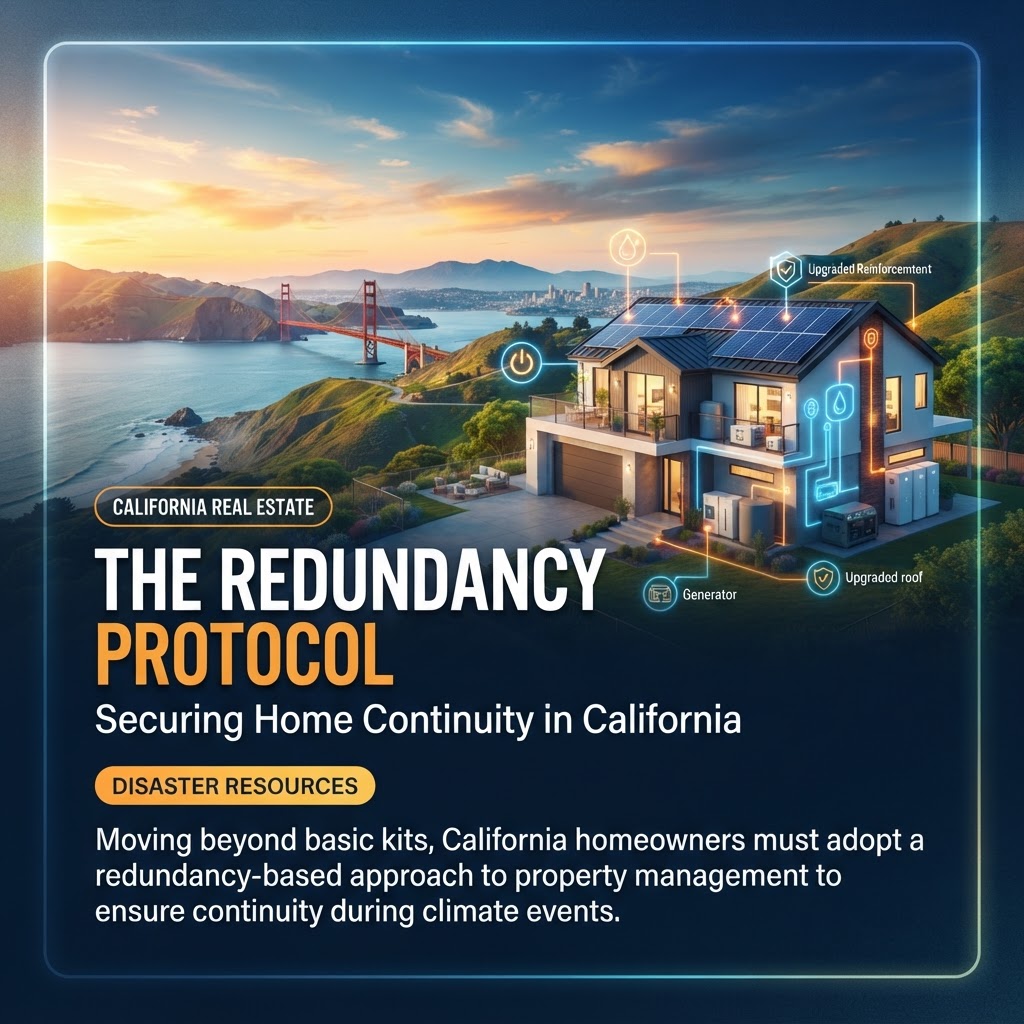
For the modern California homeowner, disaster preparedness has evolved beyond the installation of Ember Guard vents and seismic shut-off valves. While physical hardening is essential, a new bottleneck has emerged in the state’s recovery landscape: the administrative chasm. Data from the California Department of Insurance and recent post-fire recovery audits indicate that the gap between a total loss event and the commencement of reconstruction now averages 18 to 24 months, largely due to permitting backlogs and updated zoning compliance requirements.
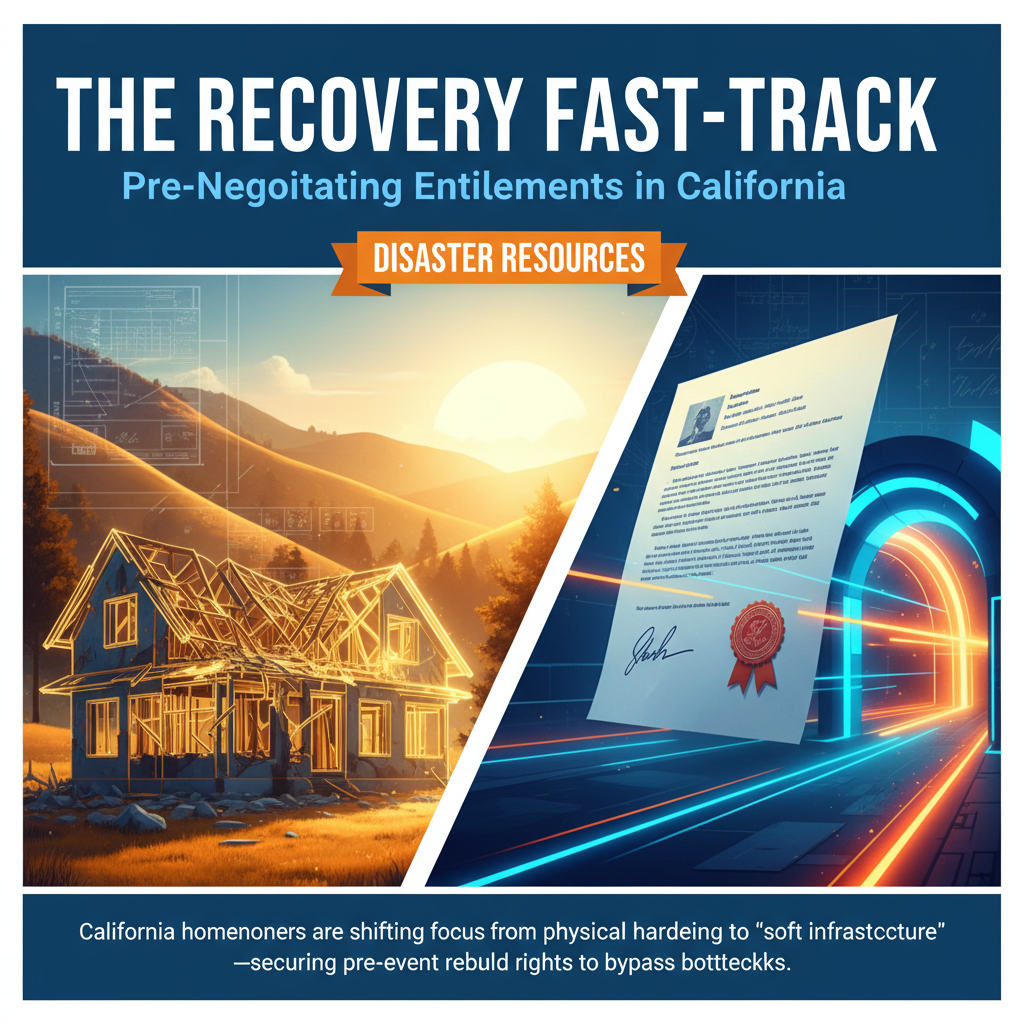
As of June 2026, savvy homeowners and institutional investors are adopting a 'Soft Infrastructure' strategy. This involves securing pre-event entitlements and professional service agreements (PSAs) to ensure that when a disaster strikes, the path to reconstruction is legally and procedurally lubricated.
The Rebuild Right: Navigating Senate Bill 381 and Local Ordinances
Under current California law, including refinements made through legislative sessions leading into 2026, homeowners often face a 'zoning trap' following a disaster. If a home is destroyed, local jurisdictions may require the new structure to meet current—not original—zoning codes, which can significantly reduce square footage or alter property use.
Strategic preparedness now involves obtaining a 'Zoning Verification Letter' or a 'Pre-Disaster Certificate of Compliance.' These documents, while not a guarantee of a permit, establish a legal baseline for a property’s non-conforming rights. According to the National Association of Realtors (NAR), properties in high-risk zones that maintain 'ready-to-rebuild' documentation see a 4-7% valuation premium compared to those with ambiguous reconstruction paths.
The Professional Service Retainer (PSR) Model
One of the most significant hurdles in post-disaster environments is the immediate scarcity of qualified labor. In 2024 and 2025, post-event surges in demand led to a 40% spike in architectural and engineering fees in impacted California counties. To mitigate this, homeowners are increasingly entering into 'Standby Service Agreements' with local firms.
Key components of a Resilience-First PSR include:
- Priority Scheduling: Guiding the homeowner to the front of the queue for site surveys and structural engineering reports.
- Digital Twin Maintenance: Keeping a BIM (Building Information Modeling) file or detailed 3D scan of the property on a secure cloud. This data allows for immediate permit submittal without the need for manual measurements of a destroyed site.
- Fee Caps: Negotiating a pre-determined fee structure for post-disaster consulting to avoid the 'disaster premium.'
Insurance Beyond the Premium: The 'Loss of Use' Strategy
The standard California homeowners policy (HO-3 or HO-5) includes 'Loss of Use' or 'Additional Living Expenses' (ALE) coverage. However, with reconstruction timelines stretching toward the two-year mark, standard 12-month ALE limits are proving insufficient. Data from the 2025 California Housing Survey shows that 62% of displaced homeowners exhausted their ALE benefits before their homes were dried-in.
Homeowners should audit their policies for an 'Actual Loss Sustained' provision or ensure their ALE coverage extends to at least 36 months. This financial runway is the difference between a controlled rebuild and a forced sale of the land at a distressed price.
Practical Takeaways for Homeowners and Investors
- Audit the 'Digital Deed': Ensure all floor plans, MEP (Mechanical, Electrical, Plumbing) layouts, and site surveys are digitized and stored in a decentralized cloud environment.
- Secure a Zoning Baseline: File for a Zoning Verification Letter with your local planning department to confirm your right to rebuild to current dimensions.
- Review ALE Duration: Adjust insurance riders to account for a 36-month reconstruction cycle, reflecting the reality of California’s current labor and regulatory environment.
- Establish a 'Recovery Team': Identify and vet a general contractor and architect before an event occurs; many now offer 'resilience audits' that double as an onboarding process for future recovery needs.
In California’s high-risk environment, resilience is no longer just about the strength of the roof; it is about the agility of the recovery. By pre-negotiating the administrative and professional components of a rebuild, homeowners can bridge the recovery chasm and protect their equity against the secondary disaster of bureaucratic delay.