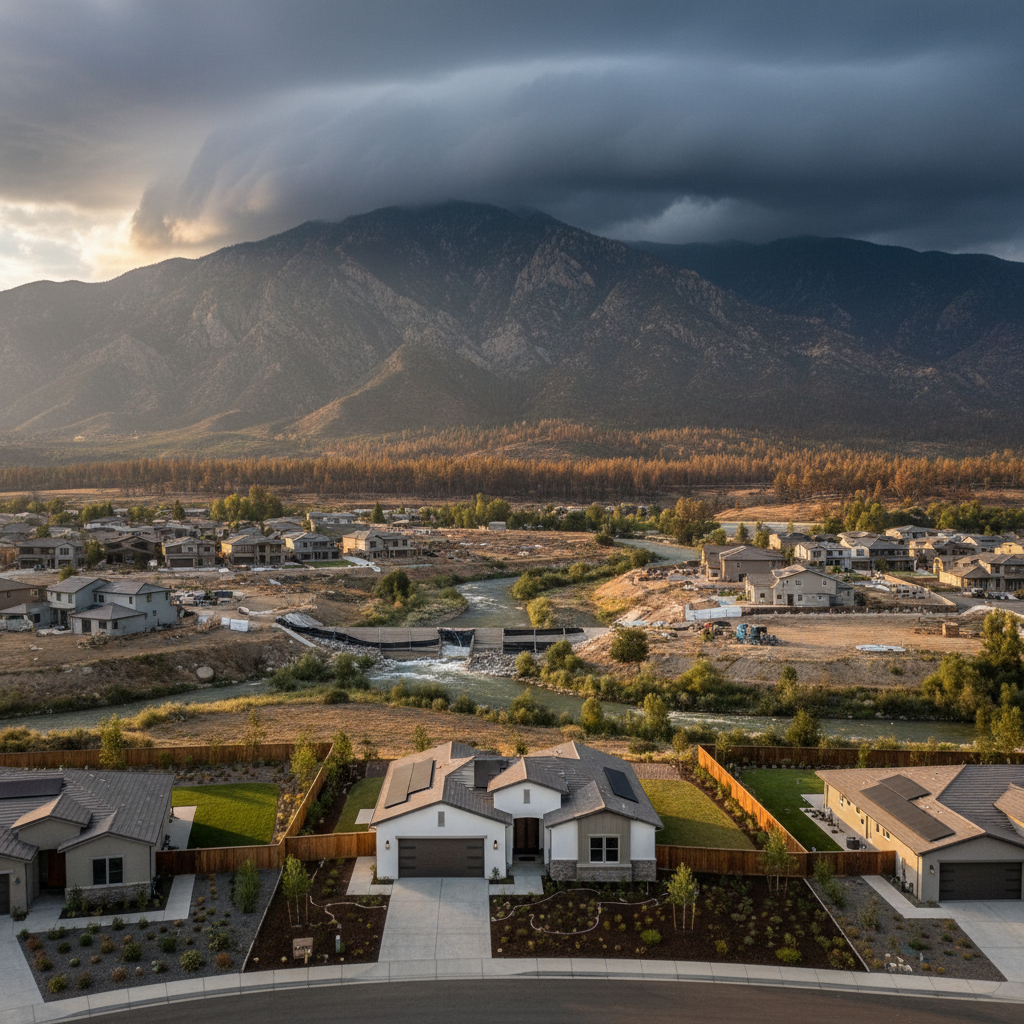
The Shift Toward Systemic Risk
As of June 2026, California’s real estate market has reached a critical inflection point in how disaster readiness is perceived. While previous years focused on individual threats—wildfire hardening or seismic retrofitting—the current risk landscape is defined by 'cascade events.' These are sequences where one disaster triggers a secondary, often more destructive, hazard. For homeowners, understanding this interdependency is no longer optional; it is the cornerstone of asset preservation.
The Fire-to-Flood Pipeline
The most prevalent cascade in the California market is the transition from wildfire to debris flow. According to the U.S. Geological Survey (USGS), land stripped of vegetation by fire loses its ability to absorb moisture. Even moderate rainfall on a burn scar can trigger a debris flow, moving at speeds up to 30 miles per hour. For properties located at the base of canyons or in high-velocity runoff zones, the risk persists for three to five years post-fire. Data from the 2025 rain season showed that approximately 40% of flood-related property damage in the state occurred in areas previously classified primarily as wildfire risks, often catching owners without appropriate flood insurance endorsements.
Seismic Cascades and Liquefaction
Seismic risk remains a constant, but professional focus has shifted toward secondary effects like liquefaction and utility rupture. The California Geological Survey (CGS) identifies significant portions of the Bay Area and Los Angeles Basin as 'liquefaction zones,' where sandy, water-saturated soil behaves like a liquid during shaking. Homeowners in these zones must look beyond 'bolt and brace' foundations to consider soil stabilization and flexible utility connectors. A 2026 analysis of California market data indicates that homes with verified seismic-flexible gas shut-off valves and stabilized soil profiles carry a 4.2% valuation premium over those with standard retrofits in high-risk census tracts.
Practical Takeaways for Property Resilience
- Integrated Landscaping: When designing defensible space for fire, homeowners should simultaneously implement bioswales and deep-rooted native vegetation to prevent soil erosion. This dual-purpose approach addresses both flame spread and post-fire runoff.
- The Multi-Hazard Insurance Audit: Review policies for the 'interdependency gap.' Many standard fire policies exclude earth movement (landslides) resulting from fire-induced erosion unless specific riders are added. Consult with a broker about 'Difference in Conditions' (DIC) policies to bridge these gaps.
- Digital Early-Warning Integration: Utilize the Cal OES 'MyHazards' tool to map overlapping risks. In 2026, hyper-local alerts via the Wireless Emergency Alerts (WEA) system now include specific debris flow warnings for recently burned parcels; ensuring your mobile devices are registered with county-specific systems (like AlertLA or AC Alert) is critical.
- Community-Scale Mitigation: Individual efforts are often negated by a neighbor’s neglect. Engaging with local Community Emergency Response Teams (CERT) ensures that neighborhood-scale drainage and fuel breaks are maintained, protecting the collective property value.
The Resilience Frontier
The 2026 homeowner must be an active risk manager. By viewing disaster preparedness through the lens of cascading hazards, owners can move from reactive repairs to proactive stability. In a market increasingly sensitive to climate volatility, the ability to demonstrate a property’s resilience against multiple, intersecting threats is the new gold standard for California real estate ownership.


