The Shift from Structural Defense to Personal Continuity
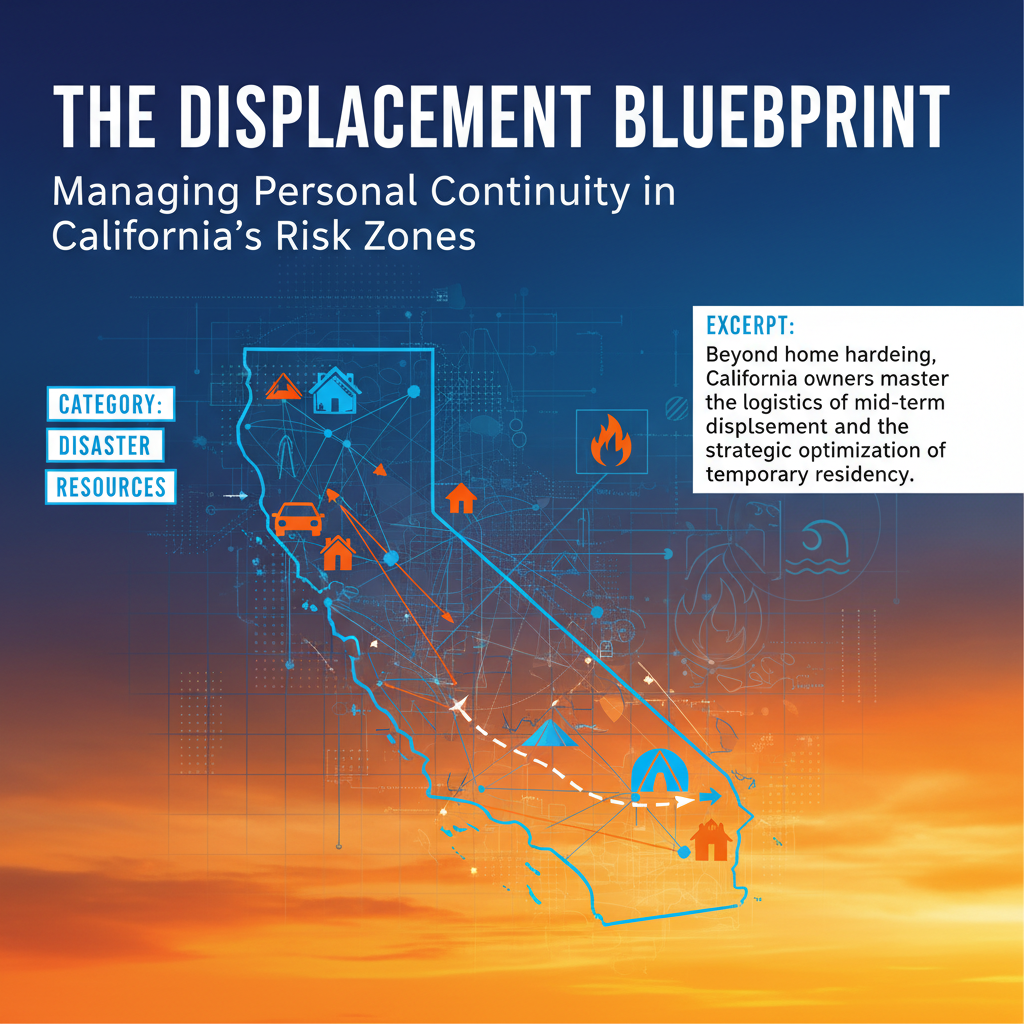
For the modern California homeowner, disaster preparedness has evolved beyond the physical integrity of the structure. While seismic retrofits and defensible space are mandatory prerequisites, the 2025 wildfire season demonstrated a new vulnerability: the logistics of the 'intermediate gap.' This is the period between an evacuation order and the eventual return or relocation—a phase that now averages 14 to 22 months in high-impact zones due to labor shortages and supply chain constraints in the reconstruction sector.
As of June 2026, data from the California Department of Insurance indicates that while 92% of homeowners carry fire coverage, fewer than 40% have a documented 'Continuity of Residency' plan. In a state where the median monthly rent for a single-family home has surged to record highs, the strategy for displacement is now as critical as the strategy for defense.
Optimizing Additional Living Expenses (ALE)
The core financial engine of displacement is the Additional Living Expenses (ALE) provision in a standard HO-3 policy. However, in the current inflationary environment, traditional ALE limits—often set at 20% to 30% of the dwelling coverage—are being exhausted long before reconstruction is complete.
Strategic Action: Homeowners should audit their ALE limits against current short-term rental market data in their specific county. According to recent MLS trends, the 'displacement premium'—the surge in local rental costs following a regional disaster—can spike prices by as much as 25% within 30 days. Ensuring your policy includes 'Actual Loss Sustained' for a 24-month minimum is becoming the new baseline for resilience in markets like the Sierra Foothills and the Transverse Ranges.
The Digital Go-Box and Residency Verification
In the chaos of a rapid evacuation, the loss of physical documentation can delay state and federal aid by weeks. The 2026 recovery protocol emphasizes 'Digital Sovereignty.' This involves maintaining a cloud-synchronized, encrypted repository of vital records that can be accessed from any device to prove residency and ownership to FEMA or Cal OES (California Governor's Office of Emergency Services) representatives.
- Property Deeds and Title Insurance: Essential for accessing the California Disaster Assistance Act (CDAA) funds.
- Inventory of Assets: A video walkthrough of the home, updated quarterly, stored in a zero-knowledge encryption cloud.
- Utility Continuity: Digital access to the last six months of utility bills, which serve as primary proof of occupancy for temporary housing assistance.
Geospatial Risk Awareness and Evacuation Logistics
Preparedness is increasingly data-driven. Homeowners are now leveraging the California MyHazards tool not just for initial purchase due diligence, but for live operational planning. Knowing the secondary and tertiary evacuation routes is no longer sufficient; homeowners must identify 'Life-Line Hubs'—predetermined locations outside of their immediate micro-climate zone that offer stable power, communications, and medical infrastructure.
Practical Takeaways for Post-Disaster Resilience
To navigate the first 72 hours and the subsequent 18 months of displacement, California homeowners should implement the following:
- Establish a Reciprocal Residency Agreement: Create informal or formal agreements with friends or family in geographically distinct zones (e.g., a coastal owner partnering with an inland owner) to provide immediate, no-cost housing during short-term evacuation orders.
- The 72-Hour Data Lock: Ensure all smart home camera footage and IoT sensor data from the moment of evacuation is backed up. This data provides objective proof of the timeline of loss for insurance adjusters.
- Pre-Identify Short-Term Corporate Housing: Maintain a list of corporate housing providers or extended-stay facilities that accept insurance direct-billing. This avoids out-of-pocket liquidity drains during the initial weeks of displacement.
Resilience in 2026 is measured by the speed at which a household can regain its functional routine. By focusing on the logistics of displacement, California homeowners can ensure that even if their property is temporarily lost, their family’s stability remains intact.