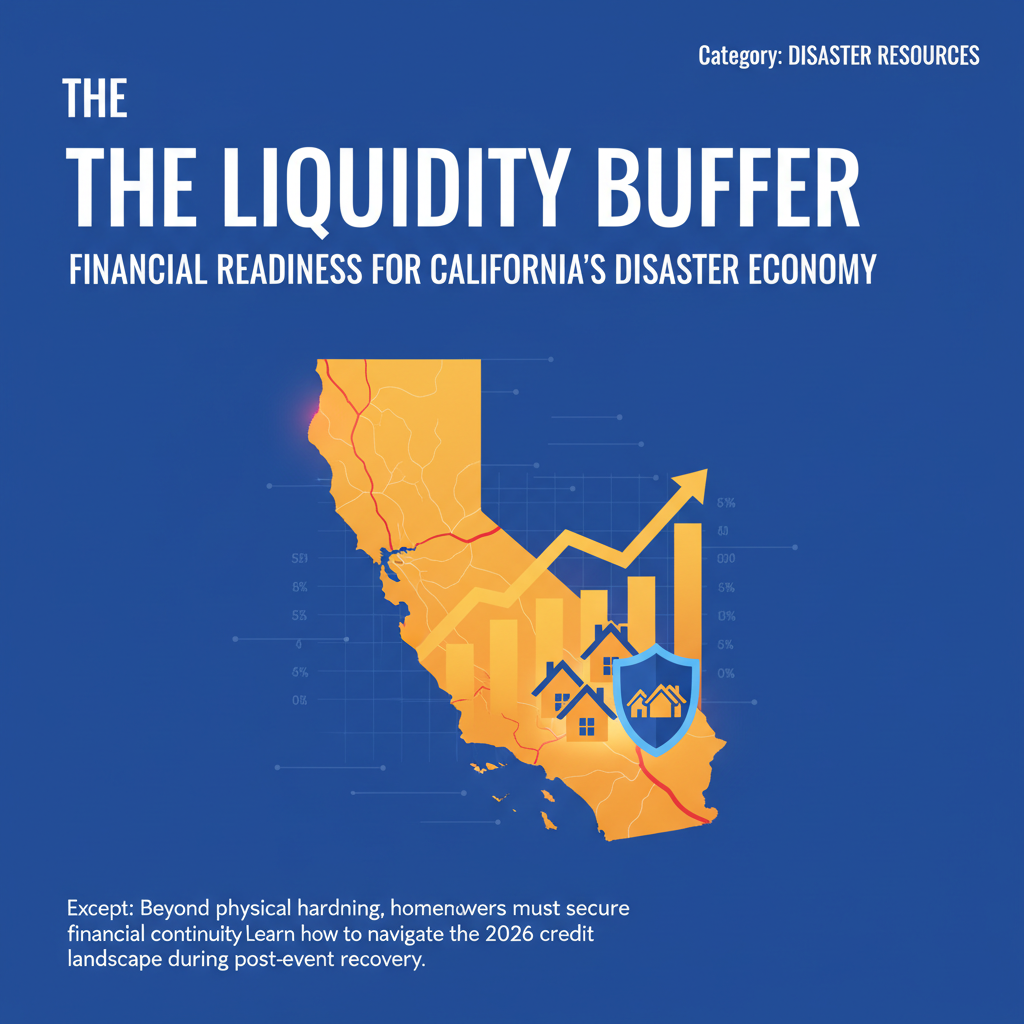
Beyond the Structure: The Financial Architecture of Resilience
In 2026, California homeowners have largely embraced structural hardening, yet a critical vulnerability remains: the financial 'bridge' period. While the 2025 California Sustainable Insurance Strategy has stabilized the market, the lag between a catastrophic event and the disbursement of total loss claims still averages 12 to 18 months. For the modern homeowner, resilience is no longer just about fire-resistant siding; it is about maintaining liquidity in a disrupted economy.
The Insurance Payout Gap
Data from the California Department of Insurance (CDI) indicates that while 'Loss of Use' (ALE) coverage provides immediate relief, these funds often cover only 20-30% of actual displacement costs in high-demand temporary housing markets. With the median California home price hovering near $900,000, a total loss event necessitates a massive capital outlay before the primary dwelling coverage is released. Homeowners must prepare for a 'Liquidity Gap'—the period where mortgage obligations, temporary housing, and rebuilding deposits converge simultaneously.
Strategic Credit and the 2026 Lending Landscape
Traditional credit access often tightens immediately following a regional disaster. To mitigate this, savvy investors and homeowners are establishing 'Disaster-Contingent HELOCs' or dedicated credit lines while their assets are in peak condition. According to recent 2026 banking sector reports, properties with verified 'Wildfire Prepared Home' designations from IBHS are seeing a 15% higher approval rate for standby credit lines. These funds serve as a non-dilutive secondary reserve to cover construction deposits, which often require 10-15% upfront before insurance adjusters finalize valuations.
The Role of Cal OES and Federal Interconnectivity
The 2026 integration of the Cal-Ready data portal has streamlined the application process for state-level grants. However, federal assistance through FEMA is increasingly contingent on homeowners demonstrating they have exhausted private insurance and 'reasonable personal reserves.' This shift underscores the importance of the 'Disaster Bridge Account'—a liquid reserve equivalent to six months of mortgage and living expenses, held in an institution with geographically diversified operations to ensure access even if local branches are offline.
Practical Takeaways for Homeowners
- Audit ALE Limits: Ensure your 'Loss of Use' coverage is calculated based on current 2026 rental market rates, not historical averages.
- Establish Standby Liquidity: Secure a Home Equity Line of Credit (HELOC) or a personal line of credit now. Accessing capital after a regional emergency declaration is significantly more difficult.
- Digital Financial Vaulting: Utilize the Cal-Ready portal to upload property appraisals, inventory logs, and tax records. In 2026, data-ready homeowners see claim processing times reduced by up to 40%.
- Assess the Mortgage Moratorium: Understand the specific disaster forbearance policies of your servicer. While many offer 90-day pauses, interest often continues to accrue, necessitating a long-term repayment strategy.
As we navigate the 2026 wildfire and flood seasons, the distinction between recovery and foreclosure often comes down to the first 90 days of liquidity. By treating disaster preparedness as a financial planning exercise rather than just a physical one, California homeowners can protect their equity as effectively as they protect their rooftops.


