The Shift from Passive to Active Home Defense
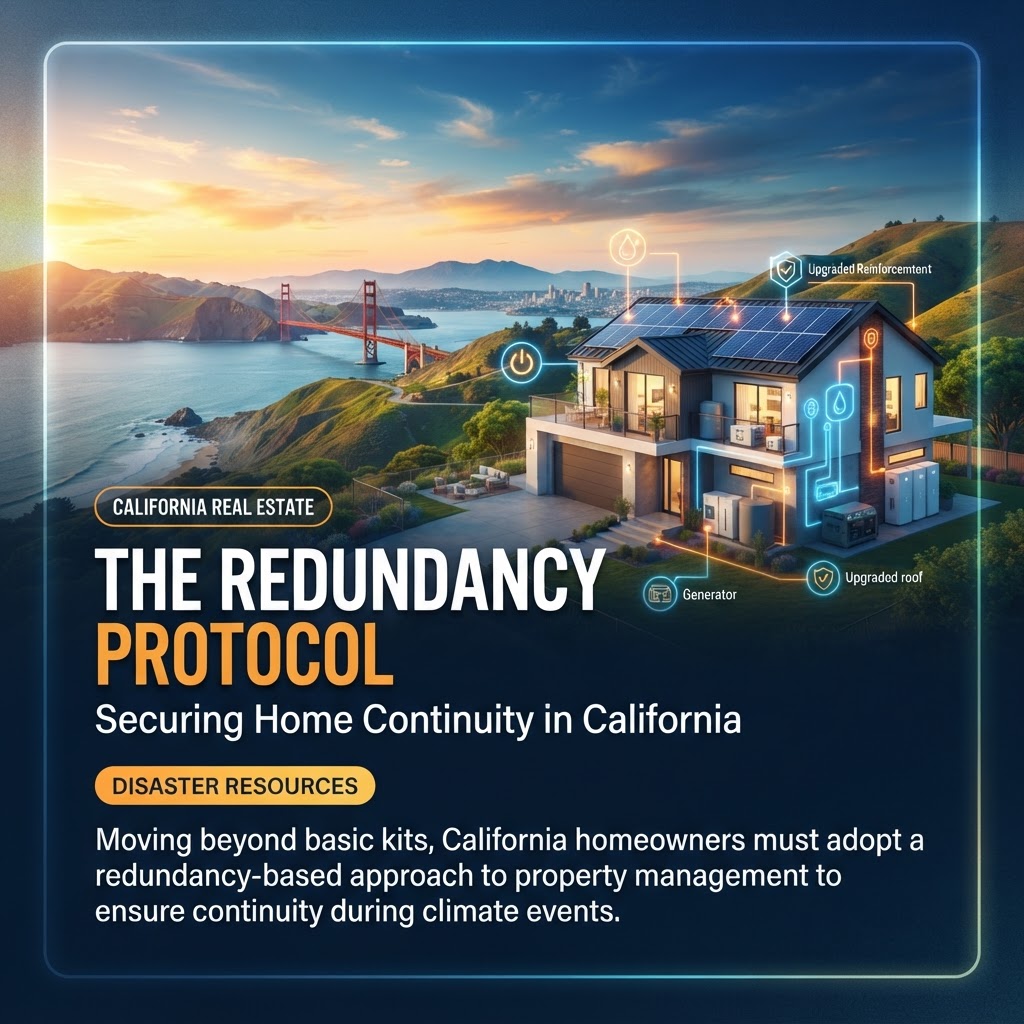
As of June 2026, the California residential landscape has moved beyond static defenses. While structural hardening—such as ember-resistant vents and seismic retrofitting—remains the baseline, the new frontier of disaster preparedness lies in real-time mitigation technology. With the California Department of Insurance reporting a 15% average premium reduction for homes equipped with verified 'active' mitigation systems, homeowners are increasingly viewing technology as an essential utility.
The Rise of Early Warning Ecosystems
California's investment in the USGS ShakeAlert system has reached full maturity in 2026. For homeowners, this means more than just a smartphone notification. Integration with smart-home hubs now allows for automated responses: gas main shut-off valves engaging seconds before seismic waves arrive, and garage doors opening to prevent jamming, ensuring vehicle egress. According to data from the National Association of Realtors (NAR), homes with integrated early-warning shut-off systems saw a 4% higher valuation in high-risk zones compared to those without, as buyers prioritize immediate loss-prevention capabilities.
Wildfire Tech: Beyond the Defensible Space
While the state's 2026 compliance mandates focus on vegetation management, the 'Digital Sentry' approach involves onsite sensors. Thermal imaging and particulate matter (PM2.5) sensors are now standard in high-fire-threat districts (HFTD). These systems provide localized data that outpaces regional alerts, allowing homeowners to activate external sprinkler systems or high-efficiency HEPA filtration before smoke infiltration causes property damage. In 2025, the California Earthquake Authority (CEA) noted that moisture and heat sensors reduced secondary damage claims by nearly 22% in affected ZIP codes.
Data-Backed Resilience: Insurance and Transparency
The 2026 insurance market has shifted toward dynamic pricing. Homeowners who share telemetry data from their mitigation systems with providers are accessing 'Surplus Line' alternatives that were previously unavailable. Real-time monitoring for leak detection and seismic integrity provides the transparency required to secure coverage in areas where traditional carriers have retracted. For investors, this data provides a 'digital logbook' of a property’s resilience, crucial for maintaining liquidity in a market sensitive to climate volatility.
Practical Takeaways for the 2026 Homeowner
- Install Automated Utility Shut-offs: Priority should be given to seismic-actuated gas valves and smart water leak detection systems to prevent the secondary fires and floods that often follow disasters.
- Sync with Cal OES Platforms: Ensure home automation systems are directly integrated with the California Governor’s Office of Emergency Services (Cal OES) alerts for zero-latency response.
- Audit the Digital Vault: Beyond physical safety, digital resilience is paramount. Maintain cloud-synchronized, encrypted copies of property deeds, insurance policies, and 3D home inventories to expedite 2026 claims processes.
- Leverage Smart Filtration: In areas prone to atmospheric rivers and subsequent mold or wildfire smoke, HVAC systems with automated pressure-balancing and Merv-16 filtration are now essential for maintaining indoor air quality and structural health.
In 2026, preparedness is no longer a seasonal checklist; it is a continuous, digitally-monitored state of being. By integrating real-time response technology, California homeowners are not just waiting for the next event—they are actively mitigating its impact before it arrives.