The 14-Day Resilience Benchmark
As of June 2026, the paradigm of California disaster preparedness has shifted from temporary evacuation to long-term operational autonomy. Recent data from the California Department of Water Resources and FEMA indicates that in the event of a major seismic rupture on the Hayward Fault or a catastrophic wildfire in the wildland-urban interface (WUI), municipal utility restoration now averages between 10 and 14 days. This 'recovery gap' has birthed a new standard in luxury and mid-market real estate: the Autonomous Hearth.
Unlike previous years where 'prepping' was a fringe activity, 2026 buyers are prioritizing homes that function as independent micro-grids. According to the Solar Energy Industries Association (SEIA), California has seen a 42% year-over-year increase in residential bidirectional charging installations (V2H), allowing homeowners to utilize their electric vehicles as primary home batteries during prolonged grid failures.
Energy Independence: The V2H Revolution
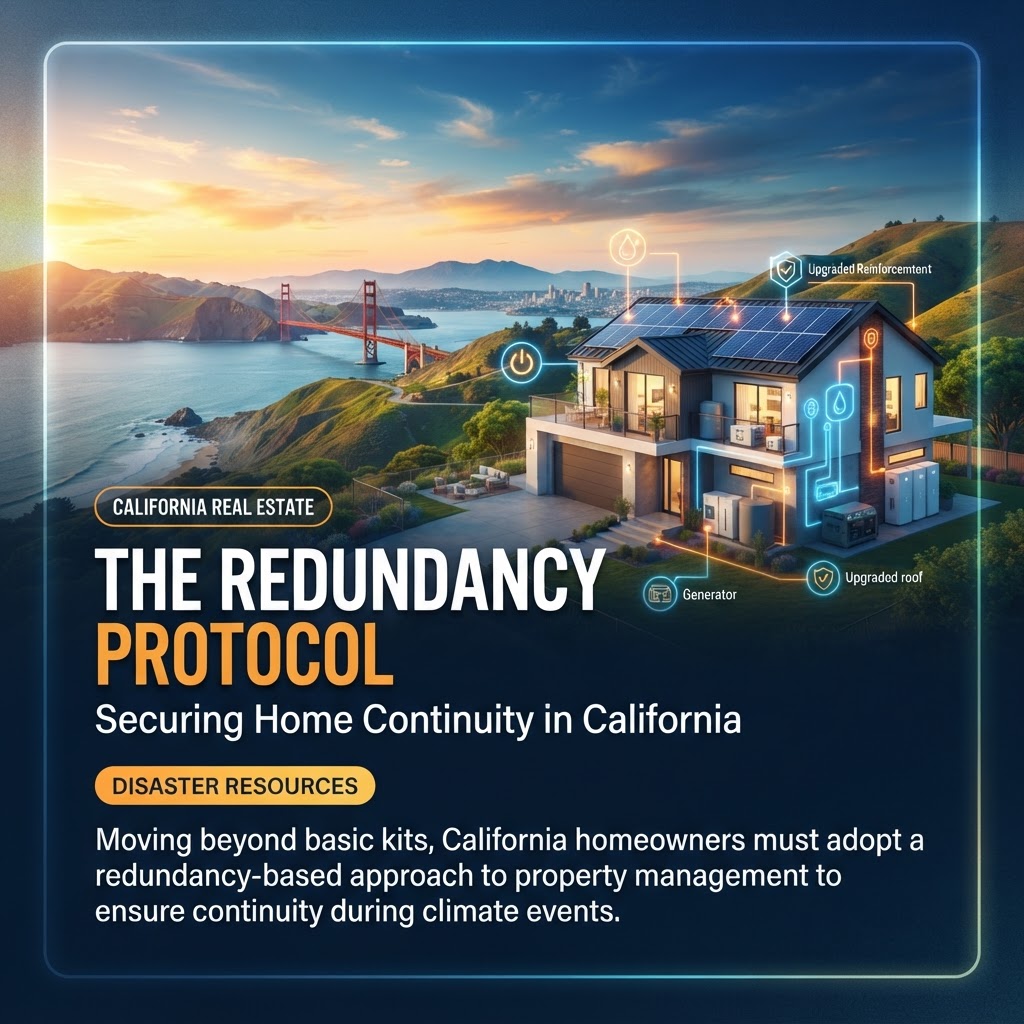
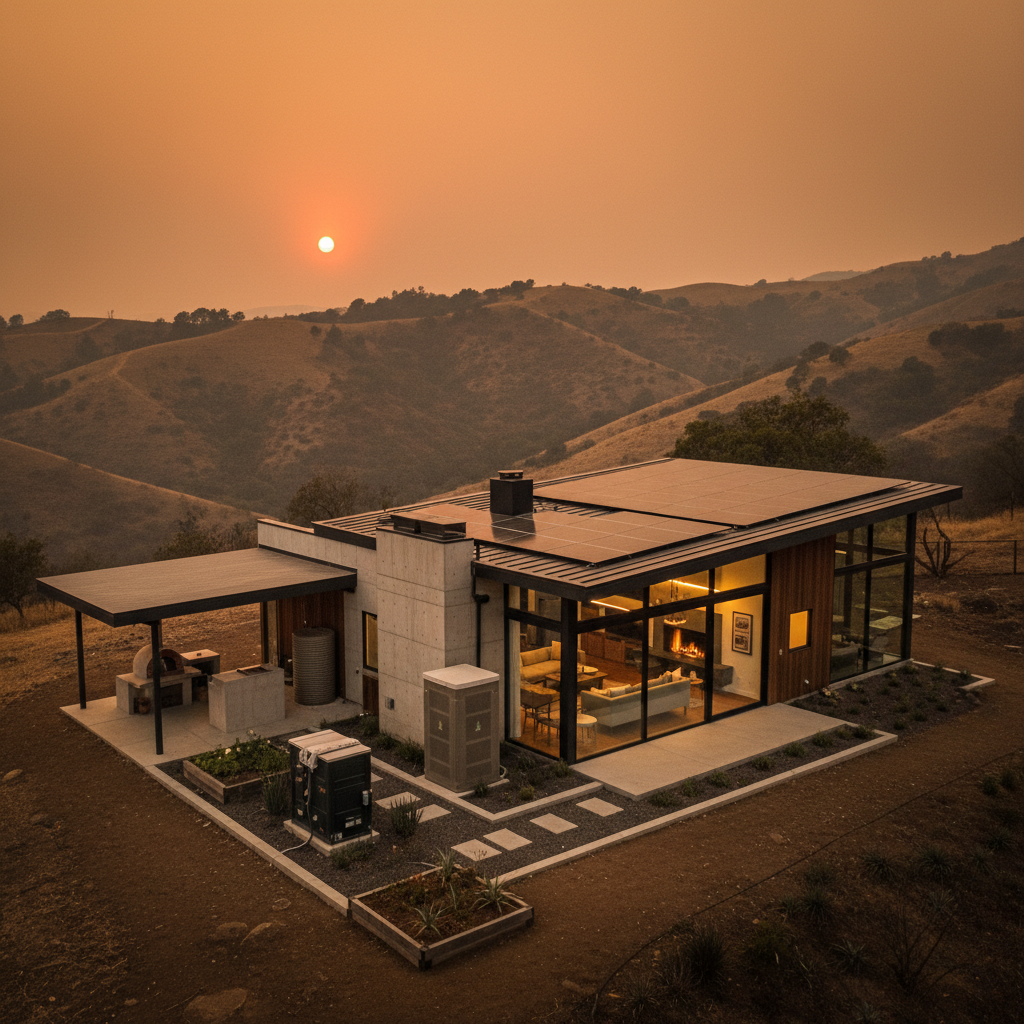
The core of modern California resilience is no longer a gas-powered generator, but an integrated energy management system. For a standard 2,500-square-foot home, a 15kW solar array paired with 30kWh of stationary storage and a bidirectional EV charger provides sufficient energy to maintain refrigeration, climate control in a 'safe room,' and critical communications indefinitely. Investors are seeing 'Energy Autonomy Scores' (EAS) directly influence property appraisals, with high-scoring homes commanding a 6.5% premium over grid-dependent neighbors.
Water Sovereignty in the Arid West
While fire is the immediate threat, water scarcity following infrastructure failure is the silent secondary disaster. The 2026 homeowner is increasingly looking toward atmospheric water generation (AWG) and advanced graywater recycling. Current MLS data shows that properties equipped with 5,000-gallon subterranean cisterns and UV-filtration systems are moving 15% faster in drought-prone regions like the Inland Empire and Central Valley. These systems provide the critical 'hydration bridge' needed when municipal mains are compromised by soil liquefaction or fire-related pressure loss.
The Digital Twin and Real-Time Mitigation
Preparedness in 2026 also leverages the 'Digital Twin' of the property. Homeowners are now utilizing localized AI sensors that monitor air quality, soil moisture levels, and structural vibration in real-time. These systems, often integrated with the California Earthquake Early Warning (EEW) system, can automatically shut off gas valves and trigger exterior ember-suppression sprinklers 30 to 60 seconds before an impact, significantly reducing the risk of secondary home loss.
Practical Takeaways for Homeowners and Investors
- Audit the Autonomy Gap: Homeowners should calculate their 'days-to-failure' for energy and water. If your home cannot sustain basic life-support systems for 14 days without external inputs, it is considered a high-risk asset in the 2026 market.
- Invest in Bidirectional Infrastructure: When upgrading EVs or home chargers, ensure compatibility with Vehicle-to-Home (V2H) standards. This transforms a depreciating transportation asset into a vital piece of emergency infrastructure.
- Hard-Pipe Hydration: Prioritize the installation of independent water sources. Simple rainwater catchment is no longer sufficient; pressurized, filtered cistern systems are the new baseline for resilience.
- Documentation and Digital Twins: Maintain a cloud-based 'Digital Twin' of home systems, including shut-off locations and structural reinforcements, to expedite post-disaster insurance claims and structural assessments.
Conclusion: Resilience as a Functional Asset
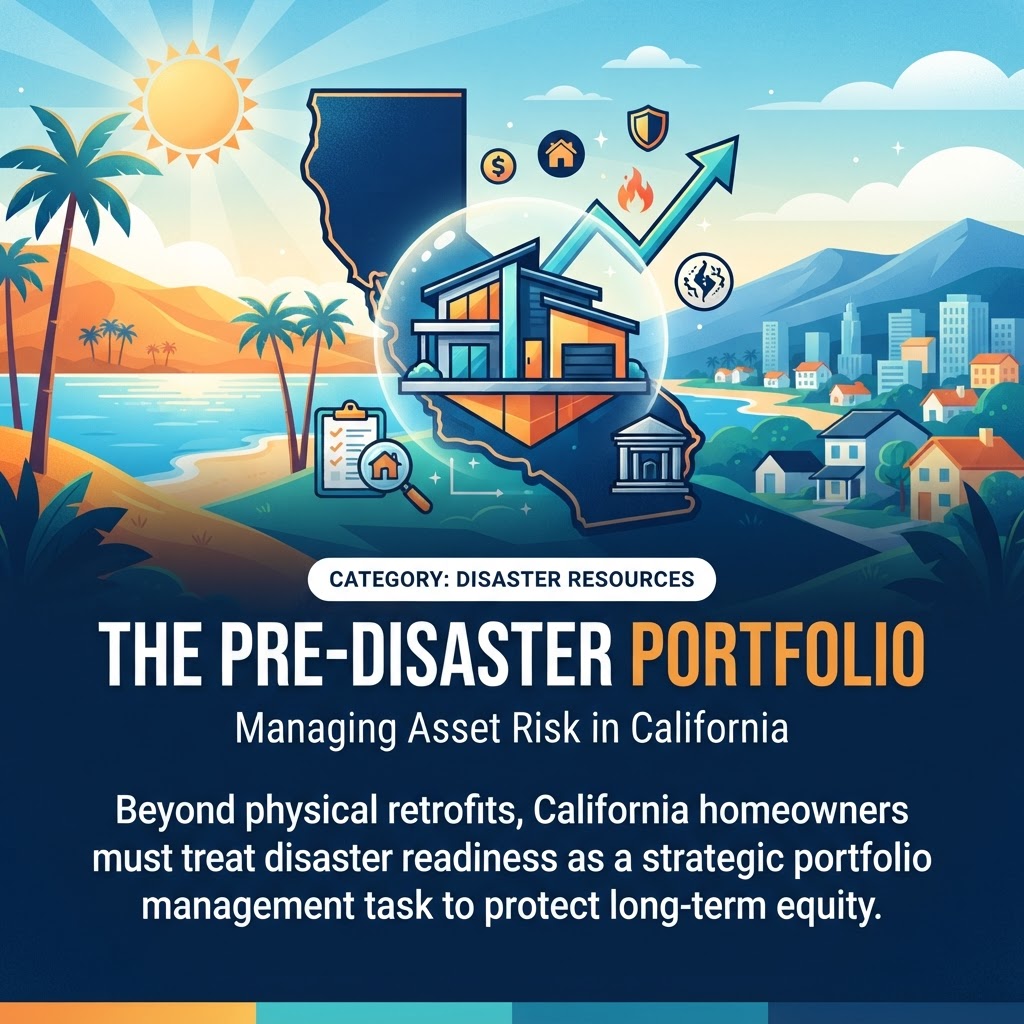
In the California of 2026, disaster preparedness is no longer about a 'go-bag' in the closet. It is an engineering philosophy that treats the home as a self-sustaining life-support system. For the savvy homeowner or investor, these upgrades are not just safety measures; they are essential protections for the property’s long-term valuation and livability in an increasingly volatile environment.