The Shift from Individual to Community Resilience
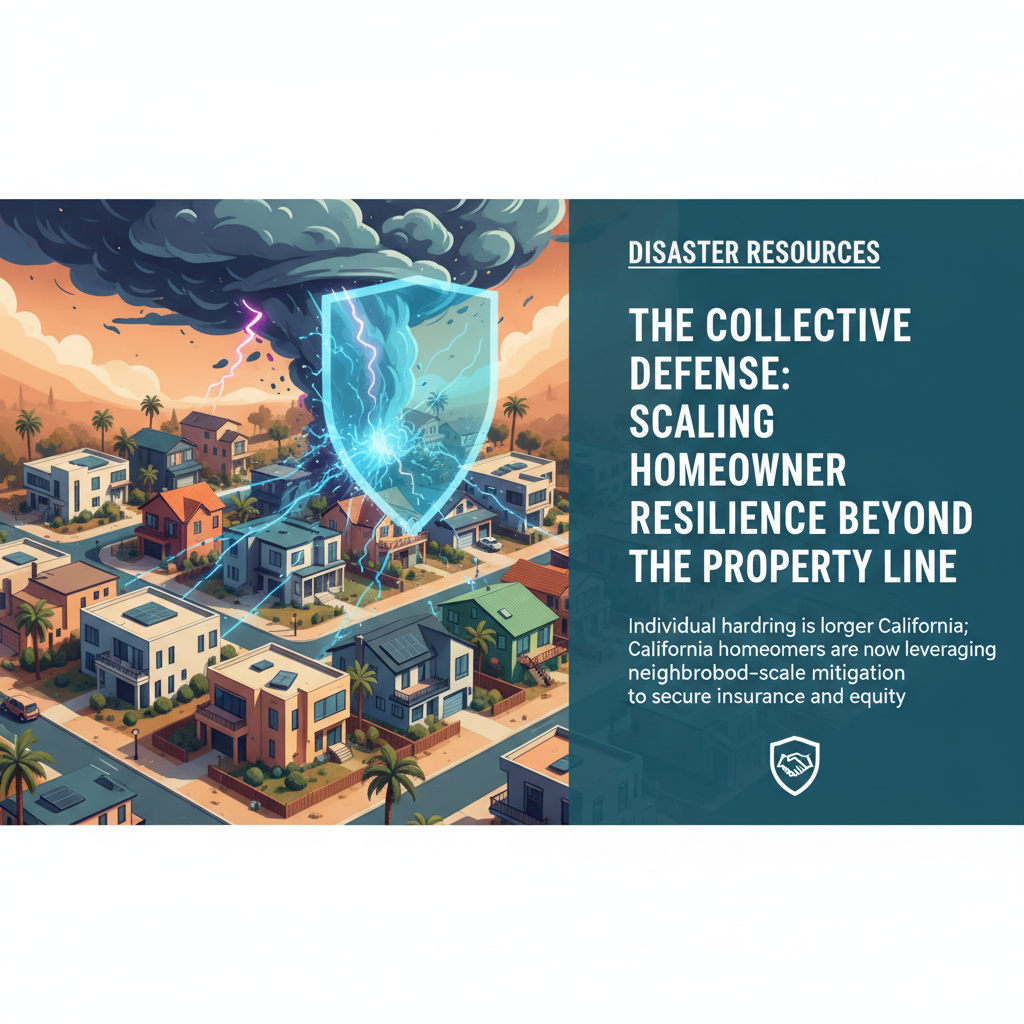
As of mid-2026, the California real estate market has reached a critical inflection point. While previous strategies focused heavily on individual home hardening and personal liquidity, the evolving risk landscape—characterized by more frequent 'conflagration events'—has proven that a single fortified house is still vulnerable if the surrounding neighborhood remains untreated. Data from the 2025 California Department of Insurance (CDI) reports indicates that insurers are increasingly moving toward 'district-level' underwriting, where the collective risk profile of a ZIP code or HOA carries as much weight as the individual property's features.
The Firewise Factor and Property Valuations
The National Fire Protection Association (NFPA) reported a 40% increase in Firewise USA® site recognitions across California in the last 18 months. This is not merely a badge of honor; it is a financial necessity. According to recent MLS data from high-risk regions like the Sierra Foothills and the Santa Cruz Mountains, homes located within certified Firewise communities sell for a 4.5% premium compared to non-certified neighbors. More importantly, these homes are seeing a 30% higher success rate in securing private-market insurance binders rather than being forced onto the FAIR Plan.
The logic is simple: fire does not respect property lines. When a neighborhood adopts a unified strategy for vegetation management and defensible space, the 'embershed' is significantly reduced. This community-scale mitigation creates a buffer that individual hardening alone cannot achieve.
Infrastructure Resilience: The Shared Asset Model
In 2026, resilience is increasingly defined by shared infrastructure. We are seeing a rise in 'Resilience Districts'—local assessment areas where homeowners vote to fund communal assets. Key trends include:
- Communal Water Augmentation: Neighborhoods are investing in shared 50,000-gallon cisterns equipped with standardized Fire Department Connections (FDCs), ensuring high-volume water access even when municipal systems fail.
- Fuel Break Networks: Strategic land clearing on communal HOA land or adjacent private parcels to create 'neighborhood envelopes' that slow the advance of wind-driven fires.
- The 'Buffer Zone' Tax Credit: Recent 2026 state legislative updates now allow for property tax abatements for homeowners who participate in multi-parcel fuel reduction programs.
Practical Takeaways for Homeowners and Investors
To protect equity and ensure long-term marketability in the current risk environment, stakeholders should act on the following:
1. Initiate or Join a Firewise Community
Consult the NFPA database to see if your neighborhood is active. If not, the process of forming a committee and conducting a community risk assessment is the single most effective way to lower the aggregate risk score of your property in the eyes of modern AI-driven underwriting models.
2. Audit HOA Bylaws for Resilience Alignment
Many older HOA bylaws actually hinder resilience by mandating specific flammable landscaping (e.g., certain types of mulch or closely packed shrubs). Investors should push for amendments that prioritize 'Zone 0' (0-5 feet from the structure) non-combustible requirements across the entire development.
3. Leverage FEMA’s Community Rating System (CRS)
For those in flood-prone areas like the Central Valley or coastal zones, verify if your municipality participates in the CRS. Improvements in the community’s rating can lead to up to a 45% discount on NFIP flood insurance premiums for all residents—a significant boost to a property’s Net Operating Income (NOI) for investors.
4. Coordinate Shared Resource Procurement
Bulk-buying services for retrofitting—such as multi-home contracts for ember-resistant venting or professional vegetation clearing—can reduce individual costs by 15-20% while ensuring the entire street meets a uniform safety standard.
The Future of California Equity
The 'lone wolf' approach to disaster preparedness is an artifact of the past. As we navigate the remainder of 2026, the most resilient assets will be those embedded in proactive, organized communities. For the California homeowner, the neighbor's preparedness is now as vital as their own. True resilience is no longer just about the house; it’s about the block.